Best Barcelona Hotels 2026: Gothic Quarter Icons, Eixample Boutiques & Budget Rooms

Where you stay in Barcelona comes down to three districts: the medieval Gothic Quarter / El Born (atmosphere — Hotel Neri, Yurbban Trafalgar), the Eixample grid (Gaudí, design hotels and Passeig de Gràcia — Casa Fuster, Mandarin Oriental), or beachfront Barceloneta (sea views — W Barcelona, Hotel Arts). Barcelona, the capital of Catalonia in northeastern Spain, is the most spatially logical city in Europe for a hotel guide. The medieval core — Gothic Quarter, El Born, La Barceloneta — runs along the waterfront, with Las Ramblas slicing through to the sea. The 19th-century Eixample grid (Gaudí's Barcelona, Passeig de Gràcia, the design hotels) sits immediately north. The beach stretches east of the old city along the Mediterranean. Three completely different Barcelonas, each five to fifteen minutes apart by metro, each with its own hotel character.
Most UK visitors stay in the Gothic Quarter because it's what Barcelona looks like on Instagram, or in the Eixample because it's where the design hotels are, or at Barceloneta because they want a pool facing the sea. All three are correct answers. None of them is correct for all three things. This guide separates them properly, matches 10 hotels across all three zones, and tells you — for the trip you're actually taking — which Barcelona to wake up in. For neighbourhood context and what's on, the official Barcelona visitor guide is a useful companion, and UK travellers can check current entry rules and local advice on the UK government's Spain travel advice before booking.
Jump to your budget: Luxury · Mid-range · Budget under £120
Scout's 3 best value picks right now: 🏙 Yurbban Trafalgar Hotel — El Born's boutique-scaled rooftop pool with Sagrada Família sightlines, the strongest pound-for-pound stay in the medieval core. 🎨 Almanac Barcelona — Gran Via design quality at a clear discount to the Passeig de Gràcia flagships two blocks over. 🛏 Hotel Neri — a 22-room Gothic Quarter boutique that punches below its five-star neighbours on price for the atmosphere it delivers. Barcelona's LiteAPI inventory in this pull doesn't yet stretch to a full sub-£120 tier — see the budget section below for how to find one on live dates.
Compare live Barcelona hotel prices before you commit, or search Barcelona flights from London to lock in dates first.
At a glance — here's how the hotels below compare on location, ideal traveller and signature feature, before the full reviews:
| Hotel | Neighbourhood / Area | Best For | Standout Feature |
|---|---|---|---|
| Hotel Neri | Gothic Quarter | Couples & honeymoons | 18th-century palace facing a quiet medieval square |
| El Palauet Living Barcelona | Passeig de Gràcia | High-budget families | Six 130–270 m² suites with private chef |
| Yurbban Trafalgar Hotel | El Born | Mid-range value | Rooftop pool framing the Sagrada Família spires |
| Hotel Casa Fuster | Upper Eixample | Architecture devotees | Only hotel in a UNESCO Modernista building |
| Mandarin Oriental Barcelona | Passeig de Gràcia | Business & prestige | Converted 1950s bank, Terrat rooftop pool |
| Almanac Barcelona | Gran Via, Eixample | Design value | 8th-floor Sky Bar pool with city and sea views |
| Cotton House Hotel | Gran Via, Eixample | Spa & quiet design | Batuar spa with Catalan botanical treatments |
| W Barcelona | Barceloneta | Beach statement stay | Bofill's Sail tower with Eclipse rooftop bar |
| Hotel Arts Barcelona | Port Olímpic | Luxury beach families | Six Senses spa on the 43rd floor |
| Sir Victor Hotel | Upper Eixample | Best rooftop view | Doña Rosa rooftop 360° city panorama |
The Three Barcelonas — Understood in Three Minutes
Gothic Quarter / El Born / Raval — the medieval city. Roman walls still standing in the basement of the Barcelona Cathedral. Streets two metres wide. The Picasso Museum in El Born, the Mercat de Santa Caterina, the MACBA contemporary art museum. At midnight the Gothic Quarter lanes are full of people eating — Barcelona's late-eating culture (dinner at 10pm, last orders at midnight, Sunday lunch until 4pm) is most concentrated here. The noise at 3am Friday night is real. The beauty at 7am Saturday is extraordinary.
Eixample (L'Eixample) — Ildefons Cerdà's 1860 grid, the most ambitious urban-planning project of the 19th century, its octagonal blocks designed so sunlight reaches every apartment. The Sagrada Família, Casa Batlló, La Pedrera (Casa Milà), Palau del Baró de Quadras — and Park Güell on the upper Gràcia hillside, the most photographed of all of Gaudí's Barcelona works. Passeig de Gràcia is the most architecturally concentrated boulevard in Europe. The Eixample has wider streets, quieter nights, and better-ventilated rooms than the Gothic Quarter. The design hotels, the Michelin-starred restaurants, the aperitivo culture of the Esquerra de l'Eixample (the LGBTQ+ "Gayxample" district).
Barceloneta / Port Olímpic — the beach. The 1992 Olympics transformed this from a working-class fishing neighbourhood into a hotel and beach-club district. The actual Mediterranean, swimmable May–October, 4km of sandy beach, beach volleyball, chiringuitos (beach bars), the W Barcelona tower at the end of the Barceloneta peninsula. The furthest zone from the Gothic Quarter (20 minutes' walk or one metro stop) but the only one with a sea view.
Gothic Quarter and El Born — Medieval Atmosphere
Our luxury tier starts here — atmosphere-first hotels in the medieval core, before the guide moves through the Eixample's design flagships and the Barceloneta beach icons.
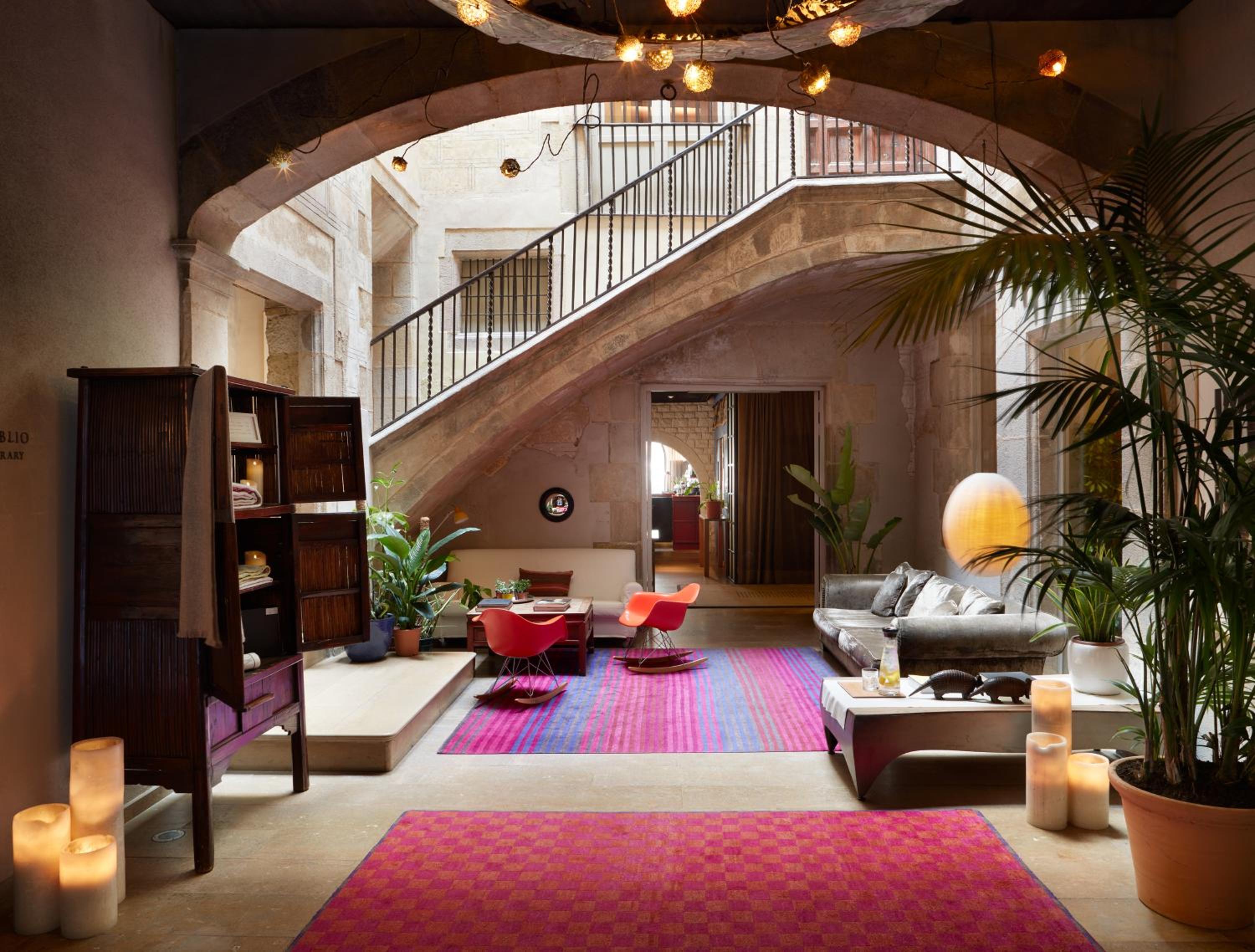
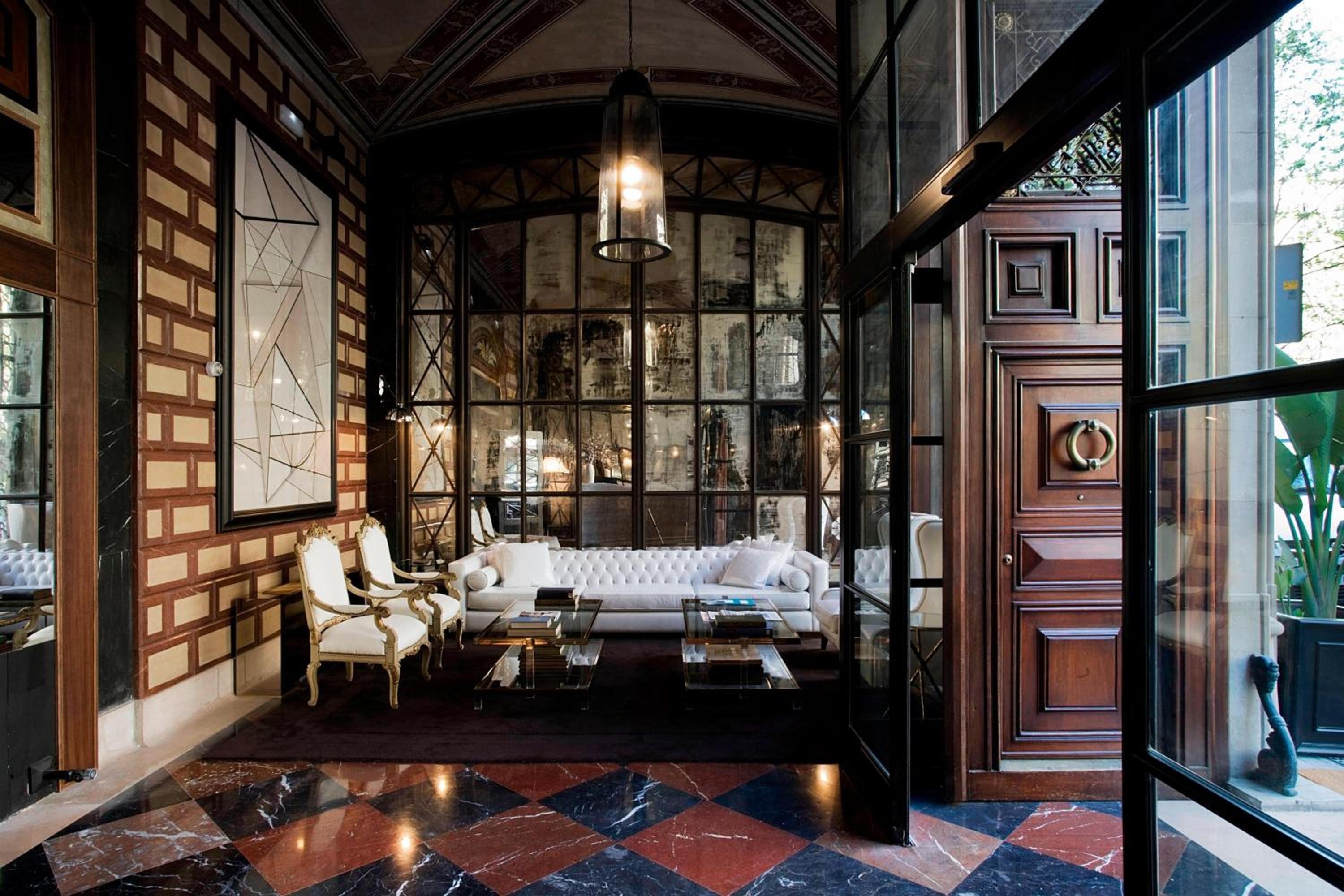
1. Hotel Neri — Boutique Gothic. Sant Sever, Gothic Quarter. 22 rooms in a restored 18th-century palace directly facing the Plaça de Sant Felip Neri (the small square where bullet holes from the Civil War are still visible in the church walls). The most atmospheric hotel in Barcelona — the building predates Columbus's return from America, the square outside is one of the quietest in the Gothic Quarter despite being 200 metres from Las Ramblas. The rooftop terrace overlooks the Gothic Quarter roofscape at the level of the cathedral bell towers. For couples seeking atmosphere above facilities, architecture-focused travellers, literature lovers. The antithesis of a beach hotel.
2. El Palauet Living Barcelona — Grand Gothic. Passeig de Gràcia 113 (Gothic/Eixample boundary). Six palatial suites in a restored 1906 Modernista building — each suite a private apartment of 130–270 m², butler service, private chef available. One of Europe's finest urban suite hotels by any measure. The building's original Modernista ironwork, mosaic floors, and coffered ceilings are preserved intact. For high-budget couples or families wanting private-apartment scale on the most architecturally significant street in Barcelona.
Mid-Range and Best Value
The strongest pound-for-pound stays in this guide — real design-hotel standard without Passeig de Gràcia or beachfront pricing.
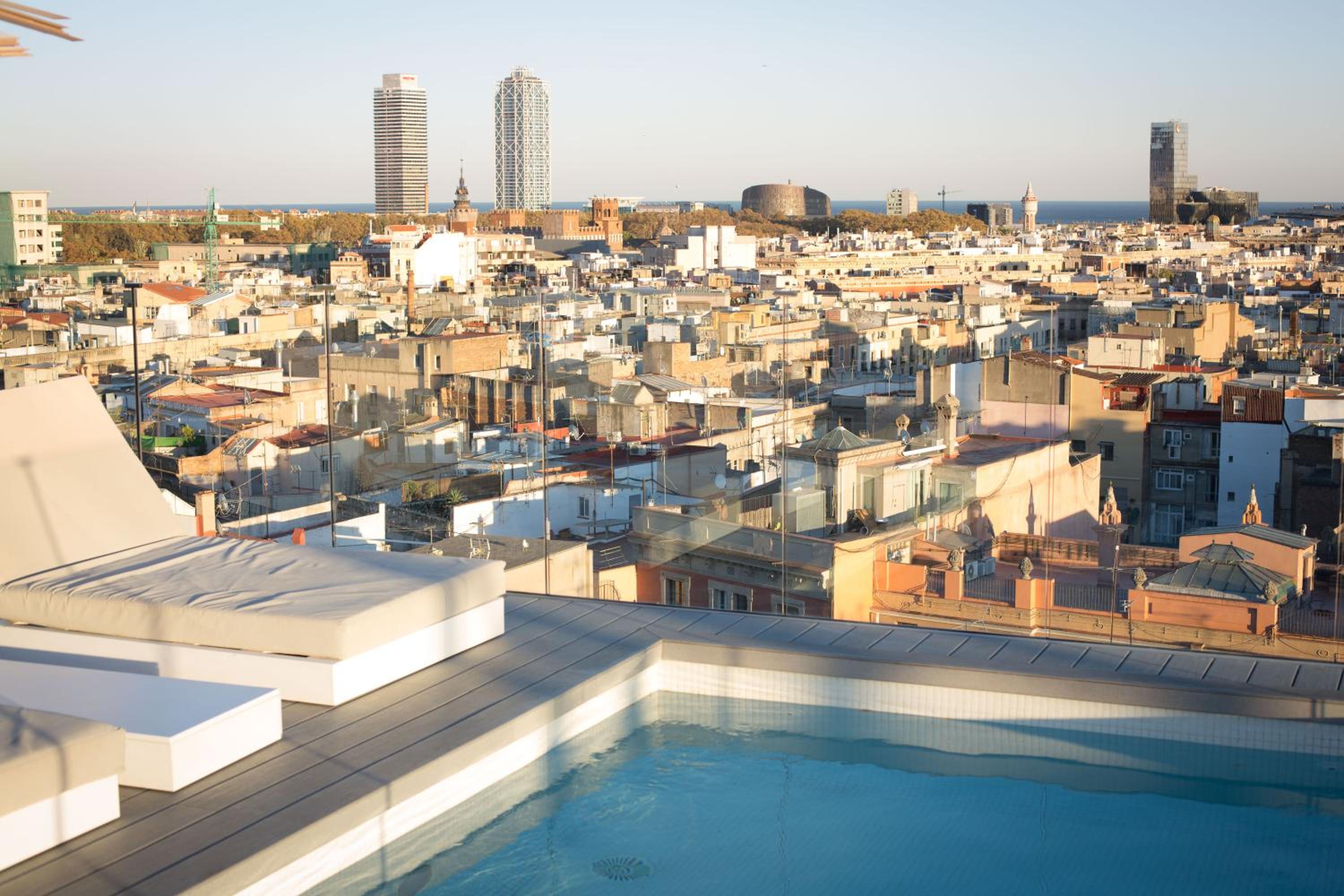
3. Yurbban Trafalgar Hotel — El Born. Trafalgar Street, El Born. 90 rooms, boutique-scaled, the rooftop pool with 360° views across El Born's rooftops toward the Sagrada Família spires on the skyline — one of the best rooftop pool views in the city. Walking distance to the Palau de la Música Catalana (UNESCO), the Picasso Museum, the Mercat de Santa Caterina. Excellent value for the location. For first-time Barcelona visitors who want Gothic/El Born immersion with a proper rooftop, couples, design travellers on a mid-budget.
Almanac Barcelona, reviewed below in the Eixample section, is this guide's other mid-range value pick — Gran Via design quality at a discount to the Passeig de Gràcia flagships.
Compare live Barcelona hotel prices →
Eixample — Modernisme and Design
The rest of this section is the luxury tier's design core — Passeig de Gràcia and Gran Via's flagship Modernista and contemporary hotels, with Almanac Barcelona (#6) as the mid-range exception among them.
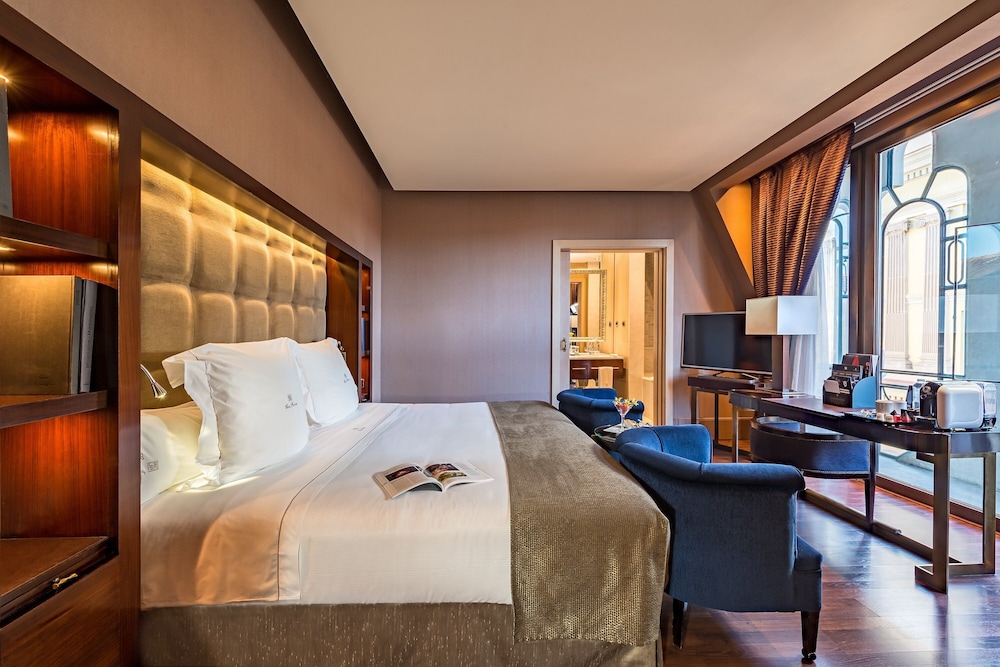
4. Hotel Casa Fuster — Passeig de Gràcia. Passeig de Gràcia 132, upper Eixample. 96 rooms in the last great Modernista building designed by Lluís Domènech i Montaner (1908) — the same architect as the Palau de la Música. The only hotel housed in a UNESCO World Heritage-listed Modernista building (technically the building is part of the Palau de la Música and Catalan Hospital UNESCO ensemble). The Café Vienès on the ground floor is a Barcelona institution; the rooftop pool faces toward Tibidabo mountain. For architecture devotees, couples, travellers who want to sleep inside Catalan Modernisme rather than merely admire it from the street.
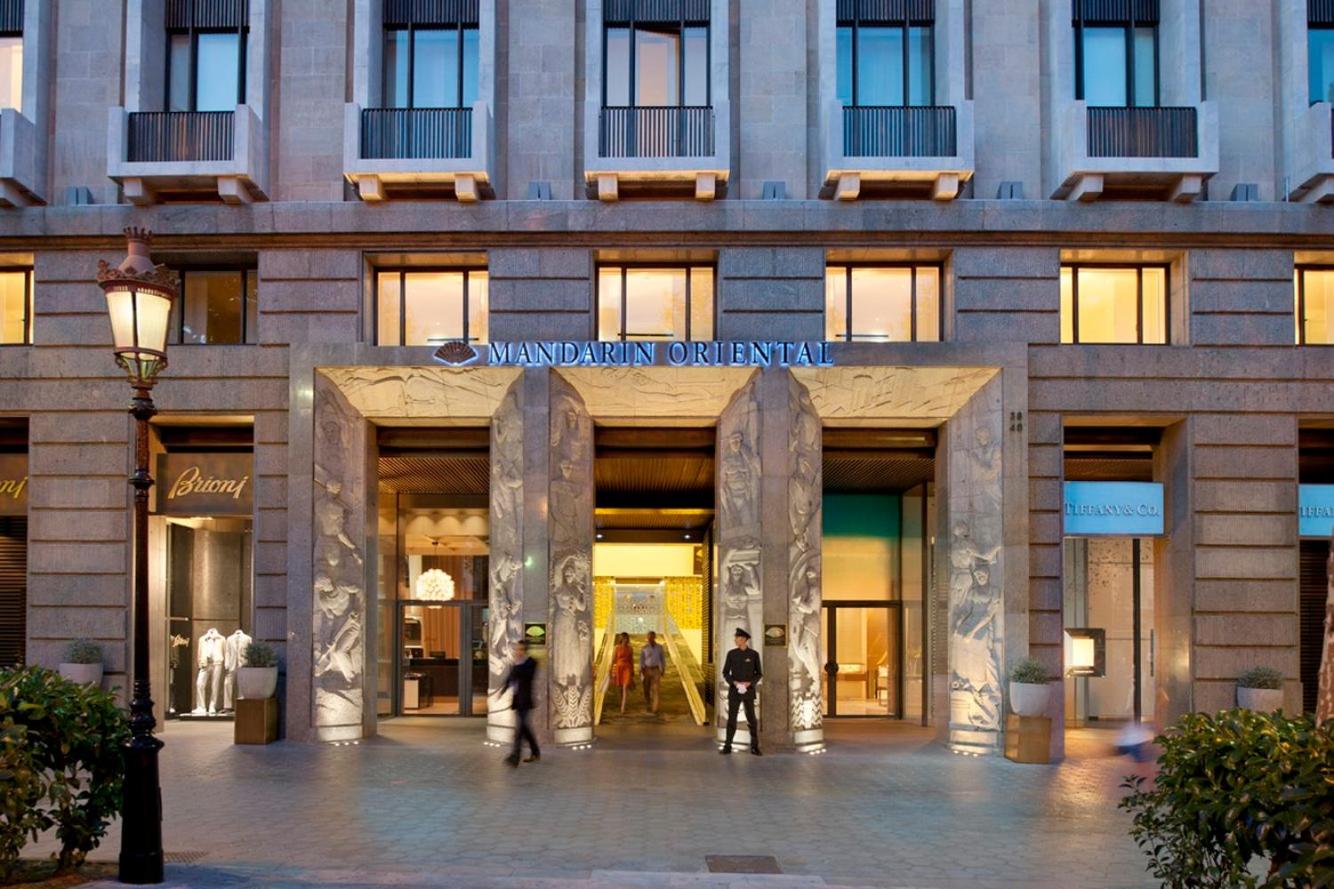
5. Mandarin Oriental Barcelona — Passeig de Gràcia. Passeig de Gràcia 38–40, Eixample. 120 rooms in a converted 1950s bank — the most prestigious hotel address in Barcelona for the last decade. Bistreau by Carme Ruscalleda (seven Michelin stars across her career, the most decorated female chef in Spain) and the Terrat rooftop bar and pool. The Passeig de Gràcia location puts Casa Batlló and La Pedrera within a 3-minute walk. For those who want Passeig de Gràcia's luxury retail and architecture access alongside top-tier hotel service.
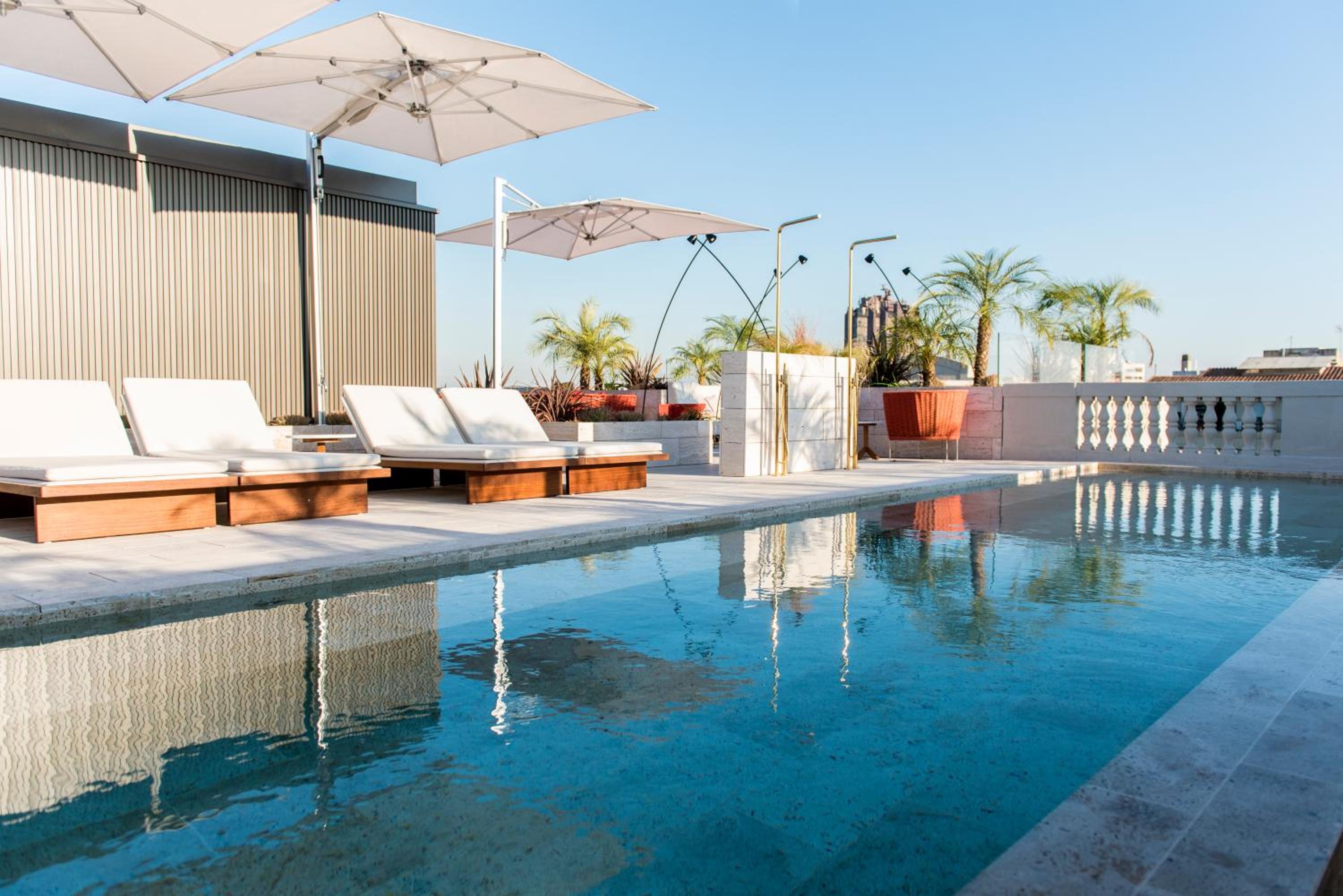
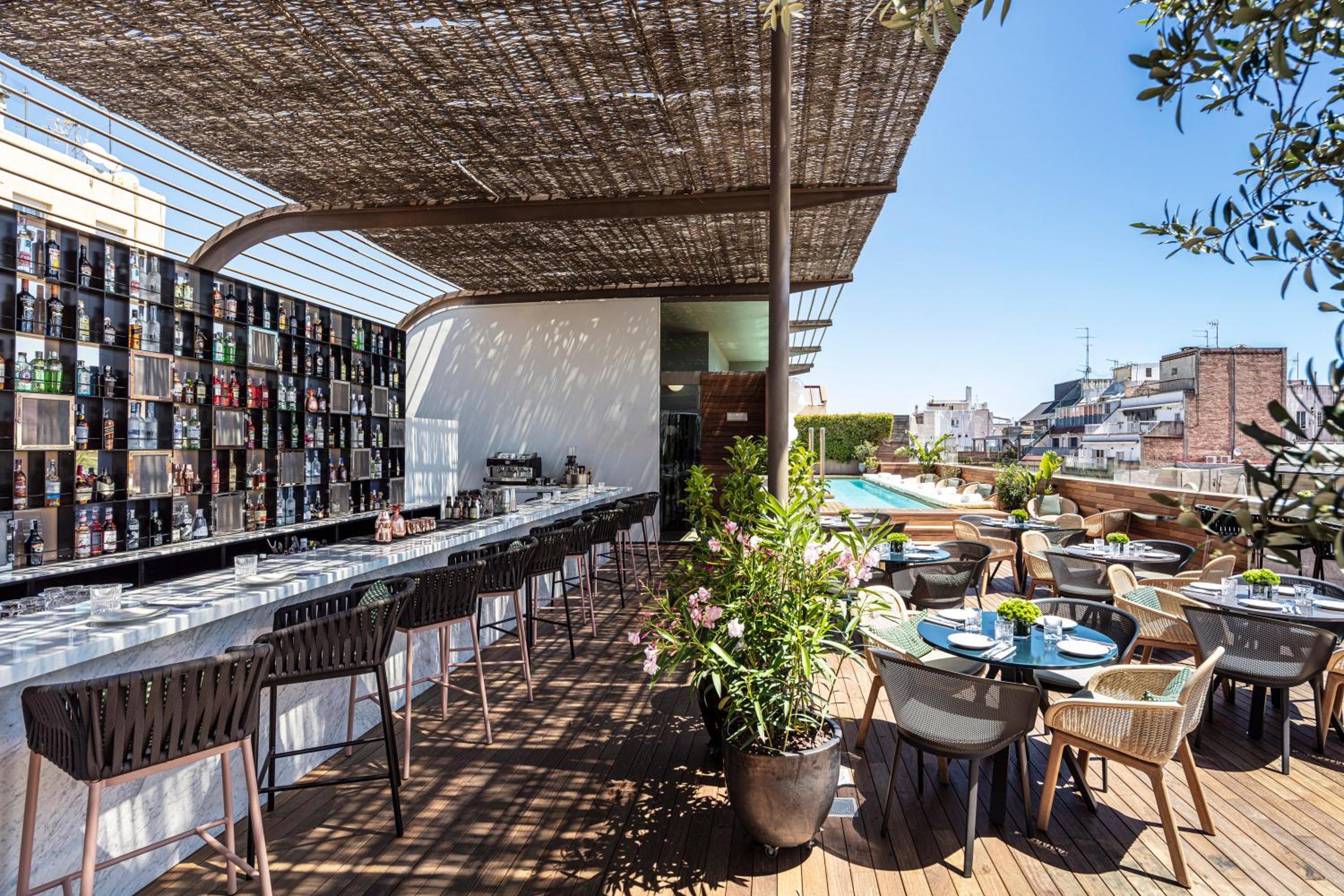
6. Almanac Barcelona — Gran Via. Gran Via de les Corts Catalanes 619, Eixample. 91 rooms, one of Barcelona's finest rooftop pools (the Sky Bar terrace with 360° city and sea views — the Mediterranean is visible from the 8th floor on clear days), the Rooftop restaurant, contemporary design aesthetic. Gran Via is quieter than Passeig de Gràcia, equally well-connected by metro (Urgell station), slightly better value. For design-conscious couples, rooftop-prioritising travellers, those who want Eixample quality at a slight price discount from Passeig de Gràcia.
7. Cotton House Hotel — Eixample. Gran Via 670, Eixample. 83 rooms in the 19th-century headquarters of the Fomento del Trabajo Nacional (the former industrial employers' federation) — the most dramatically vaulted public spaces of any Eixample hotel. The grand staircase and library have been preserved; the rooms are contemporary. The Batuar spa uses traditional Catalan botanical ingredients. For architecture enthusiasts, couples who want dramatic public spaces and quieter rooms, travellers who've done the obvious Passeig de Gràcia hotels.
Barceloneta and Port Olímpic — Beach and Sea
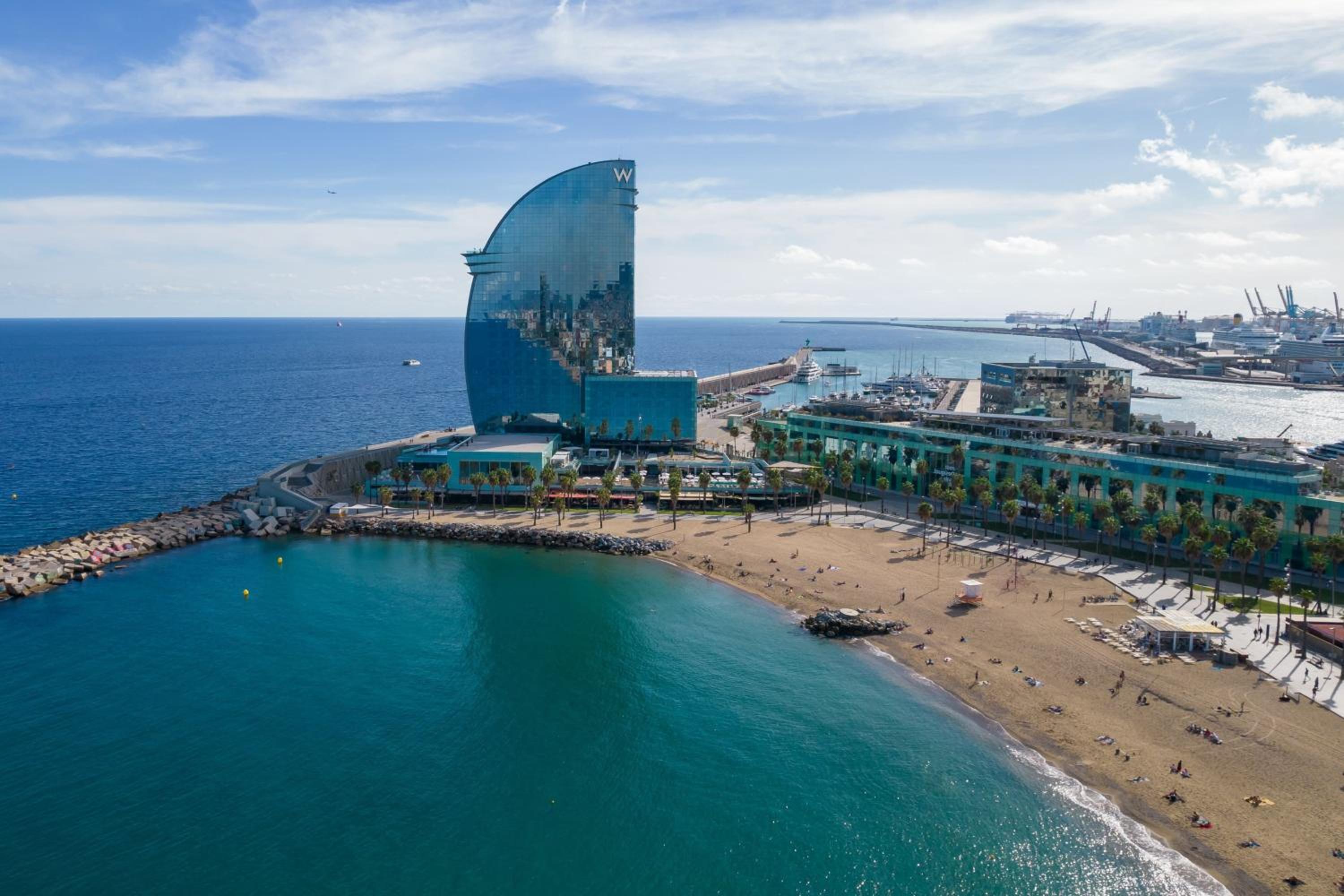
8. W Barcelona — Barceloneta. Plaça de la Rosa dels Vents 1, Barceloneta. The Sail — Ricardo Bofill's 26-floor curved tower at the end of the Barceloneta peninsula, completely surrounded by Mediterranean water on three sides. 473 rooms, the Eclipse rooftop bar (the most famous hotel bar in Barcelona, sunset views across the sea to the Balearic Islands on clear days), the WET beach club directly on the sand. For first-time Barcelona visitors who want both the beach and a statement hotel, groups, travellers who prioritise sea view and pool access.
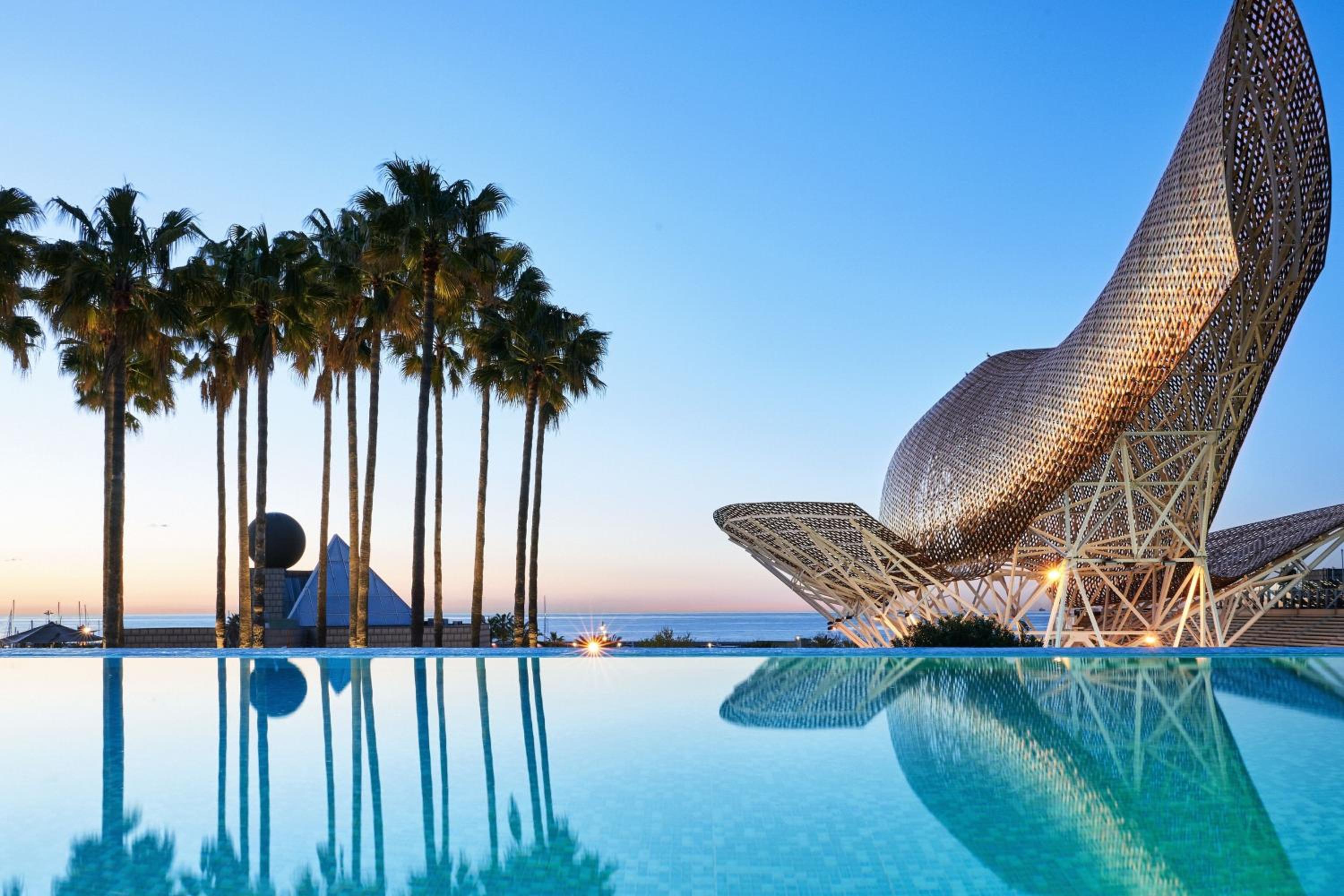
9. Hotel Arts Barcelona — Port Olímpic. Marina 19–21, Port Olímpic. 483 rooms in the Frank Gehry-adjacent tower (the neighbouring Torre Mapfre shares the skyline with Arts), directly on the Olympic marina and the Port Olímpic beach. The Ritz-Carlton-managed property — the most complete luxury beach hotel in the city, with the AROLA restaurant (Sergi Arola's two-Michelin-star Mediterranean menu), the outdoor infinity pool facing the sea, and the Six Senses spa on the 43rd floor. For luxury beach travellers, families wanting full resort facilities, travellers who want the sea view at five-star level.
10. Sir Victor Hotel — Eixample (Diagonal border). Carrer del Rosselló 265, upper Eixample. The Sir Hotels' Barcelona flagship — 91 rooms, the Doña Rosa rooftop pool and restaurant with 360° city views (the Sagrada Família spires are visible to the north-east, Tibidabo to the north-west, the sea glint to the south — the most complete Barcelona panorama of any hotel). The Sir Victor is technically Eixample but positioned at the upper Diagonal, making it equidistant between Eixample design culture and Gràcia neighbourhood (Barcelona's most genuinely local village district). For design travellers, couples, those who want the best rooftop view in the city.
Compare live Barcelona hotel prices →
Budget Barcelona Hotels Under £120 — Where to Actually Look
Straight answer: our current Barcelona hotel data pull doesn't yet stretch to a full curated sub-£120 tier the way our Las Vegas or Granada guides do, so we're not going to pad this list with hotels we haven't verified. What we can tell you, honestly, is where to look. Poble-sec, the hill neighbourhood below Montjuïc, and El Raval, west of Las Ramblas, run consistently cheaper than the Gothic Quarter, Eixample or Barceloneta zones covered above, with local vermut bars like Quimet i Quimet giving you a sense of the area before you book. Both sit on the metro network, five to ten minutes from the Gothic Quarter.
For live sub-£120 rooms on your actual dates, search Barcelona hotels and filter by price — city-wide inventory changes daily and a hotel that's £140 in August can be £95 in November. If a dedicated budget-tier Barcelona guide would help more than this note, that's a page we're planning to build out with the same street-level verification as our Granada and Las Vegas budget tiers.
Compare live Barcelona hotel prices →
Best Barcelona Hotels for Specific Trips
Not every Barcelona trip is a Passeig de Gràcia design weekend. Here's how the 10 hotels above sort by traveller type, so guests can match the right address to the right trip — whether the priority is a rooftop pool, a beachfront room, a working breakfast near the convention centres, or a quiet Gothic-Quarter honeymoon.
Best Barcelona Hotels Under £200 a Night (Mid-Range Value)
Yurbban Trafalgar Hotel in El Born is the strongest mid-range value in the medieval core — a boutique double with breakfast typically sits around £160–£200 in shoulder season, and you still get the rooftop pool with Sagrada Família sightlines that four-stars at this price rarely offer. Almanac Barcelona on Gran Via runs just above (roughly £210–£260) but delivers Eixample design quality at a clear discount to the Passeig de Gràcia addresses two blocks over. Both put you one metro stop from everything without charging Passeig-de-Gràcia rates for the postcode.
Best Barcelona Hotels for Families With Kids
Hotel Arts Barcelona is the strongest family pick — a full Ritz-Carlton-managed beach resort with an outdoor infinity pool facing the Mediterranean, the Port Olímpic beach on the doorstep, and connecting-room layouts across its 483 rooms. El Palauet Living Barcelona suits families wanting private-apartment scale: its six suites run 130–270 m² with a private chef available — effectively a serviced apartment on Passeig de Gràcia. W Barcelona works for older kids and teens who want the pool deck and beach club on the sand.
Best Barcelona Hotels for Couples and Honeymoons
Hotel Neri is the most romantic by atmosphere — a 22-room boutique in an 18th-century Gothic-Quarter palace facing one of the quietest squares in the medieval city, with a rooftop terrace level with the cathedral bell towers. Sir Victor is the most romantic by view: the Doña Rosa rooftop frames the Sagrada Família, Tibidabo and the sea in one 360° sweep. Cotton House Hotel is the quieter design-led pick, with dramatically vaulted public rooms and calm bedrooms set back from the Gran Via traffic. For an adults-only mood, Neri and Cotton House are the most grown-up addresses in the city — true adults-only-policy hotels are rare in Barcelona itself and cluster along the Costa Brava coast to the north.
Best Barcelona Hotels for Business Travel
Mandarin Oriental Barcelona is the business-and-prestige address — a converted 1950s bank on Passeig de Gràcia with full service, the Terrat rooftop for client drinks, and a 3-minute walk to Casa Batlló. Almanac Barcelona is the better-value working base, sitting on the Urgell metro line with quick connections toward the Fira convention centres at Plaça Espanya and Gran Via — the two venues most UK business travellers are actually in town for.
Best Barcelona Hotels for Spa and Wellness
Hotel Arts Barcelona wins on the Six Senses spa occupying the 43rd floor — the highest hotel spa in the city, treatment rooms looking out across the Mediterranean. Cotton House Hotel runs the Batuar spa built around traditional Catalan botanical treatments, the strongest dedicated wellness programme inside the Eixample grid. The beach hotels lead on wellness here; the Gothic-Quarter boutiques trade spa floors for medieval-palace atmosphere.
Best 5-Star Barcelona Hotels (Mandarin Oriental, Hotel Arts, W, Casa Fuster)
Spain grades its top hotels on the five-star scale, with the rare Gran Lujo (GL) designation reserved for the genuine flagship tier. Barcelona's GL addresses are Mandarin Oriental Barcelona (Passeig de Gràcia, the city's most prestigious address for a decade) and Hotel Arts Barcelona (the Ritz-Carlton-managed Port Olímpic tower). Just below them, the standout five-stars are W Barcelona (Ricardo Bofill's Sail on the Barceloneta peninsula) and Hotel Casa Fuster (the only hotel inside a UNESCO-listed Domènech i Montaner Modernista building). UK travellers paying £450+ a night should be at the Mandarin or Arts; £250–£350 puts you in W Barcelona or Casa Fuster territory.
Best Barcelona Hotels With a Swimming Pool
Where Vienna's grand hotels mostly skipped pools, Barcelona made the rooftop pool its signature hotel amenity. The best of them: Almanac Barcelona's Sky Bar pool on the 8th floor (city, with a sea glimpse on clear days), Yurbban Trafalgar's rooftop pool framing the Sagrada Família spires, Hotel Casa Fuster's rooftop pool facing Tibidabo, and Mandarin Oriental's Terrat pool above Passeig de Gràcia. For a pool on the sea itself, Hotel Arts has the outdoor infinity pool at Port Olímpic and W Barcelona has the WET deck directly on the Barceloneta sand. Families should book Hotel Arts; rooftop-sunset couples should book Almanac or Sir Victor.
Best Barcelona Hotels With a View
Sir Victor's Doña Rosa rooftop has the most complete panorama of any Barcelona hotel — Sagrada Família to the north-east, Tibidabo to the north-west, the Mediterranean glinting to the south. W Barcelona's Eclipse bar, 26 floors up at the tip of the Barceloneta peninsula, has the purest sea view, out toward the Balearics at sunset. Almanac's Sky Bar catches both city and sea from Gran Via, and Hotel Neri's Gothic-Quarter rooftop sits level with the cathedral bell towers — the most medieval view in the city. For Sagrada Família sightlines specifically, Sir Victor and Yurbban Trafalgar have the clearest hotel rooftops.
How Barcelona Compares to Madrid and Valencia
The three great cities of mainland Spain — Madrid, Barcelona and Valencia — each present a different hotel proposition. Madrid is the political and royal capital (Hotel Ritz, Mandarin Oriental Ritz, Four Seasons Madrid), with Habsburg and Bourbon palaces and a tapas culture concentrated around La Latina. Valencia is the Mediterranean third-place capital, three hours south by AVE — the Calatrava-designed City of Arts and Sciences, the freshest paella in Spain, and hotel pricing roughly 30% below Barcelona.
Barcelona's hotel inventory edges Madrid on two specific axes. First, Modernisme: no hotel in Madrid sits inside a UNESCO-listed Domènech i Montaner Modernista building the way Hotel Casa Fuster does, and no Madrid property has Sagrada Família sightlines like Sir Victor's Doña Rosa rooftop. Second, beach: Madrid is landlocked, Barcelona has 4km of city beach 20 minutes from the Gothic Quarter, and W Barcelona and Hotel Arts deliver beach-and-city in a single property in a way Madrid cannot replicate. Valencia rivals Barcelona on Mediterranean access but is half the size and lacks the architectural density.
For UK travellers, the right combination depends on budget: a Madrid–Barcelona AVE pair (2h 45m on the high-speed train, €30–60 each way) is the canonical first-time Spain trip; adding Valencia (3 hours from Madrid, 3 hours from Barcelona) makes a 9-night triangle that covers Castile, Catalonia and the Levante.
Zoom out to Europe and Barcelona's closest design-hotel peer isn't Spanish at all — it's Milan, another city where 19th/20th-century design heritage (Modernisme here, Italian design culture there) shapes the hotel scene as much as the sights do. For pure city-break comparison on price and flight time from the UK, Paris is the other short-haul benchmark most UK travellers weigh against a Barcelona trip.
Barcelona Rooftop Bar Master Guide 2026
Rooftop access drives hotel choice in Barcelona as much as neighbourhood. Here's the head-to-head:
| Bar | Hotel | View | Open to non-guests? |
|---|---|---|---|
| Eclipse | W Barcelona | Sea + city 360° | Yes (cover charge peak hours) |
| Terrat | Mandarin Oriental | Passeig de Gràcia + city | Yes |
| Sky Bar | Almanac Barcelona | City + sea glimpse | Yes |
| Doña Rosa | Sir Victor | Sagrada Família + sea + Tibidabo | Yes |
| Rooftop | Yurbban Trafalgar | Gothic Quarter + Sagrada | Yes |
| Café Vienès roof | Hotel Casa Fuster | Tibidabo + upper Eixample | Yes |
Barcelona's 10 Essential Experiences 2026
1. Sagrada Família — book towers access. The basic ticket grants nave access. The tower ticket (either the Nativity or Passion towers — book the Nativity for the better view) adds the lift to the tower gallery with Barcelona's highest publicly accessible view. Book at least 4–6 weeks ahead in summer. Early morning (9am opening) before tour groups.
2. Park Güell — book the Monumental Zone. The free outer park is pleasant. The ticketed Monumental Zone (the mosaic terrace, the hypostyle room, the gingerbread gatehouses) is the Gaudí experience. Limited daily tickets — book online weeks ahead.
3. La Boqueria — before 10am. The covered market on Las Ramblas is genuinely outstanding at 8–9am when restaurant chefs are shopping. After 10am it becomes a tourist scrum. The best stalls are at the sides and rear, not the fruit-stand front.
4. Palau de la Música Catalana — guided tour or evening concert. The most extraordinary interior of any concert hall in Europe — Domènech i Montaner's Art Nouveau stained-glass ceiling floods the auditorium with coloured light. Guided tours run daily. An evening concert in the hall is a Barcelona experience that sits alongside the Sagrada Família for emotional impact.
5. El Born – Sant Pere — Tuesday morning. The El Born neighbourhood's best day is Tuesday morning — the local market at Mercat de Santa Caterina, the Picasso Museum before tour groups, the best coffee in Barcelona at Bar del Pla. The whole circuit takes 3 hours.
6. Tibidabo mountain and amusement park. The mountain above the city (512m), accessible by historic tram (the Tramvia Blau, in service since 1901) and funicular. The views from the Tibidabo Amusement Park (1901, the oldest still-operating in Spain) cover the entire Barcelona metropolitan area and the Pyrenees. Worth it for the funicular ride and the view alone, even without the park.
7. Camp Nou — FC Barcelona tour or match. The most attended football stadium in Europe (capacity 99,354). Stadium tours run daily (book ahead). Match tickets for the 2025–26 La Liga season should be booked through FC Barcelona's official site — third-party resellers charge 3–4× face value.
8. Sitges day trip. 35 minutes south by RENFE commuter train (R2 Sud), Sitges is where Barcelona goes to the beach — a whitewashed Catalan coastal town with better sand than Barceloneta, a Carnival that rivals Venice (February), and a wine culture (the Penedès wine region begins here). Walk the old town, eat at El Vivero (seafood terrace directly on the Bassa Rodona beach), return.
9. Gràcia neighbourhood — the real Barcelona. The village within the city — Gràcia has its own distinct identity from Barcelona proper (it was an independent town until 1897). The Plaça del Sol and Plaça de la Vila de Gràcia are where Barcelona's young professionals eat and drink. The best pintxos bars in the city are on Carrer de Verdi. The Festa Major de Gràcia (mid-August) turns every street into a decorated corridor for a week.
10. Montjuïc — castle, pavilion, gardens, cable car. The hill above the port — the Mies van der Rohe Pavilion (the most influential building of the 20th century, reconstructed), the Fundació Joan Miró, the Anella Olímpica (1992 Olympic stadium and Calatrava's communications tower), the Montjuïc Castle (panoramic city and sea views), the cable car from Barceloneta beach directly to the summit. A full day.
11. Vermut hour at Bodega Quimet (Quimet i Quimet) — Poble-sec. Carrer del Poeta Cabanyes 25. The 110-year-old standing-room-only bodega in Poble-sec (the hill below Montjuïc) is where Barcelona's late-night crowd ends up after the Eixample restaurants close — vermut on tap (the bitter, herb-infused fortified wine that is Catalonia's national aperitif, served over ice with an olive and an orange slice), montaditos (small open-faced toasts with anchovies, tinned mussels, and the family's house tomato), the entire bar lined floor-to-ceiling with wine bottles and conserva tins. Open from midnight on weekends. No seating — you stand at the marble bar with the regulars. The vermut ritual is the most Barcelonan ritual you can engage in, and Quimet i Quimet is the platonic ideal of how the Catalans drink it.
UK Flights and Practicalities
Direct UK–Barcelona: British Airways, Vueling, Ryanair and easyJet all operate frequent LGW/LHR/STN/MAN–BCN services. Flight time 2 hours 10 minutes. Among the most competitive routes in Europe — book 6–8 weeks ahead for best fares. The Aerobus from BCN airport to Plaça de Catalunya runs every 5 minutes (€6.75, 35 minutes).
UK visa: No visa required for UK passport holders (reciprocal agreement post-Brexit covers 90 days in any 180-day period across the Schengen Area).
Currency: Euro. Contactless and card widely accepted. ATMs on every Passeig de Gràcia block. Tip 5–10% in restaurants (not mandatory but appreciated).
Weather: Mediterranean climate — hot dry summers (25–32°C June–September), mild winters (10–15°C December–February). Best months: May, June, September, October. July–August is peak heat and crowd; the beach is excellent but the city is very hot.
Ready to Book?
Use JetMeAway's hotel search to compare live prices across all ten properties, see real photos, and book in under 90 seconds. No spam, no upsells, no phone calls.
Frequently asked questions
Is Barcelona safe for UK tourists?
Best Barcelona hotel near Sagrada Família?
When is the best time to visit Barcelona?
How many days do I need in Barcelona?
What's the cheapest area to stay in Barcelona?
Does Barcelona charge a tourist tax?
Can you walk to Sagrada Família from a hotel?
Are there direct UK flights to Barcelona?
What are the best months to visit Barcelona to avoid the heat?
Is Barcelona expensive compared to other Spanish cities?
Which Barcelona neighbourhood is best for a first-time visitor on a budget?
How much does a hotel room in Barcelona cost per night?
Is the Barcelona metro easy to use for hotel-hopping between neighbourhoods?
Do I need to book Sagrada Família tickets before I arrive?
Are hostels or budget guesthouses a realistic option in Barcelona?
Is it worth paying more to stay in the Gothic Quarter versus Eixample?
What's the deal with pickpocketing near budget accommodation?
Can I get from the airport to a budget hotel without a taxi?
Which is cheaper, a package holiday or booking a Barcelona hotel separately?
Do hotels in Barcelona include breakfast?
Is Barcelona good for a budget weekend break from the UK?
What's the best value time of day to fly to Barcelona to save money?
Are there budget-friendly alternatives to Passeig de Gràcia for design-focused travellers?
How far in advance should I book a Barcelona hotel to get the best rate?
Is Barceloneta safe to stay in on a budget?
Do all these hotels have air conditioning?
What's the best way to compare live prices across all ten hotels quickly?
Read next

Plan Your 2026 Trip Now
Use the JetMeAway Scout to compare live prices across 15+ trusted providers. Zero booking fees.
Start Searching