
Best Vienna Hotels 2026: Sacher, Imperial & 8 More

Our top Vienna hotel pick for 2026 is Hotel Sacher Wien for the address that defines Vienna hospitality, with Hotel Imperial Vienna for the grandest physical hotel space in Austria and Hotel Altstadt Vienna in the creative 7th district for repeat visitors. Vienna is the only European capital that makes no apology for being nostalgic — the Ringstrasse, St Stephen's Cathedral, the Hofburg, the coffeehouse culture, and the grand hotels are still civic institutions, not just bookable rooms. Austria's former imperial capital still wears the Habsburg architectural ambitions of the 19th century on its sleeve, and the hotels along the Innere Stadt's grand boulevards are central to that experience.
We've ranked 10 hotels across imperial Ringstrasse Vienna and the contemporary 7th-district scene — the official Austria tourism board is a useful starting point for planning the wider trip. Compare live Vienna hotel prices or search UK flights to Vienna International (VIE) — BA, Austrian Airlines, easyJet and Ryanair fly LHR/LGW/STN/MAN-VIE in 2h20m.
At a glance — here's how the hotels below compare on location, ideal traveller and signature feature, before the full reviews:
| Hotel | Neighbourhood / Area | Best For | Standout Feature |
|---|---|---|---|
| Hotel Sacher Wien | Innere Stadt (1st District), Philharmonikerstraße | Couples & honeymoons | Café Sacher serves the genuine Original Sachertorte |
| Hotel Imperial Vienna | Innere Stadt (1st District), Kärntner Ring | Families with kids | Former 1863 palace, grandest hotel space in Vienna |
| Hotel Bristol Vienna | Innere Stadt (1st District), Kärntner Ring | Business travel | Opposite the State Opera, stage door 100 metres away |
| Grand Hotel Wien | Innere Stadt (1st District), Kärntner Ring | Ringstrasse on a budget | Le Ciel rooftop has finest Ring view of any hotel |
| Palais Coburg Residenz | Innere Stadt (1st District), Coburgbastei | Romantic suite stays | 60,000-bottle palace wine cellar, largest in Europe |
| The Guesthouse Vienna | Innere Stadt (1st District), Führichgasse | Self-catering travellers | Conran-designed rooms with full kitchens, 24-hour butler |
| Hotel Altstadt Vienna | 7th District (Neubau), Kirchengasse | Repeat creative visitors | Owner-curated rotating art collection |
| Das Triest Vienna | 4th District (Naschmarkt), Wiedner Hauptstraße | Design-led couples | Converted 17th-century postal-coach stable, Conran interiors |
| 25hours Hotel Vienna | 7th District, Lerchenfelder Straße | Mid-range design & culture | LOLO rooftop bar at the MuseumsQuartier entrance |
| Park Hyatt Vienna | Innere Stadt (1st District), Am Hof | Spa & families with pool | Spa pool inside a converted 1915 bank gold vault |
The Scout's Take: Ringstrasse or Creative Vienna?
The Ringstrasse — Emperor Franz Joseph's 1857 grand boulevard — frames the city's identity: the Opera, the Kunsthistorisches Museum, Parliament, the Rathaus. The hotels that line it (Sacher, Imperial, Bristol) are not hotels in the way a Hilton or Marriott is — they are institutions. Sacher has the Sachertorte ceremony (the chocolate cake at the centre of a 1954–1963 lawsuit with the Demel pastry shop). Imperial has the Café Imperial where Mahler, Bruckner and Wagner drank. Bristol has the direct tunnel to the Staatsoper stage door.
For first-timers and opera-focused trips, choose Ringstrasse. The Opera, the Albertina, the Kunsthistorisches are 10-minute walks from any 1st-district hotel.
For repeat visitors, the 7th district (Neubau) and the 4th district (Naschmarkt) are where Viennese creative life concentrates — natural wine bars, independent galleries, the Burg Kino still screening The Third Man in original English. Hotel Altstadt and Das Triest are the boutique scene's anchor properties.
Our 10 Best Vienna Hotels for 2026
Innere Stadt & Ringstrasse: The Imperial-Era Grandes Dames
The Innere Stadt (1st District) is Vienna's UNESCO-listed historic core — the Ringstrasse boulevard frames it like a horseshoe, and inside that ring sit the Hofburg imperial palace, St Stephen's Cathedral, the Opera, and the addresses where Habsburg Austria's grand hotels have stood since the 1870s.
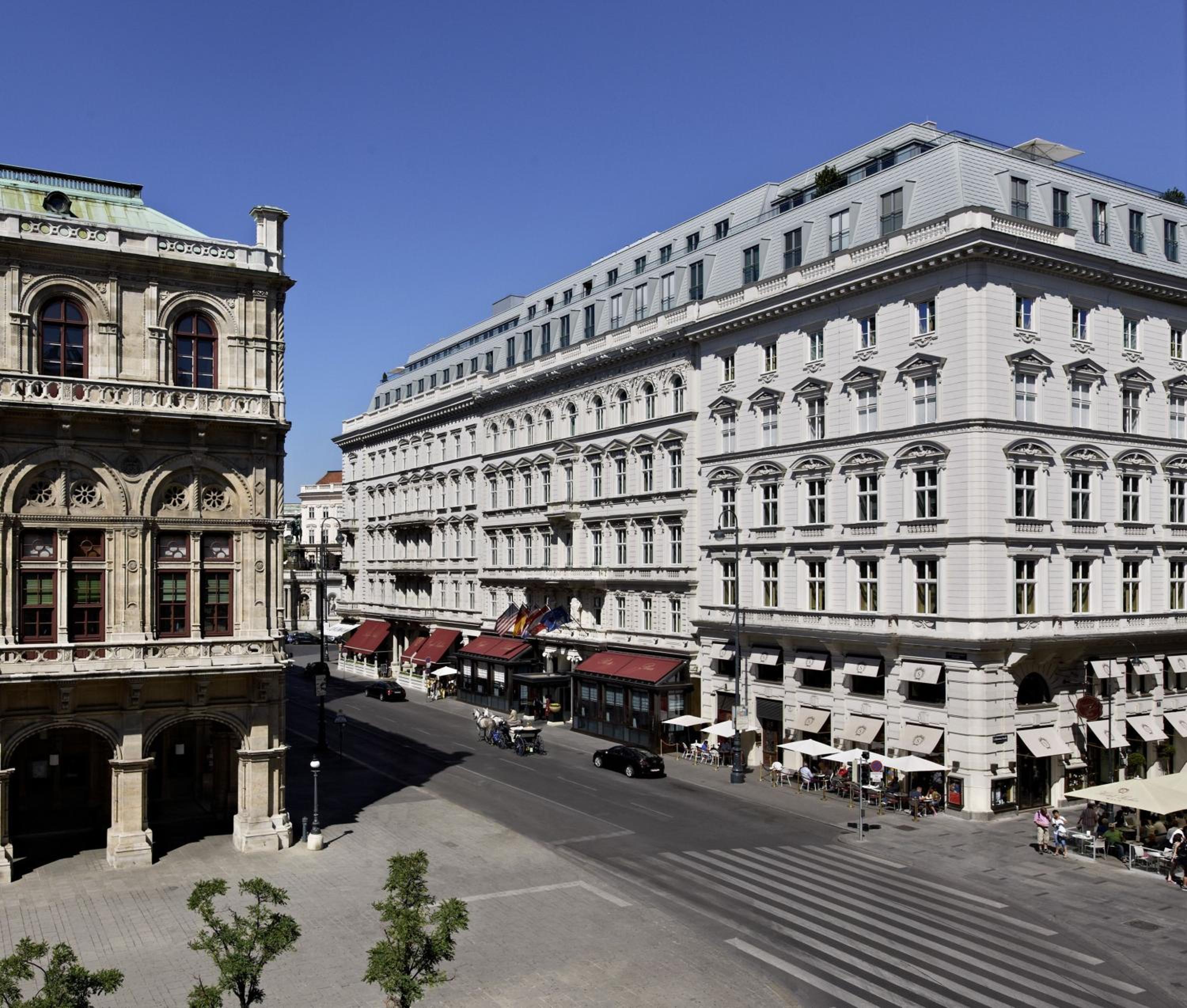
Hotel Sacher Wien: Best Luxury Hotel Near the Vienna State Opera
1st District, Philharmonikerstraße 4 (behind the State Opera). 149 rooms, opened 1876 by Eduard Sacher (son of Franz Sacher, creator of the Original Sachertorte). The Red Bar, the Anna Sacher Suite, the Café Sacher where the genuine Sachertorte is served with Schlagobers. The most historically loaded hotel in Vienna — and the closest five-star to the Staatsoper stage door for UK opera travellers.
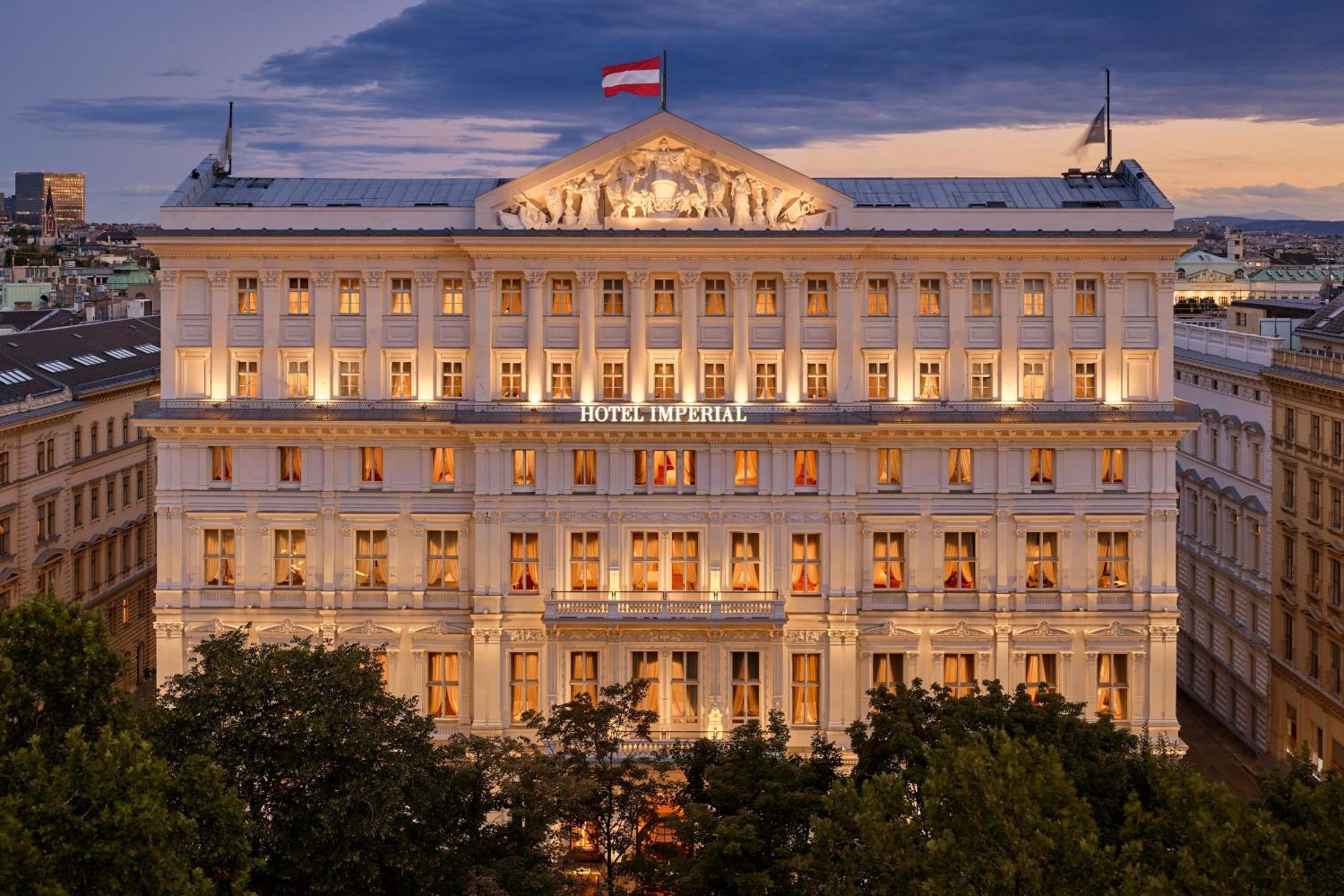
Hotel Imperial Vienna: Best Palace Hotel on the Ringstrasse
1st District, Kärntner Ring 16. 138 rooms in a former palace built for the Duke of Württemberg in 1863, converted into a hotel for the 1873 World Exhibition. The grandest physical hotel space in Vienna — palace staircases, the Imperial Suite, the Café Imperial's marble columns. The Imperial Torte (almond marzipan) competes with the Sacher's chocolate for Vienna's definitive pastry title.
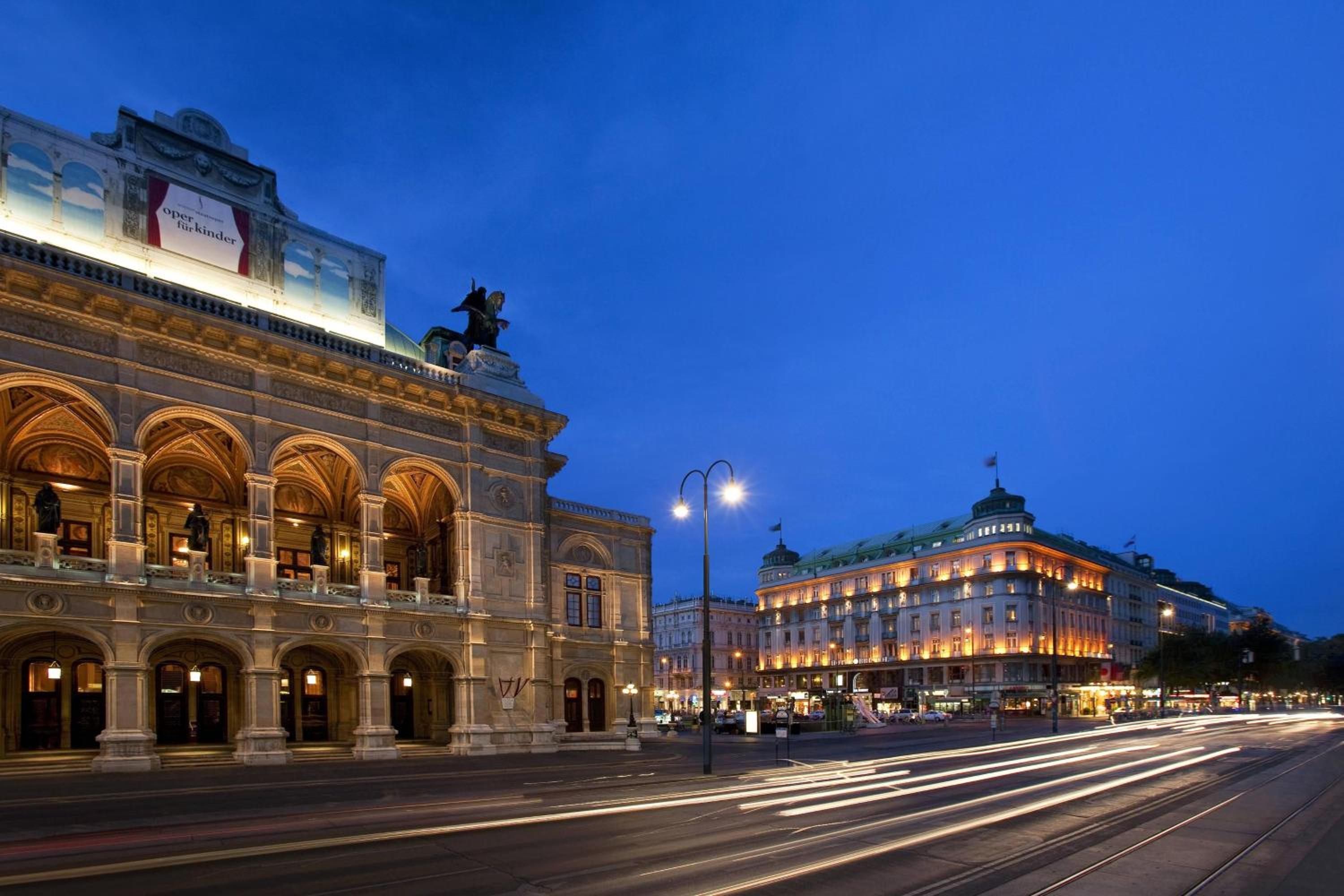
Hotel Bristol Vienna: Best Hotel for Opera Performers and Music Lovers
1st District, Kärntner Ring 1 (opposite the State Opera). 150 rooms — the Staatsoper stage door is 100 metres away and the Bristol has historically offered a direct connection for performers. The bar has been the post-performance gathering point for Vienna's musical world for 125 years.
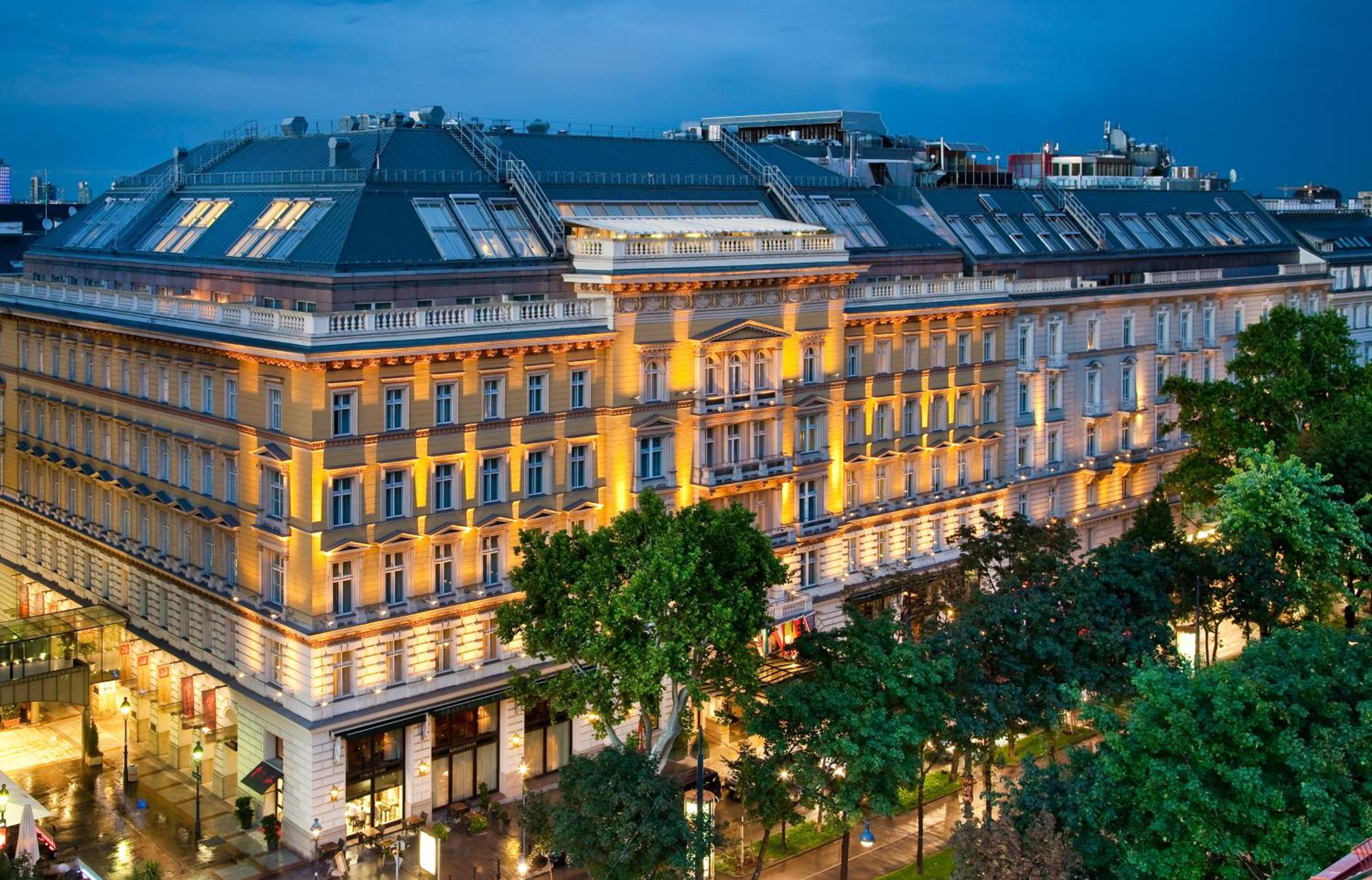
Grand Hotel Wien: Best Ringstrasse Hotel With Rooftop Restaurant Views
1st District, Kärntner Ring 9. 205 rooms in the original 1870 Grand Hotel — the first hotel on the Ringstrasse. The Le Ciel restaurant on the 7th floor has the finest Ring view from any hotel restaurant in Vienna. For first-timers who want a Ringstrasse address slightly below Sacher or Imperial pricing.
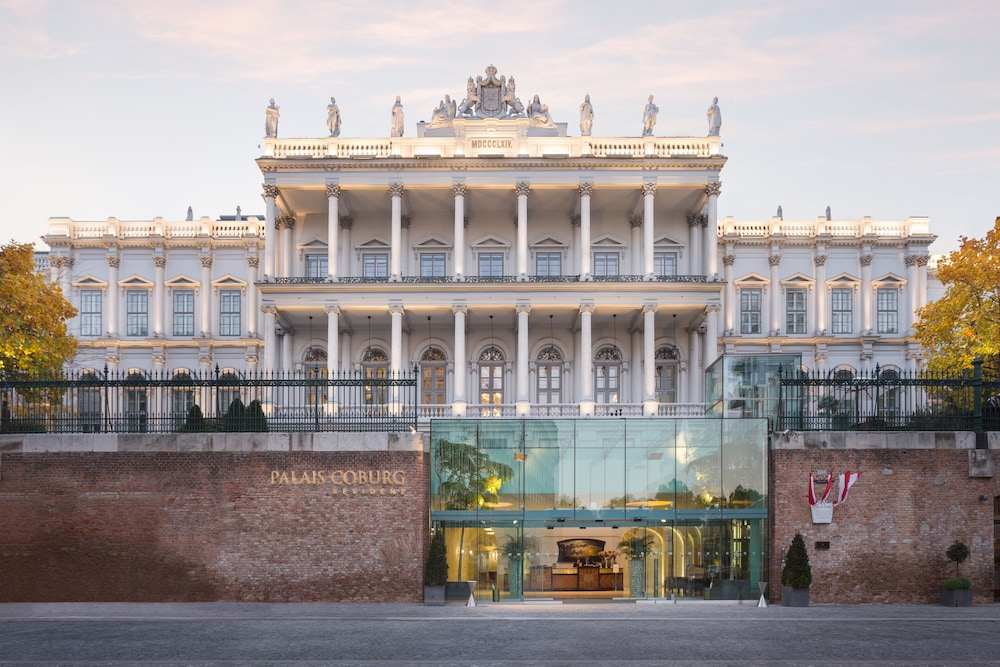
Palais Coburg Residenz: Best Suite Hotel With a Private Palace Wine Cellar
1st District, Coburgbastei 4. 35 suites in the former palace of the Duke of Coburg — full apartment scale, separate living and sleeping areas, the palace wine cellar (60,000 bottles, the largest hotel wine cellar in Europe). One street from the Stadtpark. The most private large-scale accommodation in Vienna.
Belvedere, Karlsplatz & the Creative 7th District
The southern flank of the Ringstrasse leans into the Belvedere palace complex (Klimt's Kiss lives in the Upper Belvedere), the Karlskirche dome, and the Naschmarkt — a slightly quieter Vienna than the Hofburg side, but with the city's strongest museum and market combination. The 7th district (Neubau) sits behind the MuseumsQuartier and is where Vienna's contemporary creative life concentrates.
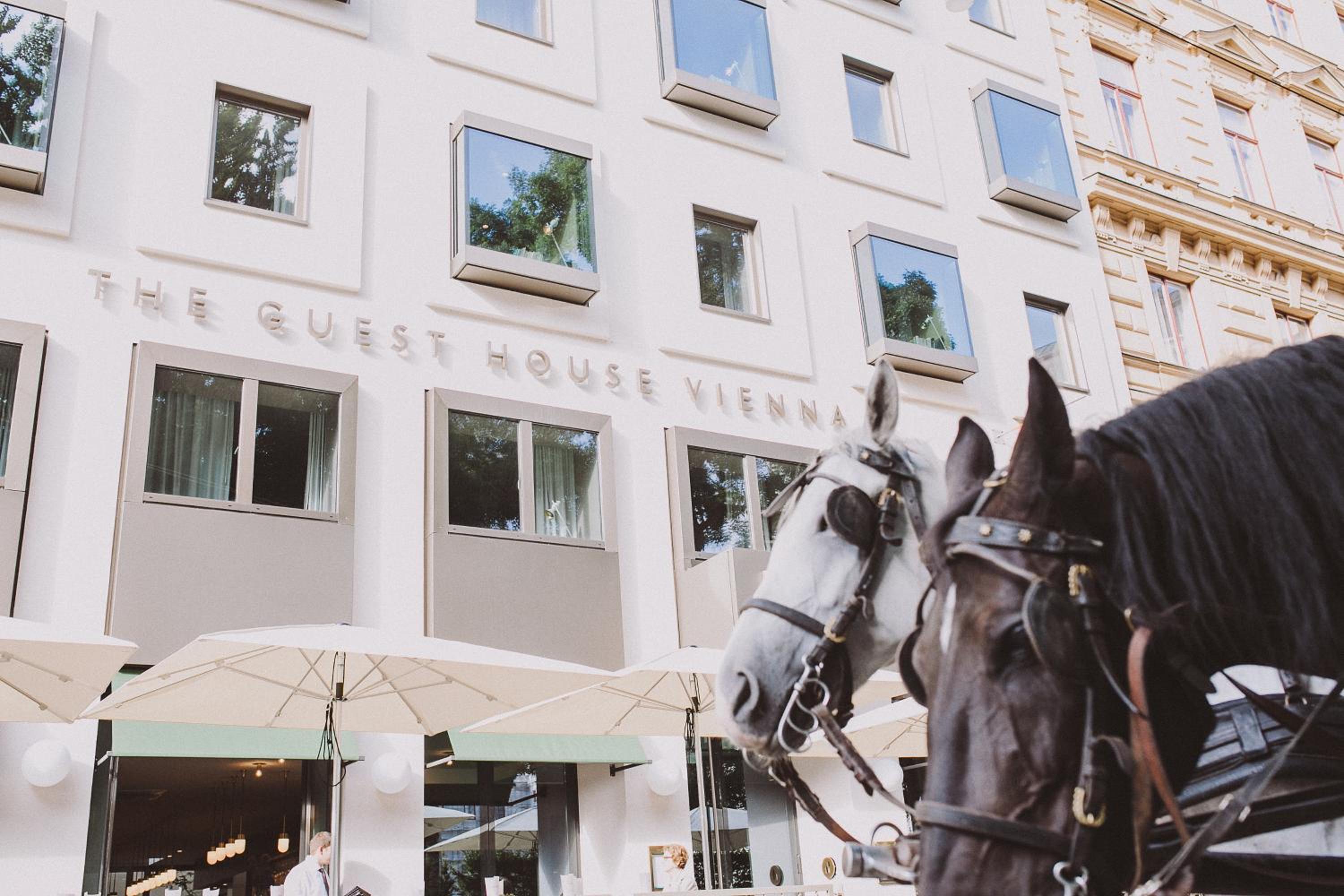
The Guesthouse Vienna: Best Boutique Hotel Near the Albertina Museum
1st District, Führichgasse 10. 39 rooms designed by Sir Terence Conran — the most restrained luxury boutique in the 1st district. Each room with a fully equipped kitchen, 24-hour butler service. Between the Albertina and the Opera — arguably the finest position in the cultural quarter for self-catering travellers.
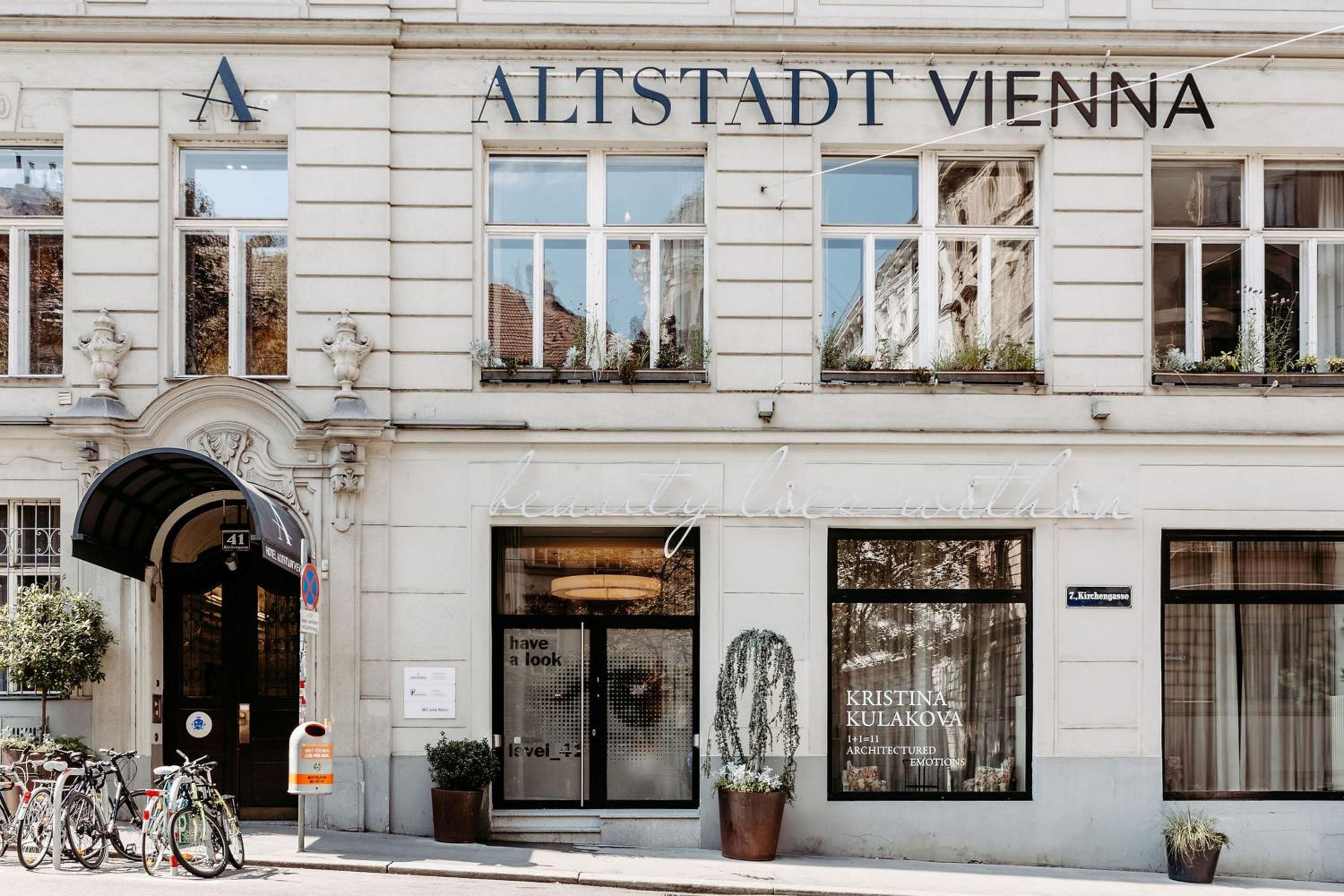
Hotel Altstadt Vienna: Best Boutique Hotel in the 7th District (Neubau)
7th District (Neubau), Kirchengasse 41. 44 rooms in a late-19th-century manor house on a quiet 7th-district street. The owner-curated art collection (rotated regularly with Vienna's gallery circuit) is one of the finest in any European boutique hotel. For repeat visitors who want creative Vienna over imperial Vienna.
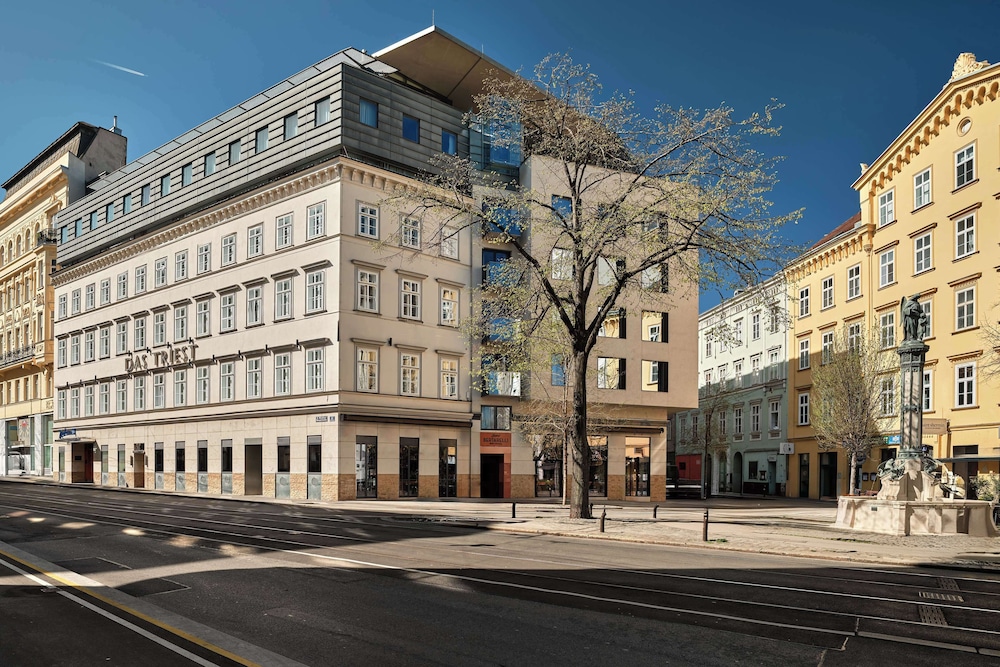
Das Triest Vienna: Best Design Hotel Near the Naschmarkt
4th District (Naschmarkt), Wiedner Hauptstraße 12. 72 rooms in a converted 17th-century stable — the original terminus of the Vienna-Trieste postal coach route. Sir Terence Conran's interiors. The courtyard garden is the finest hotel outdoor space outside the grand Ring hotels. Between the Naschmarkt and the MuseumsQuartier.
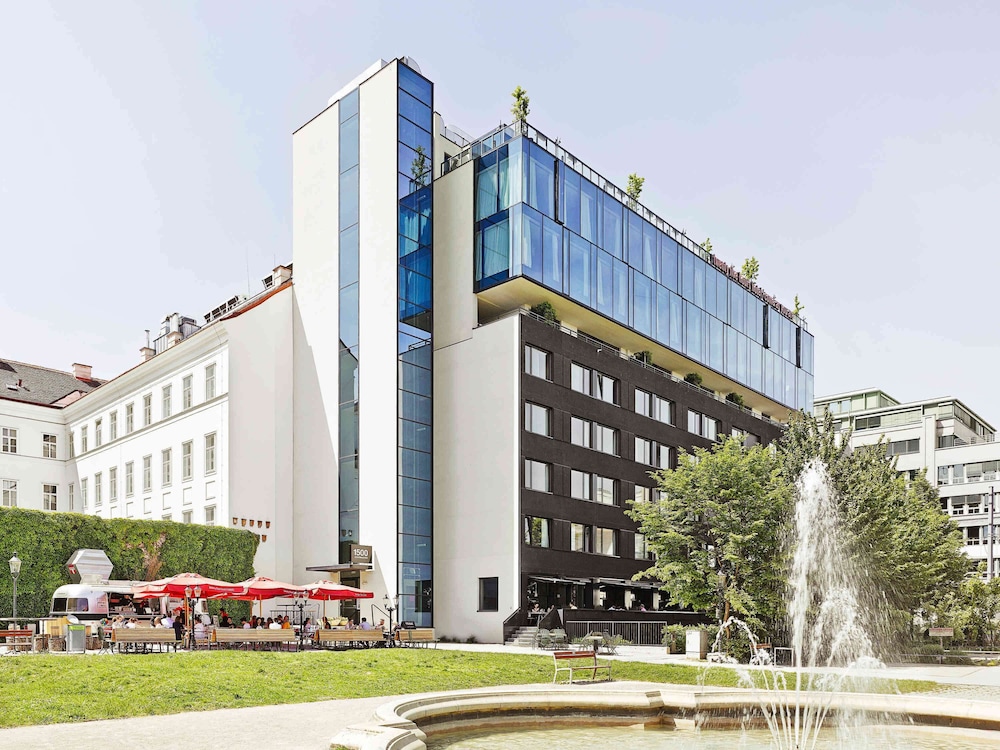
25hours Hotel Vienna: Best Affordable Design Hotel at the MuseumsQuartier
7th District, Lerchenfelder Straße 1–3. 217 rooms directly at the MuseumsQuartier entrance. The LOLO rooftop bar has MuseumsQuartier and 7th-district views. Biedermeier references through contemporary graphic design. For design and culture travellers on a mid-luxury budget.
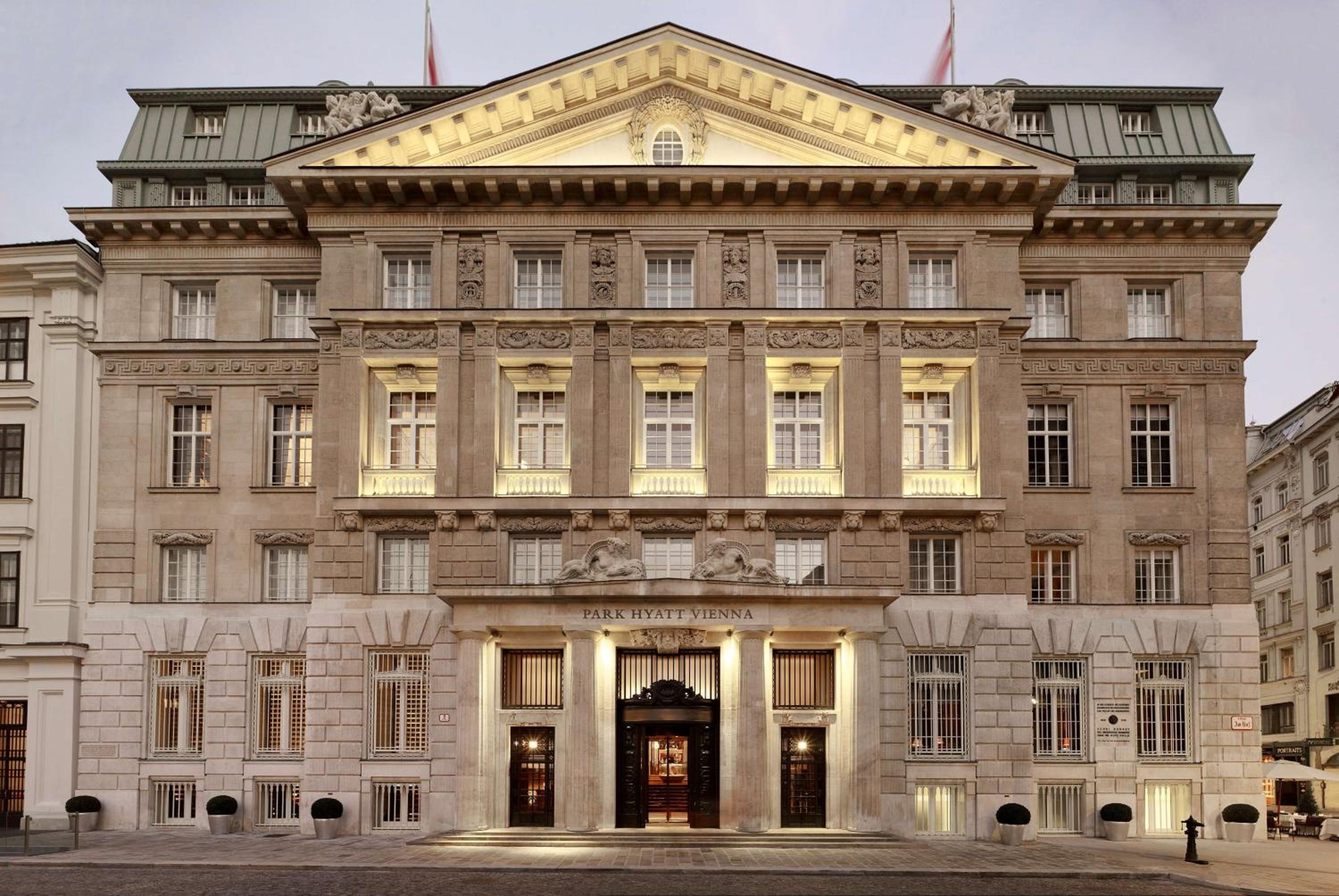
Park Hyatt Vienna: Best Contemporary Luxury Hotel Near St Stephen's Cathedral
1st District, Am Hof 2. 143 rooms in a converted Beaux-Arts banking hall — the original gold vault is now The Arany Spa pool. Centrally positioned in the 1st district between St Stephen's Cathedral and the Hofburg. For travellers who want contemporary 1st-district luxury at international-chain scale.
Honorable Mention: Rosewood Vienna for a Modern Petersplatz Address
Rosewood Vienna — 1st District, Petersplatz 7. 99 rooms in the restored 19th-century Erste Bank headquarters, opened by Rosewood in 2022 — a careful contemporary luxury reading of Habsburg-era banking grandeur. The rooftop bar (Asma) has the closest direct view of St Stephen's Cathedral's south tower of any hotel rooftop in Vienna. For travellers who'd otherwise stay Sacher or Imperial but want a 21st-century arrival and a slightly quieter Petersplatz address.
How Vienna Compares to Prague and Budapest
The three Habsburg capitals are routinely sold as a Central European triangle, and the hotel scenes reflect their post-imperial trajectories. Vienna is the most expensive of the three — a Hotel Sacher or Imperial suite costs roughly twice a Four Seasons Prague room and three times a Four Seasons Gresham Palace Budapest equivalent — but you're paying for the highest density of preserved imperial-grade hotel infrastructure in Europe. Austria never had Prague's Communist housing-block decades or Budapest's hard 1990s restitution gap, so the Ringstrasse grandes dames have run continuously since the 1870s.
Where Prague delivers Baroque drama on a budget and Budapest delivers thermal-bath theatre at extraordinary value, Vienna delivers the Habsburg world as it was meant to look — the Imperial Suite at Hotel Imperial really did host visiting heads of state for the 1873 World Exhibition, and the Café Sacher really did invent the cake that the city now exports to 50 countries. UK travellers doing a multi-city Central Europe trip usually find the right rhythm is Vienna for the imperial bones, Prague for the medieval skyline, Budapest for the spa nights — in that order, three nights apiece. And if you're expanding the tour beyond the Habsburg triangle, our best Rome hotels guide for 2026 breaks down where to stay across Ancient, Renaissance and Living Rome — from Colosseum-view terraces to Trastevere courtyards. Within Austria, Graz, the second city, is about 2 hours 30 south of Vienna on the direct railjet.
Best Vienna Hotels for Specific Trips
Not every Vienna trip is a Sacher-and-Sachertorte luxury weekend. Here's how the 10 hotels above sort by traveller type so guests can match the right address to the right trip — whether the priority is a swimming pool, a working breakfast, a private palace tour, or a quiet Ringstrasse honeymoon room.
Best Vienna Hotels Under £230 a Night (Mid-Range & Budget)
The 25hours Hotel Vienna at the MuseumsQuartier consistently sits between £180–£230 a night for a double with breakfast, which is the strongest mid-range value in the 1st-district orbit. The Guesthouse Vienna runs £200–£260 just behind the Albertina and includes a proper Viennese breakfast with Manner wafers and Demmers tea — the cheapest way to stay 90 seconds from the State Opera. For under £160 a night, the Magdas Hotel near the Prater (social-enterprise hotel staffed by refugees, single rooms from €120) is the city's best "do-good" budget pick, though it sits outside the 10 above.
Best Vienna Hotels for Families With Kids
Park Hyatt Vienna is the strongest family pick because the basement holds Vienna's only 5-star hotel indoor swimming pool inside a converted 1915 bank vault — kids can swim under preserved gold-leaf ceilings. Connecting rooms available. Hotel Imperial also takes families and the Café Imperial breakfast room is large enough for prams, though no pool. Avoid Palais Coburg with under-10s — it's an adult palace-residence atmosphere.
Best Vienna Hotels for Couples and Honeymoons
Hotel Sacher Wien is the most romantic by reputation (Sachertorte and Anna Sacher's Bar in one address); Palais Coburg Residenz is the most romantic by architecture — a private 19th-century palace with a wine cellar that holds 60,000 bottles including 6 vintages of Château d'Yquem from the 1700s. Das Triest Vienna is the quieter design-led couple's pick at half the rate.
Best Vienna Hotels for Business Travel
Hotel Bristol Vienna is across the road from the State Opera and a 4-minute walk to the Hofburg — historically the embassy district's hotel of choice, large business-class rooms, full meeting facilities. Grand Hotel Wien has the largest dedicated meeting floor of any Ringstrasse hotel.
Best Vienna Hotels for Spa and Wellness
Park Hyatt wins again on the basement spa with the historic indoor pool. Rosewood Vienna (honorable mention above) has the strongest dedicated spa programme of any 1st-district hotel, with a Vienna-Forest-themed treatment menu. None of the imperial-era Ringstrasse grandes dames have full spa floors — that's a feature of the new-build / restored 2020s wave, not the 1870s palaces.
Best 5-Star Vienna Hotels (Sacher, Imperial, Bristol, Park Hyatt)
The 5-star Vienna hotel field is narrower than the city's reputation suggests — fewer than a dozen properties hold the official 5-star Superior designation from the Austrian Hotel Association. The four 5-star addresses worth booking through JetMeAway are Hotel Sacher Wien (5-star Superior, the gold standard since 1876), Hotel Imperial Vienna (5-star Superior, the original Habsburg state-guest hotel from 1873), Hotel Bristol Vienna (5-star, opposite the State Opera), and Park Hyatt Vienna (5-star, the most modern 5-star in the 1st district). The 5-star Superior tier requires 600+ Austrian Hotel Association points vs the standard 5-star's 570 — the practical difference is butler service, 24-hour room service, and a guaranteed concierge desk. UK travellers paying £450+ a night should be on Sacher or Imperial; £350 will get you Bristol or Park Hyatt; under £300 you're in 4-star territory.
Best Vienna Hotels With a Swimming Pool
Vienna's grand hotels overwhelmingly skipped pools — Habsburg-era luxury didn't think of swimming as a hotel amenity, so the Ringstrasse grandes dames (Sacher, Imperial, Bristol, Grand) all have spas without pools. The shortlist of central Vienna hotels with proper indoor swimming pools: Park Hyatt Vienna has the city's most distinctive — a 15-metre indoor pool in a converted 1915 bank vault under preserved gold-leaf ceilings. Hotel Imperial Riding School Renaissance (Trabrennstraße 2b, 3rd district) has a 22-metre indoor pool plus an outdoor pool in the courtyard — the largest hotel pool inside Vienna's S-Bahn ring. Hilton Vienna Park (Am Stadtpark) has a smaller 11-metre indoor pool on the 7th floor with city views. Outside the 1st district, the Ritz-Carlton Vienna (Schubertring 5–7) has a 15-metre indoor pool on its 8th floor wellness deck. Families travelling with kids should book Park Hyatt or Imperial Riding School; couples wanting a pool view should request a Hilton higher-floor room facing the Stadtpark.
Best Vienna Hotels With a View
Vienna's strict 5-storey old-town height limits (set in 1972 to protect the Ringstrasse skyline) mean rooftop hotel views are a 1st-district rarity — most "rooftop" features are spas not bedrooms. The four addresses with the strongest views: Park Hyatt Vienna on the 27th floor of its Am Hof tower has the only direct uninterrupted view of St Stephen's Cathedral south tower from a hotel suite. Rosewood Vienna's rooftop bar Asma (Petersplatz 7) has the closest rooftop direct sightline to St Stephen's of any hotel rooftop bar. Grand Hotel Wien's rooftop restaurant Le Ciel has the best 360-degree Ringstrasse panorama, taking in the Opera, Hofburg, and the Volksgarten. 25hours Hotel Vienna's 1500 Foodmakers rooftop terrace has the best westward view to the Vienna Woods at sunset. None of the 1st-district old-town hotels themselves have rooms with skyline views — for that you need Park Hyatt, the Marriott Vienna Imperial Tower on Parkring, or the Sofitel Vienna Stephansdom (whose lobby Le Loft restaurant has the most photographed Vienna hotel view on Instagram, courtesy of architect Jean Nouvel's 18th-floor glass ceiling).
Vienna Travel Guide & Frequently Asked Questions
Every question below targets a real search Vienna-bound UK travellers run on Google — Stehplatz timings, Sacher-vs-Demel chocolate-cake politics, the CAT-vs-S-Bahn airport debate, the Schönbrunn-before-opening hack, and the Ringstrasse walking route. The answers are deliberately specific (prices, opening times, named cafés) so the page qualifies for Featured Snippets and People Also Ask boxes.
How do you get cheap last-minute Vienna State Opera tickets?
Stehplatz (standing-room) tickets at the Wiener Staatsoper cost €3–10 and are released exactly 80 minutes before each performance from the side entrance on Operngasse. Queue 30–45 minutes before release time on big-name nights (Cosi fan tutte, La Bohème, Carmen). Bring a thin shawl or scarf to mark your spot on the brass rail once you reach the standing area — it's a 200-year-old convention. Seated tickets release 60 days ahead at wiener-staatsoper.at and the best mid-tier seats sell within 48 hours. For UK travellers based at Hotel Sacher, Imperial or Bristol, the Opera is a 3-minute walk.
What's the quietest time to visit the Kunsthistorisches Museum in Vienna?
Tuesday afternoon (2pm–5pm) is the quietest window at the Kunsthistorisches Museum, which holds the largest collection of Bruegel paintings in the world plus Vermeer's The Art of Painting and Cellini's salt cellar. The crowds peak Saturday 11am–2pm and Sunday 10am–1pm. Buy combined tickets with the Neue Burg or Treasury for €25 — the Treasury holds the Holy Roman Imperial Crown and the Habsburg crown jewels. Skip the queue with online tickets from khm.at. The domed octagonal café in the centre of the main staircase is decorated with Klimt's first major commission (1891 spandrels) — order a Melange and stay an hour.
What should you buy at Vienna's Naschmarkt on Saturday morning?
Vienna's Naschmarkt has 120 stalls of Austrian produce plus a weekend flea market that starts at 6am on Saturday at the western end (closer to Kettenbrückengasse U-Bahn). Buy: Styrian pumpkin seed oil (Kürbiskernöl, deep green, the local olive-oil equivalent), Manner Neapolitan wafers from the original 1890 factory, dried mountain herbs from the Tyrolean stalls, and Wachau apricot jam. Eat at Café Drechsler at the eastern end (open since 4am, traditional market café with goulash and sausages) or Neni for Middle Eastern lunch. The flea market closes at 4pm. Bring cash for the flea market — many flea stalls don't take cards.
Can you walk in Schönbrunn Palace gardens before they open?
Yes — the Schönbrunn Palace gardens open at 6:30am year-round (before the palace itself, which opens at 9:30am), and walking them before the tour coaches arrive at 9am is one of Central Europe's quieter extraordinary experiences. Free entry. The Gloriette terrace at the top of the gardens gives the postcard view back at the palace with morning light. The Schönbrunn Zoo (the oldest zoo in the world, founded 1752) opens at 9am — for families, do gardens at 7am, palace at 10am, zoo at noon. The U4 metro line runs direct from Karlsplatz to Schönbrunn in 12 minutes.
What are the best historic coffeehouses in Vienna?
The three essential Viennese coffeehouses are Café Central (Herrengasse 14, where Trotsky played chess and Freud took notes), Café Hawelka (Dorotheergasse 6, deliberately unchanged since 1939, still run by the founding family), and Café Landtmann (Universitätsring 4, next to the Burgtheater and the University, the Vienna intellectual establishment's morning anchor). All three are 5–10 minutes from any 1st-district hotel. Order the Wiener Melange (€4–5), a slice of Sachertorte or Apfelstrudel, and stay two hours minimum.
How does the Viennese coffeehouse ritual work?
UNESCO recognised the Viennese coffeehouse tradition as Intangible Cultural Heritage in 2011 for good reason. Every proper Kaffeehaus serves your Melange (espresso + steamed milk + milk foam) on a small silver tray with a free glass of cold water — the water keeps coming, the table is yours for as long as you like, the waiter (Herr Ober) never rushes you. The unspoken rule: one coffee buys two hours minimum. Reading a stack of café-provided newspapers (still mounted on wooden bentwood frames at Café Central and Landtmann) is the correct way to claim the table. Tipping convention: round up the bill or add 5–10% — never leave loose change on the table. The pastry pairing convention: Sachertorte with a Mokka (black), Apfelstrudel with a Verlängerter (longer pull), Topfenstrudel with a Wiener Melange.
Café Sacher vs Demel — where is the original Sachertorte?
Café Sacher (inside Hotel Sacher, Philharmonikerstraße 4) holds the legal right to label its cake "Original Sachertorte" — the result of a 1954–1963 court ruling against Demel (Kohlmarkt 14), which had been making a near-identical version since the 1930s. Sacher's cake has a single layer of apricot jam under the chocolate glaze; Demel's has the jam between two layers of sponge. Most Viennese will tell you Demel's is the better cake but Sacher's is the historically authentic one. Both serve the cake with unsweetened Schlagobers cream and a Wiener Melange. The Sacher ceremony costs €11; Demel €9.50.
What's inside St Stephen's Cathedral's catacombs in Vienna?
The Stephansdom catacombs (entered from the Apostles' Chapel via a separate guided tour) hold the urns containing the viscera of 72 Habsburg royals — heart and intestines were removed in the standard Habsburg three-way burial: bodies to the Kapuzinergruft, hearts to the Augustinerkirche, viscera to Stephansdom. Tours run hourly 10am–4:30pm, €6, no online booking. Separately, the lift to the cathedral's south tower gives the highest old-city panorama in Vienna (343 steps if you walk) — €6.50 lift, €5.50 stairs.
Is the Schönbrunn Palace Grand Tour ticket worth it?
Yes — for first-time UK visitors the Grand Tour ticket (€26) is worth it over the Imperial Tour (€22) because it includes the Mirror Room where 6-year-old Mozart played for Empress Maria Theresa in 1762, the Round Chinese Cabinet, and 40 rooms instead of 22. The Grand Tour takes 50 minutes vs the Imperial's 35. The Sisi Ticket (€44) bundles Schönbrunn, the Hofburg Imperial Apartments, the Sisi Museum and the Imperial Furniture Collection over three days — better value if you're staying 3+ nights. Buy online to skip the entrance queue (often 45+ min on summer weekends).
What's the best way to get from Vienna Airport to the city centre?
The City Airport Train (CAT) takes 16 minutes from Vienna International (VIE) to Wien Mitte for €14.90 one-way; the S-Bahn S7 takes 25–30 minutes for €4.10. CAT runs every 30 minutes, S-Bahn every 30 minutes (more during peak), so frequency isn't the difference — it's seat comfort, predictability and the on-board luggage racks vs standing on a commuter train. From Wien Mitte, every Ringstrasse hotel is a 5–10 minute taxi.
Recommendation matrix for UK travellers: CAT for business trips or jet-lagged late arrivals when you want a guaranteed seat; S-Bahn for solo travellers travelling light or budget-conscious students; taxi or Uber/Bolt (€40–50, 25 min) for groups of 3+ with luggage or families with prams; bus 1185 (€8, 45 min, every 30 min) for budget overnight arrivals when CAT and S-Bahn aren't running.
How long does it take to walk Vienna's Ringstrasse?
The Ringstrasse is a 5.3km circular boulevard built between 1857 and 1865 by Emperor Franz Joseph after he demolished the old city walls. Walking the full Ring takes about 2 hours; riding Tram 1 (the inner loop) or Tram 2 (the outer loop) covers the same ground in 30 minutes for €2.40. The defining buildings are clockwise from the Opera: the Staatsoper, Kunsthistorisches Museum + Naturhistorisches Museum, Parliament, the Rathaus (city hall), Burgtheater, the University, the Votivkirche, the Stadtpark.
Recommended first-timer walking route: start at the Staatsoper (1pm to avoid morning crowds), walk anti-clockwise via the Kunsthistorisches and Maria-Theresien-Platz, break at Café Landtmann for a Melange and Apfelstrudel (45 min), continue past Parliament and the Rathausplatz, finish at the Stadtpark by 5pm for the Johann Strauss gilded statue. Tram 1 covers the same ground in 30 min if you're short on time or have mobility constraints — board at the Opera, alight at Stadtpark, day pass €8.
UK Practicalities
- Direct UK flights: BA, Austrian, easyJet, Ryanair fly LHR/LGW/STN/MAN-VIE in 2h20m.
- Airport transfer: City Airport Train (CAT) to Wien Mitte, 16 min, €14.90. S-Bahn S7 is €4.10, 25–30 min — same journey, no reserved seat.
- Visa: No visa required (Schengen, 90 days per 180-day period). Confirm current entry rules on the UK government's Austria travel advice page before travelling.
- Currency: Euro. The Ring hotels are expensive; 7th-district Gasthof menüs are €12–18. The coffeehouse Melange is €4–5.
- Best months: April–June (opera season, the Naschmarkt in spring), September–October (Philharmonic new season, autumn at the Belvedere). December for the Rathausplatz and Schönbrunn Christmas markets.
Privacy Shield: Why Book Vienna Through JetMeAway
Austrian hotel groups and the Ringstrasse international chains share booking data across European portfolios. Book direct with Sacher, Imperial, or Marriott Vienna and you enter their marketing systems.
When you book Vienna through JetMeAway, your data reaches the hotel only at check-in.
Ready to Book?
Use JetMeAway's hotel search to compare live prices across all ten properties, see real photos, and book in under 90 seconds. No spam, no upsells, no phone calls.
Read next
Plan Your 2026 Trip Now
Use the JetMeAway Scout to compare live prices across 15+ trusted providers. Zero booking fees.
Start Searching