Bali vs Maldives 2026: Private Pool Villa or Overwater Bungalow?

Pick Bali if you want your senses stimulated — a private pool villa as a base, with neighbourhoods, food and culture to explore beyond the hotel. Pick the Maldives if you want them silenced — an overwater bungalow on a single resort island you never leave. Choosing between Bali and the Maldives is the ultimate "luxury problem." Most travel blogs will tell you they're different countries with different cultures. That's true but useless. The real question in 2026 is simpler:
What do you want your hotel to look like when you wake up?
Because the two destinations offer fundamentally different architecture of stay — and that choice shapes your entire holiday more than the flight, the food, or the beach ever will. In Bali, the decision that matters is which neighbourhood. In the Maldives, it's which atoll. Get that one call right and everything else — the villa, the views, the rhythm of your days — falls into place.
This is the long version of that decision. We'll go neighbourhood by neighbourhood through Bali, atoll by atoll through the Maldives, name the specific hotels our Scout actually rates in each, settle the cost, the season, the flights, the family-versus-couple question, all-inclusive versus villa, the cultural experience on each side, overwater bungalows versus clifftop pools — and finally, which one is right for you.
Jump to a section: At a Glance · Bali Neighbourhoods · Maldives Atolls · Overwater vs Clifftop · Family vs Couple · All-Inclusive vs Villa · Culture · A Day in Each Place · Cost Comparison · Best Months · Direct Flights · Combining Both · Decision Guide · FAQ
Bali vs Maldives: At a Glance
Before we go deep, here's the whole argument compressed into one table.
| Bali | Maldives | |
|---|---|---|
| Signature stay | Private pool villa | Overwater bungalow |
| The vibe | Vibrant, communal, adventurous | Secluded, romantic, silent |
| Luxury price/night | ~£400 | ~£1,800–£2,200+ |
| UK flight time | 15–17 hrs (1+ stop) | 10–11 hrs (direct to Malé) |
| Airport transfer | 20 min–2 hrs by car | 20-min speedboat or 30–45-min seaplane |
| You leave the hotel? | Most days | Never |
| Best for | Foodies, nomads, families, explorers | Honeymooners, divers, switch-off seekers |
| Dry season | Apr–Oct | Nov–Apr |
| Decision unit | Which neighbourhood | Which atoll |
| Nightlife | Genuine beach clubs, bars, DJs | Sunset cocktail, early dinner |
| Culture on your doorstep | Temples, markets, rice terraces, local villages | None — resort island only |
| Meal structure | Pay-as-you-go, eat anywhere | Half-board/full-board/all-inclusive, one restaurant ecosystem |
| Diving/snorkelling | Good, requires a boat trip | Exceptional, often off your own deck |
| Minimum nights to justify the flight | 10–14 | 7 |
Now the detail.
Bali: The Private Pool Villa Ecosystem
The Architecture: Walled garden, private infinity pool, thatched pavilion, a butler who appears when you need one and disappears when you don't.
Vibe: Vibrant, communal, and adventurous — but inside your villa wall, completely private.
Best for: Digital nomads, wellness seekers, foodies, and anyone who wants to leave the hotel most days.
The Scout's Take: Bali is about Deep Neighbourhood Intelligence. A private pool villa isn't a destination — it's a base. Where you put that base decides what your trip is. Stay in Ubud and you wake to rice terraces and morning yoga; stay in Canggu and you wake to surf and flat whites; stay on the Bukit clifftops and you wake 70 metres above the Indian Ocean. The island is small enough to move around, but heavy traffic between the south and the centre means most people pick one or two zones and commit. Here's how the Scout reads each.
Ubud — Jungle, Wellness & Rice Terraces
Bali's spiritual and creative heart, set inland among river gorges, rice paddies and monkey-filled forest. This is where you come to slow down: sunrise yoga, jungle spas, vegan cafés, craft markets and temples. It's greener, cooler and quieter than the coast, and the villa style leans toward open-air pavilions cantilevered over the Ayung River valley.
Top Scout Picks:
- COMO Shambhala Estate — wellness-first, set in a rainforest valley, private residences with individual pools and one of Asia's most serious destination spas.
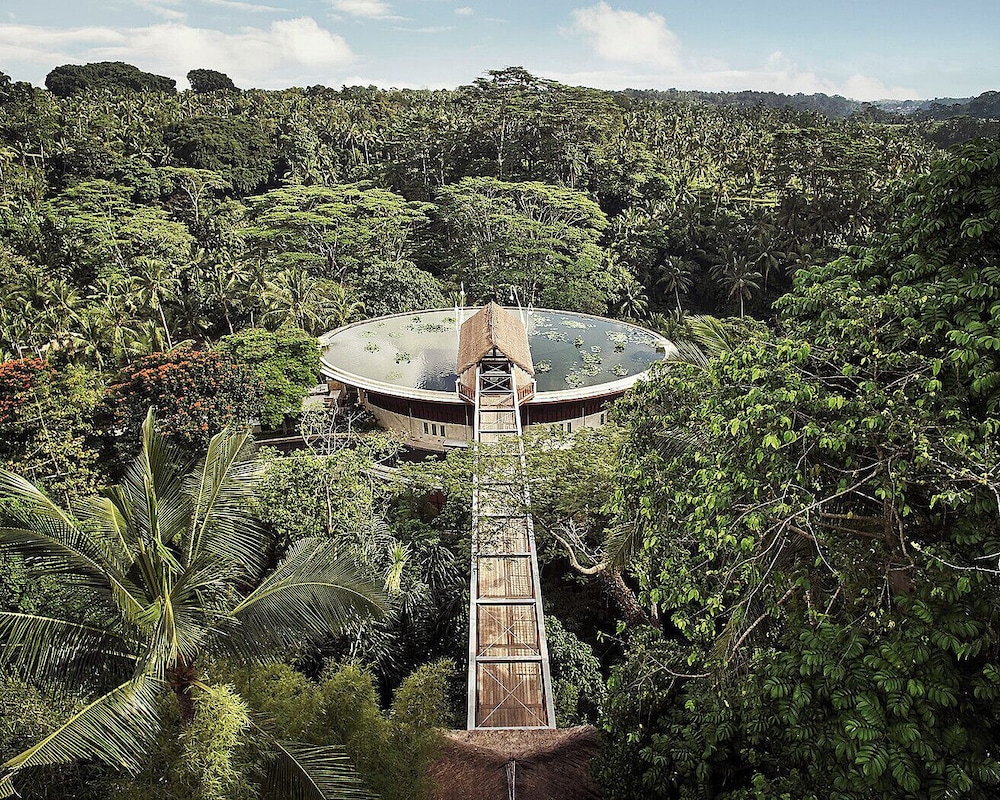
- Four Seasons Resort Bali at Sayan — the lily-pond rooftop entrance is iconic; villas drop down into the Ayung gorge so you sleep level with the treetops.
- Mandapa, a Ritz-Carlton Reserve — riverside pool villas, a working rice paddy on-site and the kind of butler service that anticipates rather than reacts.
- Bisma Eight — boutique, compact and brilliant value, with arguably the best sunrise rice-terrace view in central Ubud.
Canggu — Surf, Coffee & Coworking
Ten years ago Canggu was rice fields and a surf break. Today it's the engine room of Bali's digital-nomad scene: specialty coffee, coworking spaces, beach clubs, boutique fitness and black-sand beaches with reliable waves. It's busy and a little chaotic, but if you want energy, community and a flat white within walking distance of your villa, this is it.
Top Scout Picks:
- COMO Uma Canggu — beachfront, with a rooftop pool overlooking the break and an easy walk to the cafés.
- The Slow — a design-hotel-meets-villa-compound that more or less defined the Canggu aesthetic, attached to one of the best brunch spots on the island.
- Desa Potato Head — a sustainability-obsessed creative complex with studios, a beach club, art and music programming, and zero-waste credentials baked in.
- Hotel Tugu Bali — antique-filled, theatrical and romantic, a heritage counterpoint to all the minimalism.
Uluwatu & the Bukit Peninsula — Clifftops & Beach Clubs
The southern tip of Bali is a limestone peninsula ringed by dramatic cliffs, world-class surf and the island's most photogenic beach clubs. Villas here sit on the clifftops with infinity pools that appear to spill straight into the Indian Ocean. It's more spread out and more expensive to get around, but the drama is unmatched.
Top Scout Picks:
- Bulgari Resort Bali — perched on a 150-metre cliff with a private beach reachable only by inclinator; the benchmark for clifftop luxury in Asia.
- Six Senses Uluwatu — sustainability-led, with an organic garden, a cliff-edge pool and one of the best sunset bars on the island.
- Alila Villas Uluwatu — architecturally severe in the best way, with private cabana pool villas overlooking the ocean.
Seminyak — Polished Beachfront Glamour
If Canggu is the upstart, Seminyak is the established player: Bali's most polished beach district, with designer boutiques, sunset cocktail bars, fine dining and direct sand access. It's central, walkable and sophisticated — the easy choice for a first-timer who wants beach, shopping and restaurants on the doorstep without the trek to the cliffs.
Top Scout Picks:
- The Legian Seminyak — a grande dame on the beachfront with a three-tier pool running down to the sand.
- The Oberoi Beach Resort, Bali — one of the island's original luxury resorts, with walled garden villas and old-school service.
- W Bali — Seminyak — louder and more design-driven, with a buzzing pool scene for those who want energy with their beachfront.
Nusa Dua & Jimbaran — Calm, Family-Friendly Resorts
The gated enclave of Nusa Dua and the curving bay of neighbouring Jimbaran are where Bali does the classic big-resort holiday: manicured, gentle-surf beaches, kids' clubs and acres of pool. It's less "authentic Bali" and more "beach-resort safe," which is exactly the point if you're travelling with young children or want zero friction.
Top Scout Picks:
- The St. Regis Bali Resort — a saltwater lagoon you can swim in from your villa, plus the signature St. Regis butler service.
- The Mulia & Mulia Villas, Nusa Dua — grand to the point of theatrical, with a vast beachfront and serious spa.
- Four Seasons Resort Bali at Jimbaran Bay — villa-style rooms tumbling down to a calm bay, beloved by families for the cooking school and beach.
Sidemen & the East — The Bali That's Disappearing
If you've done Bali before, or you want the version that existed before the beach clubs, head east. Sidemen is a valley of terraced rice fields beneath Mount Agung; the east coast around Manggis and Candidasa is quiet, traditional and astonishingly green. Fewer villas, fewer crowds, more silence.
Top Scout Picks:
- Wapa di Ume Sidemen — a small resort with an infinity pool that frames Mount Agung and rice terraces in one shot.
- Alila Manggis — a low-key coastal retreat that's a launchpad for diving and the east's temples.
- Amankila — terraced down a hillside above the Lombok Strait, with a three-tiered pool that's one of the most photographed in Asia.
The Maldives: The Overwater Bungalow Ecosystem
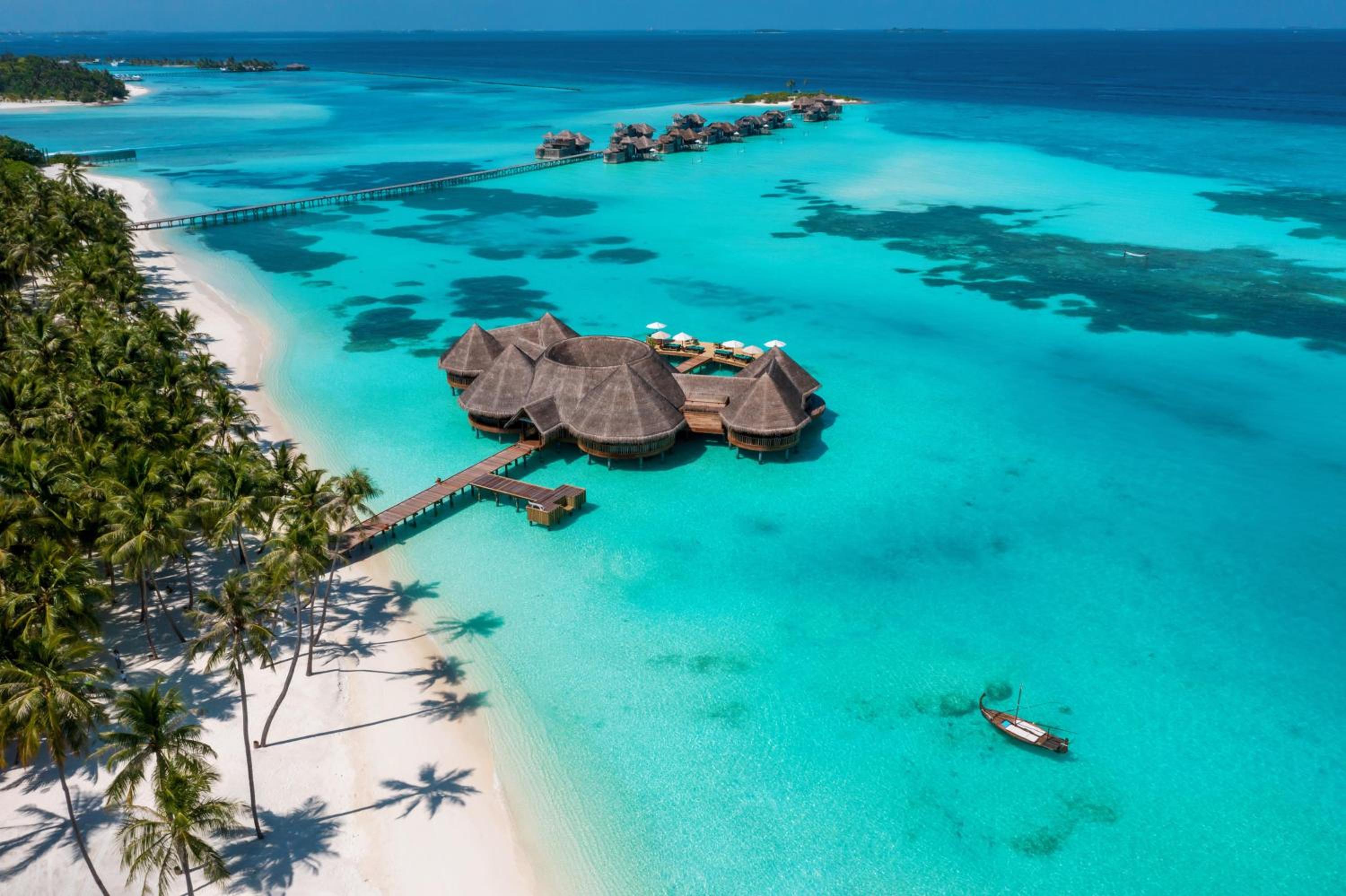
The Architecture: A private bungalow built on stilts over a turquoise lagoon. Glass floor, direct ocean access from your deck, no neighbour visible in any direction.
Vibe: Secluded, romantic, and immersive. You are on the water, not near it.
Best for: Couples, divers, and anyone whose idea of a holiday is seeing no other humans.
The Scout's Take: The Maldives is about the Resort Ecosystem. Once you land in Malé and board your speedboat or seaplane, the world disappears. Every meal, every activity, every sunset is produced for you by the resort. You are not going to leave the island for a single day — and that's exactly the point. So the decision that matters here isn't which hotel chain, it's which atoll. The atoll determines your transfer (a 20-minute speedboat versus a 45-minute seaplane that doesn't fly after dark), your marine life, and your price. Here's the lay of the water.
North Malé Atoll — Speedboat-Close & Resort-Rich
The atoll wrapped around the international airport. Most resorts here are a 20–50 minute speedboat ride, which means no seaplane, no overnight-in-Malé risk if your flight lands late, and the lowest transfer costs in the country. It's the practical choice — and it still has some of the best resorts on Earth.
Top Scout Picks:
- Gili Lankanfushi — barefoot-luxury royalty; enormous overwater villas, a no-news-no-shoes ethos and a "Mr/Ms Friday" butler for every villa.
- One&Only Reethi Rah — one of the largest private islands in the Maldives, with twelve beaches and villas big enough to lose your travelling companion in.
- Four Seasons Resort Maldives at Kuda Huraa — a strong all-rounder with a surf break, a marine-discovery centre and a quick transfer.
South Malé Atoll — Quick Transfers, Quiet Lagoons
Just across the channel from North Malé, this atoll keeps the short speedboat transfers but feels a touch quieter and less developed. A sweet spot for travellers who want overwater luxury without the seaplane premium or the all-day journey.
Top Scout Picks:
- COMO Cocoa Island — intimate and serene, with dhoni-shaped overwater suites modelled on traditional Maldivian fishing boats.
- Waldorf Astoria Maldives Ithaafushi — a three-island resort connected by bridges and boats, with a famously over-the-top three-bedroom overwater estate.
- Taj Exotica Resort & Spa — set on one of the largest lagoons in the Maldives, all soft sand and shallow turquoise water.
Baa Atoll — UNESCO Biosphere & Manta Season
A UNESCO Biosphere Reserve and the most famous atoll in the country, thanks to Hanifaru Bay — where, in season, hundreds of manta rays and the occasional whale shark gather to feed. Reached by a short seaplane hop, Baa is home to several of the resorts that define the Maldives in the popular imagination.
Top Scout Picks:
- Soneva Fushi — the original castaway-luxury resort: vast sandy-floored villas, an open-air cinema, an observatory and a barefoot philosophy that launched a thousand imitators.
- Four Seasons Resort Maldives at Landaa Giraavaru — a marine-research powerhouse with a manta programme, an Ayurvedic centre and enormous villas.
- Anantara Kihavah Maldives Villas — home to the most Instagrammed overwater pool villas in the country, plus an underwater wine cellar and restaurant.
- The Nautilus — a tiny, unscheduled, no-fixed-mealtimes hideaway for travellers who want the resort to bend entirely around them.
Noonu & the Far North — Seaplane-Only Seclusion
Further out, reached by a longer seaplane flight, the northern atolls trade convenience for genuine seclusion. Fewer resorts, fewer boats, more space. This is where the Maldives goes from "wonderful" to "I can't believe this place exists."
Top Scout Picks:
- Soneva Jani — the category-defining overwater villa, with a private slide into the lagoon and a retractable roof that opens the bedroom to the stars.
- Cheval Blanc Randheli — LVMH's Maldives flagship, designed by Jean-Michel Gathy, all clean lines, art and a Guerlain spa on its own island.
- Velaa Private Island — discreet, exclusive and lavishly equipped, with an over-water tennis facility and a snow room (yes, snow).
Laamu & South Ari — Diving's Holy Grail
For divers and big-fish chasers, the more remote southern atolls are the prize. Laamu is barely developed; South Ari Atoll is the most reliable place on the planet to swim with whale sharks year-round.
Top Scout Picks:
- Six Senses Laamu — wellness-focused and the only resort in Laamu Atoll, which means the surrounding reefs and waves are essentially untouched.
- Conrad Maldives Rangali Island — a two-island resort in South Ari famous for Ithaa, the all-glass undersea restaurant, and the Muraka, an undersea villa where you sleep beneath the lagoon.
- LUX South Ari Atoll — a long, photogenic island on the whale-shark route, with a more relaxed, less formal take on the luxury formula.
Overwater Bungalow vs Beach Cliff: The Architecture Decides the Trip
This is the choice underneath the choice. Both destinations sell a "wake up somewhere extraordinary" fantasy, but the physical architecture of the two signature stays produces a genuinely different daily experience — not just a different view.
The overwater bungalow puts you in the ocean. Glass floor panels over the lagoon, direct steps down into the water from your own deck, and — critically — total flat, uninterrupted horizon in every direction. There's no land mass behind you, no cliff edge, no sense of elevation. It's calm, level and enveloping. The trade-off is exposure: overwater villas sit lowest and closest to weather, so wind and rain (more likely outside the November–April dry season) are felt more directly than in a garden villa on the same resort.
The clifftop infinity pool — Bali's Uluwatu and Bukit Peninsula signature — puts you above the ocean. You're 30 to 150 metres up, looking down at the Indian Ocean smashing into limestone, with an infinity edge engineered to make the pool water visually merge with the sea below. It's dramatic rather than calm: sunset from a Uluwatu clifftop villa is one of the most photographed views in Asia, precisely because the elevation adds a sense of scale that a flat lagoon can't replicate. The trade-off is proximity — you're looking at the ocean, not floating on it, and getting down to the water itself (Uluwatu's beaches sit at the base of the cliffs) usually means a walk, stairs, or an inclinator like Bulgari Resort Bali's.
Neither replicates the other. If the specific fantasy is "glass floor, fish visible beneath the bed, step directly into the lagoon," only the Maldives delivers that — Bali's coastline and reef structure simply aren't built for stilted architecture. If the fantasy is "watch the sunset explode over the ocean from 100 metres up while floating in an infinity pool," that's a Bali clifftop experience the Maldives' flat atolls can't produce, since the country's highest natural point is only a couple of metres above sea level.
The Scout's read: book the overwater bungalow for stillness and immersion; book the clifftop villa for drama and scale. Both are five-star architecture built around the same instinct — waking up somewhere no one else can access — executed in opposite directions.
Family Holiday vs Couple's Escape
The family-versus-couple question is really a proxy for the same "architecture of stay" decision, and it splits cleanly.
For couples, especially honeymooners or a milestone-anniversary trip, the Maldives is purpose-built. Overwater villas are designed around the fantasy of total isolation — a private plunge pool, a sunset that no one else can photograph from your angle, meals delivered rather than sought out. There's no logistics to manage once you land: no driver to book, no restaurant to choose, no decision beyond which treatment to have at the spa. That's precisely the appeal for a couple who spend the rest of the year making decisions. Bali works for couples too, particularly those who'd rather do things together — a cooking class in Ubud, a surf lesson in Canggu, a sunset at a Uluwatu beach club — and it stretches a honeymoon budget across two weeks instead of one.
For families, Bali is the clearer answer in almost every scenario. A private pool villa with two or three bedrooms, a kitchen or kitchenette, and a garden for children to actually run in costs a fraction of the Maldives equivalent, and — crucially — there's somewhere to go when the pool gets boring on day four. Nusa Dua and Jimbaran specifically are built around this: gentle-surf beaches, kids' clubs, and a resort culture that expects children. The Maldives can absolutely work for families, but only with deliberate planning: pick a resort with a genuine kids' club (not every property has one), accept that you will not leave the island for the entire stay, and budget for the fact that children eat into an all-inclusive or half-board plan just as fast as adults do, at Maldives prices.
The rule of thumb: if the trip's success depends on having options — different restaurants, different activities, a change of scene when the mood shifts — that's a family need and Bali answers it. If the trip's success depends on having no options — nothing to decide, nowhere else to be — that's a couple's need and the Maldives answers it.
All-Inclusive Resort vs Private Pool Villa
This is where the two destinations diverge on the actual mechanics of eating and drinking, and it surprises first-timers more than any other difference on this list.
The Maldives runs on meal plans, because there is nowhere else to eat. Half-board (breakfast and dinner) sounds generous until you realise lunch, most drinks, and the better a-la-carte restaurants are charged separately — a full day's food and drink on a nominally half-board booking can add £100–200 per couple by the time it hits the bill. This is why so many Maldives stays upgrade to full-board or all-inclusive: it isn't indulgence, it's predictability. You're not comparing an all-inclusive resort against a private villa here — in the Maldives, the overwater villa is usually sold with a meal plan attached, because the resort is the only restaurant in the world for the length of your stay.
Bali runs on pay-as-you-go, because the private pool villa is a base, not a self-contained ecosystem. Breakfast is often included or cooked to order by villa staff, but lunch and dinner are an open question every single day — a warung two minutes away, a beach club a driver away, a fine-dining room in a different neighbourhood entirely if you're willing to travel. This is a feature, not a gap: it's what makes Bali suited to food-driven travellers, and it's genuinely cheaper, since street and mid-range dining costs a fraction of resort a-la-carte pricing.
The Scout's take: if you want the certainty and zero-decision-fatigue of everything being pre-paid and pre-planned, the Maldives' all-inclusive model removes that friction entirely. If you want a private pool as your base camp and total freedom over where every meal happens, Bali's villa-plus-pay-as-you-go model is built for exactly that, and it rewards travellers willing to do a little homework on where to eat.
Cultural Experience: Living Culture vs None at All
This is the starkest difference between the two, and it's the one most brochures gloss over.
Bali has culture everywhere, because Bali is a place people actually live. Hindu temples (pura) sit on almost every street corner, daily canang sari offerings appear outside shops and homes each morning, ceremonies and processions can close a road with no warning, and Ubud's art markets, dance performances and gamelan orchestras are a living tradition rather than a museum piece. Staying in any Bali neighbourhood means culture happens around you, whether or not you seek it out — the rice terrace your villa overlooks is a working agricultural system, not a backdrop, and the staff who run your villa live in the village next door. This is a huge part of why Bali suits explorers: there is a genuinely different, distinct Indonesian and specifically Balinese-Hindu culture to encounter, not a resort simulation of one.
The Maldives has essentially none of this available to a resort guest. Each resort occupies its own private island; the country's actual culture — Dhivehi language, Islamic religious life, local inhabited islands — exists on entirely separate islands you will not visit unless you deliberately book a local-island guesthouse stay instead of a resort. The Maldives you experience on an overwater-villa holiday is, by design, a produced luxury environment with international staff and international cuisine, not a window into Maldivian life. This isn't a criticism — it's precisely what most Maldives guests are booking, the same way no one visiting Soneva Jani expects to learn about Maldivian fishing traditions from the beach. But if "immersing in a different culture" is part of what you want from the trip, only one of these two destinations can deliver it.
A Day in Each Place
The clearest way to feel the difference is to walk through a single day.
A day in Bali starts early — a sunrise yoga class in Ubud or a dawn surf in Canggu before the heat builds. Breakfast is a long, photogenic affair at a café you walked to. The middle of the day is yours: a scooter or a driver to a waterfall, a temple, a rice terrace, a spa, or a beach club where you'll spend the afternoon and a surprisingly small amount of money. You'll eat dinner somewhere different every night, because there are a thousand somewheres. You come back to your villa to swim under the stars, pleasantly worn out by choice.
A day in the Maldives has no commute and no decisions. You wake to silence and water on three sides, swim off your own deck before breakfast, then snorkel the house reef or dive with a guide who knows exactly where the mantas are. Lunch arrives where you want it. The afternoon is a hammock, a book, a spa treatment over the lagoon, a sunset dolphin cruise. Dinner might be on the beach, under the water, or floated to your villa. You see the same handful of staff, learn their names, and never once look at a map. You come back to your villa pleasantly worn out by nothing at all — which, after a hard year, can be the entire point.
That's the trade. Bali gives you a thousand small decisions; the Maldives removes every one.
Cost Comparison (Luxury Tier, 2026)
Here's the part that decides most trips. The headline figures:
- Bali private pool villa (Canggu/Ubud): ~£400/night for a genuine 5-star property — often less in shoulder season.
- Maldives overwater villa (premium resort): ~£1,800/night, with most top-tier stays starting at £2,200+ and the marquee names (Soneva, Cheval Blanc, Velaa) running well beyond that.
The 4–5x price gap isn't about the room. It's about the ecosystem. In Bali you pay for a villa and then choose how much to spend outside it — street-side warung dinners cost a few pounds, beach clubs cost what you let them. In the Maldives you pay for everything, whether you use it or not: the seaplane transfer (often £400–£700 per person return), all meals on a captive island where there's nowhere else to eat, and the private island itself.
And then there are the costs the brochure doesn't lead with. In the Maldives, factor in a service charge (typically 10%), 16% GST, and a per-night green tax. Half-board sounds generous until you realise lunch, drinks and the better restaurants are extra — many couples end up on a full-board or all-inclusive plan that adds meaningfully to the nightly rate. In Bali, the hidden costs are smaller and more controllable: a 21% tax-and-service charge on hotel bills, the new tourist levy, drivers and the odd splurge dinner.
Scout maths: A week in a top Bali villa, eating out daily and hiring a driver, can land around the cost of two or three nights at a flagship Maldives resort. If your dream is two weeks of luxury, Bali makes it possible. If your dream is one perfect, sealed-off week, the Maldives is built for it.
Worked example — 10 nights, two people, luxury tier:
| Bali | Maldives | |
|---|---|---|
| Flights (return, per couple) | ~£1,400–£1,800 (1+ stop) | ~£1,600–£2,200 (direct) |
| Villa (10 nights) | ~£4,000 (£400/night) | ~£18,000 (£1,800/night) |
| Transfers | ~£100–200 (driver) | ~£800–1,400 (seaplane, return, per couple) |
| Food & extras | ~£600–900 (eating out most nights) | Often bundled into meal plan; extras still ~£500–1,000 |
| Approximate total | ~£6,000–7,000 | ~£22,000–30,000 |
The gap holds at every tier, not just the marquee names — it's structural, not a quirk of picking expensive hotels on one side.
When to Go: Bali vs Maldives Season
Both destinations are tropical, sit near the equator and have a dry and a wet season — but they run on opposite calendars, which is genuinely useful when you're planning around UK weather.
Bali is driest from April to October. May, June and September are the Scout's sweet spot: reliable sunshine, lower humidity and prices below the July–August and Christmas peaks. The wet season (November–March) brings short, heavy afternoon downpours rather than all-day rain — villas with covered pavilions handle it well, and it's the cheapest, greenest time to go.
The Maldives is driest from November to April, which is also peak season and peak prices — Christmas, New Year and February half-term are the most expensive weeks of the year. May to October is the southwest monsoon: greener, cheaper, with more chance of rain and wind, but also the best time for the marine headliners. Manta rays gather in Baa Atoll's Hanifaru Bay from roughly May to November, and whale sharks are most reliable in South Ari Atoll during the same window. If diving and big fish are the point of your trip, the "wet" season is actually the right season.
Because the two calendars run opposite each other, they're also useful as a planning shortcut: if your UK travel dates only work for, say, February, the Maldives is in its dry-season prime while Bali is in its wettest stretch — and vice versa in July. Let your fixed travel window help pick the destination, not just the other way around.
Getting There from the UK
This is where the Maldives quietly wins back some ground. There are direct flights from London to Malé at around 10–11 hours, so you can leave Heathrow in the evening and be on your resort island by lunchtime the next day. The catch: if your international flight lands after dark, seaplanes don't fly, and you may need an overnight in Malé before the final hop — worth checking when you pick an atoll.
Bali has no direct flights from the UK. Expect 15–17 hours total via a single connection — typically through the Gulf (Doha, Dubai, Abu Dhabi), Singapore, Kuala Lumpur or Hong Kong. The upside is choice and competition on price; the downside is a longer door-to-door journey. Once you land at Denpasar (DPS), transfers are by road: 20 minutes to Nusa Dua, around an hour to Seminyak or Canggu in traffic, and up to two hours to Ubud or the east.
Because both are long-haul, neither suits a long weekend. The Scout's rule of thumb: a minimum of seven nights for the Maldives, and ideally ten to fourteen for Bali so the journey earns its keep.
Can You Combine Bali and the Maldives?
You can — and for a milestone trip, it's a glorious idea — but the geography is less convenient than it looks on a map. There's no quick hop between them; you route via a hub like Singapore, Kuala Lumpur or a Gulf city, and the connection adds the better part of a travel day each way. If you're going to do both, the Scout's order is Bali first, Maldives second: front-load the active, exploratory leg while you're full of energy, then collapse into the overwater silence to decompress before the long flight home. Budget at least four or five nights in each so neither leg feels like a layover, and book the two stays independently — direct, not as one rigid package — so you keep control of villas, dates and transfer timing on both ends.
So, Which One? A Decision Guide
Strip away the brochures and it comes down to who you are on this trip.
- Honeymooners who want to vanish: Maldives. Nothing beats an overwater villa for sealed-off romance. Honeymooners who'd rather do things — eat, explore, mix beach with culture — and stretch the budget to two weeks: Bali.
- Families: Bali, almost always — variety, space, lower cost, and a villa with a kitchen and a base to come back to. Choose the Maldives only with a dedicated family resort and kids' club, and know you won't be leaving the island.
- Divers and snorkellers: Maldives, decisively. Baa for mantas, South Ari for whale sharks, Laamu for untouched reefs.
- Digital nomads, wellness seekers and foodies: Bali. Canggu and Ubud are built for long, productive, well-fed stays.
- First big trip, want guaranteed postcard perfection for one week: Maldives.
- Travellers who get restless lying still: Bali, every time.
- Travellers who want a genuine cultural encounter, not just a beach: Bali — the Maldives resort model is deliberately sealed off from local life.
- Travellers whose top priority is total predictability of spend once booked: Maldives — an all-inclusive rate removes almost every day-to-day decision, including cost.
Scout Verdict: Go to Bali if you want your senses stimulated. Go to the Maldives if you want them silenced. There's no wrong answer — only a wrong match between the holiday you booked and the holiday you actually wanted.
Book Direct, Not as a Package
For either destination, book the hotel directly through JetMeAway rather than through a flight-inclusive package. Here's why:
- Room selection. A package sells you "a villa." Booking direct, you pick the specific villa — the one with the best lagoon view, the largest pool, or the south-facing deck.
- Date flexibility. Package operators only sell weekly slots. Direct bookings let you fly midweek when seaplane transfers and villa rates are cheaper.
- Wholesale pricing. Our Nuitee partnership passes live rates with no package markup.
- Instant confirmation. The resort knows you're coming before the day ends.
Scout Trust Signal: JetMeAway hotel bookings are fulfilled directly through our global wholesaler Nuitee. No package operator in the middle. No intent data sold to Maldivian resort marketing lists six months after your trip.
For more on why booking direct beats a bundled package almost every time, see our deep dive on DIY travel vs package holidays and is it cheaper to book a hotel direct vs an OTA. If flights are the next piece of the puzzle, our UK flight hacks guide covers the booking-window and airport tricks that free up budget for exactly this kind of villa or overwater upgrade.
Bali vs Maldives: Frequently Asked Questions
Is Bali or the Maldives cheaper for UK travellers?
Bali is significantly cheaper. A 5-star Bali private pool villa in Canggu or Ubud runs around £400 a night, while a premium Maldives overwater villa is roughly £1,800 a night, with most top-tier resorts starting at £2,200+. That 4–5x gap exists because in the Maldives you pay for the whole ecosystem — seaplane transfer, all meals and the private island — not just the room.
Is Bali or the Maldives better for a honeymoon?
The Maldives edges it for a classic, switched-off honeymoon: secluded overwater bungalows with no neighbour in sight. Bali suits honeymooners who'd rather explore neighbourhoods, food and culture between villa pool sessions — and it's far easier on the budget if you want two weeks rather than one.
How long is the flight from the UK to Bali or the Maldives?
The Maldives is the shorter trip — around 10–11 hours direct to Malé. Bali is further, usually 15–17 hours with at least one connection since there are no direct UK–Denpasar flights. Neither is a short-haul hop, so factor the journey into your stay length.
Which is better for families, Bali or the Maldives?
Bali, for most families — variety, space, lower rates and a villa base with culture and food to explore beyond it. The Maldives works for families only if you pick a dedicated family resort with a kids' club, since you never leave the island.
Do I need any documents to enter Bali?
Yes — the All Indonesia Arrival Card (completed before landing), a Visa on Arrival and the Bali tourist levy. The Maldives issues a free 30-day visa on arrival and sends you straight onto a speedboat or seaplane to your resort.
Which Bali neighbourhood should I stay in?
Ubud for jungle and wellness; Canggu for surf and coffee; Uluwatu and the Bukit for clifftop villas and beach clubs; Seminyak for polished beachfront; Nusa Dua and Jimbaran for calm, family-friendly resorts; and Sidemen or the east for the quiet, old-Bali landscape.
Which Maldives atoll is best?
North and South Malé for quick, cheap speedboat transfers; Baa for manta rays and the most iconic resorts; Noonu and the far north for seaplane-only seclusion; South Ari for year-round whale sharks; and Laamu for untouched diving.
What's the best time of year to visit?
Bali's dry season runs April–October (May, June and September are ideal). The Maldives is driest November–April — peak season and peak prices — while May–October is greener, cheaper, wetter, and the best window for mantas and whale sharks.
What does a realistic 10-day cost of holiday look like for Bali vs the Maldives?
For two people, 10 nights in a genuine 5-star Bali private pool villa — flights, eating out most nights, a driver and spa treatments included — lands around £5,500–£7,000 all-in. The same 10 nights in a mid-to-premium Maldives overwater villa, with seaplane transfers and an upgraded meal plan, typically runs £22,000–£30,000 for the couple.
Are there direct flights from the UK to the Maldives?
Yes — British Airways and other carriers run direct UK–Malé flights at around 10–11 hours, mostly overnight from Heathrow or Gatwick. There's no direct equivalent to Bali; every UK–Denpasar itinerary routes through at least one hub.
What's the best month to visit Bali for a UK traveller avoiding rain?
June and September are the top picks — both sit inside the April–October dry season and avoid the July–August price peak. May is a close third for slightly warmer sea temperatures.
What's the best month to visit the Maldives for a UK traveller avoiding rain?
February and March — solidly inside the November–April dry season, past the Christmas/New Year price surge, with the calmest seas and lowest average rainfall. May–November is wetter but the season for mantas and whale sharks.
Is Bali good for a couple who don't want an all-inclusive resort?
Yes — Bali's private pool villa model is built around eating out rather than eating in, so couples work through warungs, beach clubs and fine dining across the island rather than relying on a single resort restaurant.
Is an all-inclusive Maldives resort worth the price versus half-board?
For most first-timers, yes. Half-board's hidden extras (lunch, drinks, better a-la-carte venues) add up fast on a single-island resort with nowhere else to eat, and all-inclusive removes that unpredictability, often for only a modest premium.
Can you get an overwater villa experience in Bali?
Not in the true sense — Bali's coastline isn't suited to stilted lagoon architecture. The closest equivalent is a clifftop infinity pool villa in Uluwatu or the Bukit, which offers drama and elevation rather than the Maldives' flat, immersive water-level feel.
Do you need to be a strong swimmer to enjoy the Maldives?
No — most resort lagoons are calm and shallow, safe for confident non-swimmers with a life vest, and house reefs are typically snorkel-friendly close to shore. Strong swimming matters more for further-out excursions or diving courses, both optional.
Which destination has better nightlife, Bali or the Maldives?
Bali, decisively — Canggu and Seminyak run genuine beach clubs, bars and DJ sets that don't exist in the Maldives, where evenings wind down early and deliberately.
Is Bali safe for solo female travellers?
Yes — Bali is one of the more solo-female-friendly destinations in Southeast Asia, with an established co-working and digital-nomad community, particularly in Canggu and Ubud. Standard precautions apply, with scooter traffic the more common real risk.
How much does food cost in Bali compared to a Maldives resort?
A Bali warung meal costs roughly £2–5, a mid-range dinner for two £15–30. In the Maldives, a la carte dinners for two commonly run £80–150 before drinks, since the resort is the only restaurant available — which is why most Maldives stays default to a bundled meal plan.
Does Bali or the Maldives have better diving and snorkelling?
The Maldives, for pure reef and pelagic-life diving — manta rays, whale sharks and warm, clear water often accessible straight off your villa deck. Bali has good diving too (Nusa Penida, Amed, the USAT Liberty wreck) but it requires a boat trip rather than a house reef at your door.
What vaccinations or health precautions does Bali need that the Maldives doesn't?
Bali sits in a dengue-risk zone, so evening repellent and covering up at dusk are sensible, alongside standard wider-Indonesia travel advice. Maldives resort islands are generally lower mosquito-risk. Always check current NHS Travel Health Pro guidance before you fly.
Is Wi-Fi and connectivity reliable in both destinations?
Maldives resorts generally invest heavily in Wi-Fi since it's the only connectivity option on an isolated island. Bali is more variable — excellent in Canggu and Seminyak, patchier in remote areas like Sidemen or the east coast.
Can you drink alcohol in the Maldives given it's a Muslim country?
Yes, but only within licensed resort islands — not on local inhabited islands or in Malé itself. This is invisible to most resort guests, since you never leave the island during a standard stay.
How does the currency and tipping culture differ between Bali and the Maldives?
Bali uses the Indonesian Rupiah with widely available ATMs and informal, appreciated-but-optional tipping. The Maldives operates largely in US Dollars at resorts, with tipping more embedded and often already folded into a mandatory service charge — check your resort's specific policy.
Is it worth visiting Bali and the Maldives on separate trips rather than combining them?
For most UK travellers, yes — combining them works best as a one-off milestone trip, since both are long-haul and deserve a full week or more each rather than being split thin across one shared two-week window.
What's the biggest mistake UK travellers make when choosing between Bali and the Maldives?
Choosing based on Instagram imagery rather than what they actually want from the days in between — the overwater-bungalow photo and the infinity-pool-villa photo look similar in a square crop, but represent opposite holidays: one built around going out and discovering, the other around staying still and disconnecting.
Read next


Plan Your 2026 Trip Now
Use the JetMeAway Scout to compare live prices across 15+ trusted providers. Zero booking fees.
Start Searching