
Dublin Hotels 2026: 49 Real Stays From £103

Our top Dublin hotel pick for 2026 is The Shelbourne — Ireland's most historic address, from ~£496 a night at the luxury peak — but the real headline for 2026 is that Dublin's honest floor price sits at £103 a night, at Yugo Kavanagh Court, a student aparthotel near the Grand Canal. Be clear-eyed about this city: Dublin is not Prague or Berlin. Its budget tier lives in the £103–£188 band, not London-cheap, but these are the cheapest quality-verified, currently bookable stays in a capital where hotel supply has been squeezed hard by a tech-and-pharma boom and by hotel rooms diverted to government accommodation contracts since 2022. We've rebuilt this guide around all three price bands — 10 luxury Georgian and Docklands icons, 10 mid-range 4-star city hotels, and 29 budget picks we verified as real, distinct, currently bookable properties — 49 hotels in all, each linking straight to its live price.
Jump to your budget: Luxury Georgian icons · Mid-range 4-star · Budget under £190 · FAQ
Scout's 3 best budget picks right now: 🏛 Yugo Kavanagh Court — from ~£103, a student-style aparthotel in the Portobello area near the Grand Canal, the cheapest verified bed in the city. 🍺 easyHotel Dublin City Centre — from ~£145, a compact no-frills base a 5-minute walk from Temple Bar. 🌉 Point A Hotel Dublin Parnell Street — from ~£164, a modern budget-boutique on the north side near O'Connell Street. From-prices are live midweek July rates pulled while writing — tap any hotel for today's price on your dates.
Dublin is split by the River Liffey into two very different halves. The old-money South City / Georgian Dublin — Fitzwilliam Square, Merrion Square, St Stephen's Green, Ballsbridge — is where the city's luxury hotels, Trinity College and the best-preserved 18th-century terraces cluster. North of the river, the city centre around O'Connell Street and Parnell Street is busier, cheaper and closer to Croke Park, while the Docklands east of the centre is contemporary Dublin — the Grand Canal tech quarter, glass towers, and the 3Arena. Smithfield, on the north side near the Guinness Storehouse, adds a third character: cobbled market square turned café-and-hotel district. Compare live Dublin hotel prices or search UK flights to Dublin (DUB) — Ryanair, Aer Lingus and easyJet all fly from major UK airports in around 1-1.5 hours.
At a glance — the luxury tier compared, before the full reviews:
| Hotel | Neighbourhood / Area | Best For | Standout Feature |
|---|---|---|---|
| The Shelbourne, Autograph Collection | St Stephen's Green | 5-star history | Opened 1824, the Irish Constitution drafted here |
| InterContinental Dublin | Ballsbridge | Diplomatic-quarter luxury | Dublin's grandest suites and event spaces |
| The Westbury Hotel | Grafton Street | Central luxury shopping | Steps from Grafton Street and Trinity |
| Conrad Dublin | St Stephen's Green | Business and events | Purpose-built 5-star beside the National Concert Hall |
| The Fitzwilliam Hotel | St Stephen's Green | Design-led luxury | Michael Mortell interiors overlooking the Green |
| Anantara The Marker Dublin | Docklands | Contemporary luxury | Leading Hotels of the World, Grand Canal Square |
| The Morrison Dublin, Curio Collection by Hilton | North Quays / Temple Bar | Design-forward river stays | Riverside 5-star opposite Temple Bar |
| Dylan | Ballsbridge | Boutique luxury | Edwardian former nurses' home turned design hotel |
| The Leinster | Ballsbridge | Couples and honeymoons | Quiet residential-luxury address near the RDS |
| The Address Connolly | Connolly / City Centre | Value luxury | 4-star luxury feel by Connolly Station, 7,800+ reviews |
The Scout's Take: Which Dublin Are You Staying In?
Dublin is tiny by capital-city standards — you can walk the entire Georgian core in fifteen minutes — so neighbourhood choice is more about atmosphere and budget than about access.
South City / Georgian Dublin (Fitzwilliam Square, Merrion Square, St Stephen's Green, Ballsbridge) is Dublin at its most architecturally complete — red-brick Georgian terraces, colourful front doors, iron railings, garden squares. This is where nearly the entire luxury tier sits, and it's the most walkable base for Trinity College, the National Gallery and Grafton Street.
Temple Bar / City Centre (the cobbled lanes around Wellington Quay, and the O'Connell Street/Parnell Street grid north of the river) is the tourist-dense, pub-heavy heart of the city — worth an evening out, and home to most of the easyHotel/Blooms/Point A budget cluster that puts you a five-minute walk from the action.
Docklands (Grand Canal Square, Point Village) is contemporary Dublin — the tech quarter, the 3Arena, Daniel Libeskind's glass-and-steel Grand Canal Theatre district, and this guide's Marker/Gibson/Premier Inn cluster.
Smithfield / Northside (the cobbled market square near the Guinness Storehouse) mixes café culture with the Maldron and Hendrick budget hotels, five minutes from the Storehouse and on the Luas tram line.
Southside residential (Sandymount, Ballsbridge, Grand Canal) trades city-centre buzz for quiet streets, DART rail access and, in Ballsbridge's case, most of the InterContinental/Leinster/Dylan luxury cluster near the Aviva Stadium.
For first Dublin: the Georgian Quarter. For nightlife-first trips: Temple Bar's edge (not its centre). For concerts and business: the Docklands. For tight budgets: this guide's budget tier, concentrated in South City student-aparthotels and the Smithfield/Docklands fringe.
Luxury Dublin hotels — Georgian townhouses & Docklands icons
10 hotels that define Dublin at its most polished — Georgian St Stephen's Green, the Ballsbridge diplomatic quarter, and the contemporary Docklands. Live midweek July rates pulled while writing — tap any hotel for your dates.
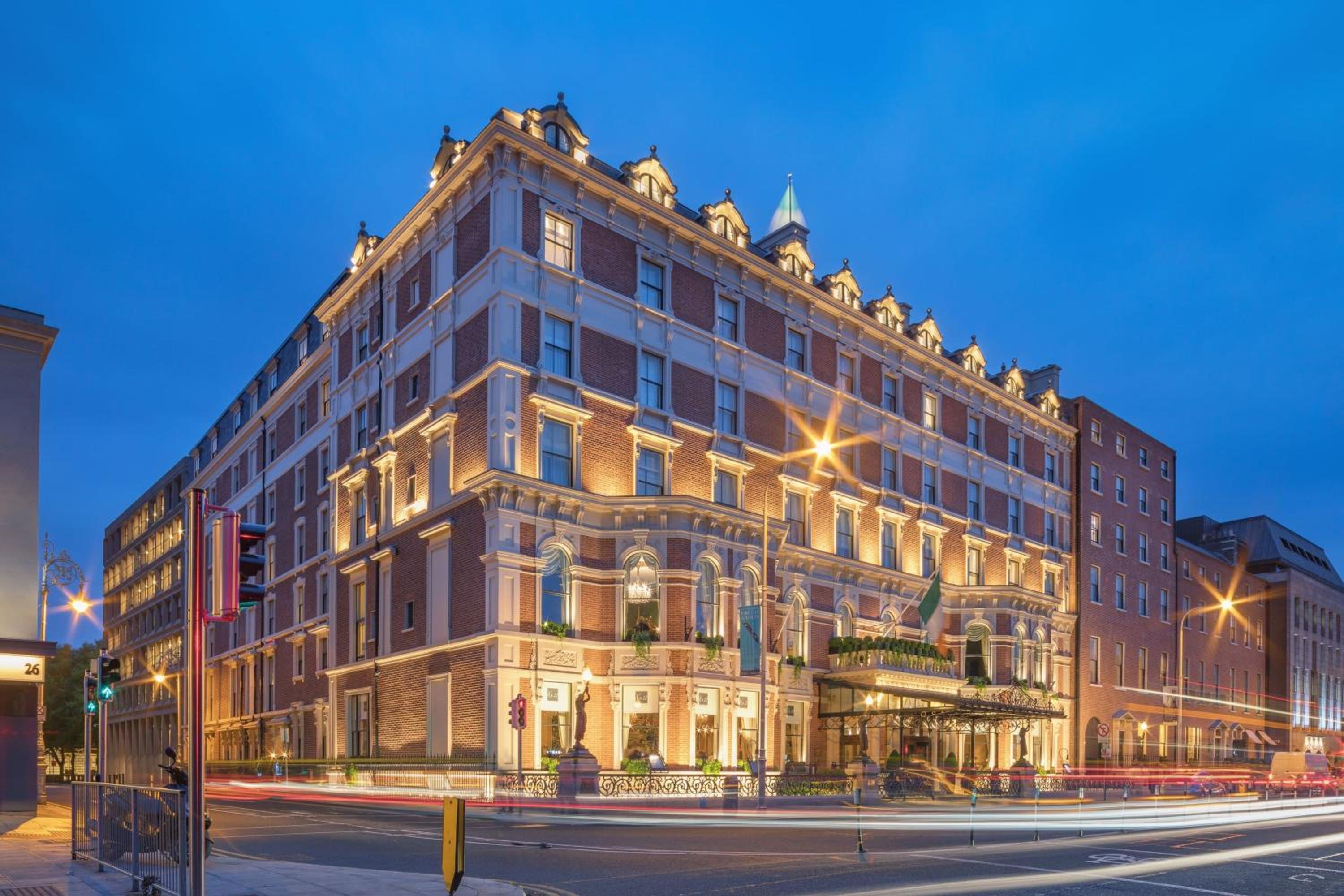
1. The Shelbourne, Autograph Collection — St Stephen's Green · 5★ · 1,030 reviews · from ~£496/night. The most historically significant hotel in Ireland — opened in 1824 facing St Stephen's Green, with the Irish Free State Constitution drafted in Room 112 in 1922. The Horseshoe Bar remains where Dublin's political and literary worlds still meet over a drink, and the Lord Mayor's Lounge afternoon tea is the city's benchmark.
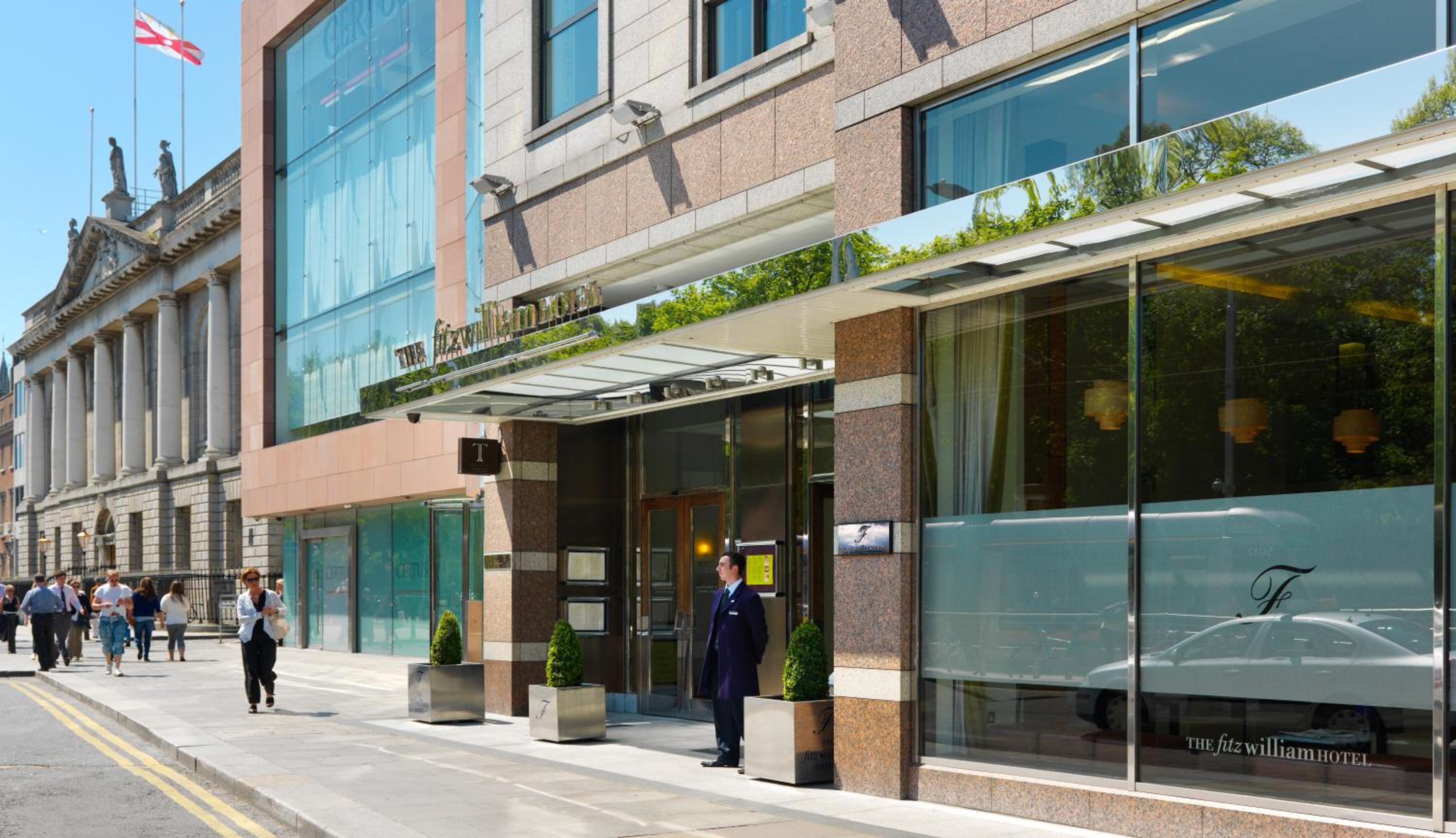
2. The Fitzwilliam Hotel — St Stephen's Green · 5★ · 2,136 reviews · from ~£404/night. A design-led 5-star directly overlooking St Stephen's Green, known for clean, contemporary interiors that stand out against Dublin's heritage hotel norm. One of the most-reviewed luxury properties in the city, with a rooftop terrace bar that catches the evening light over the Green.
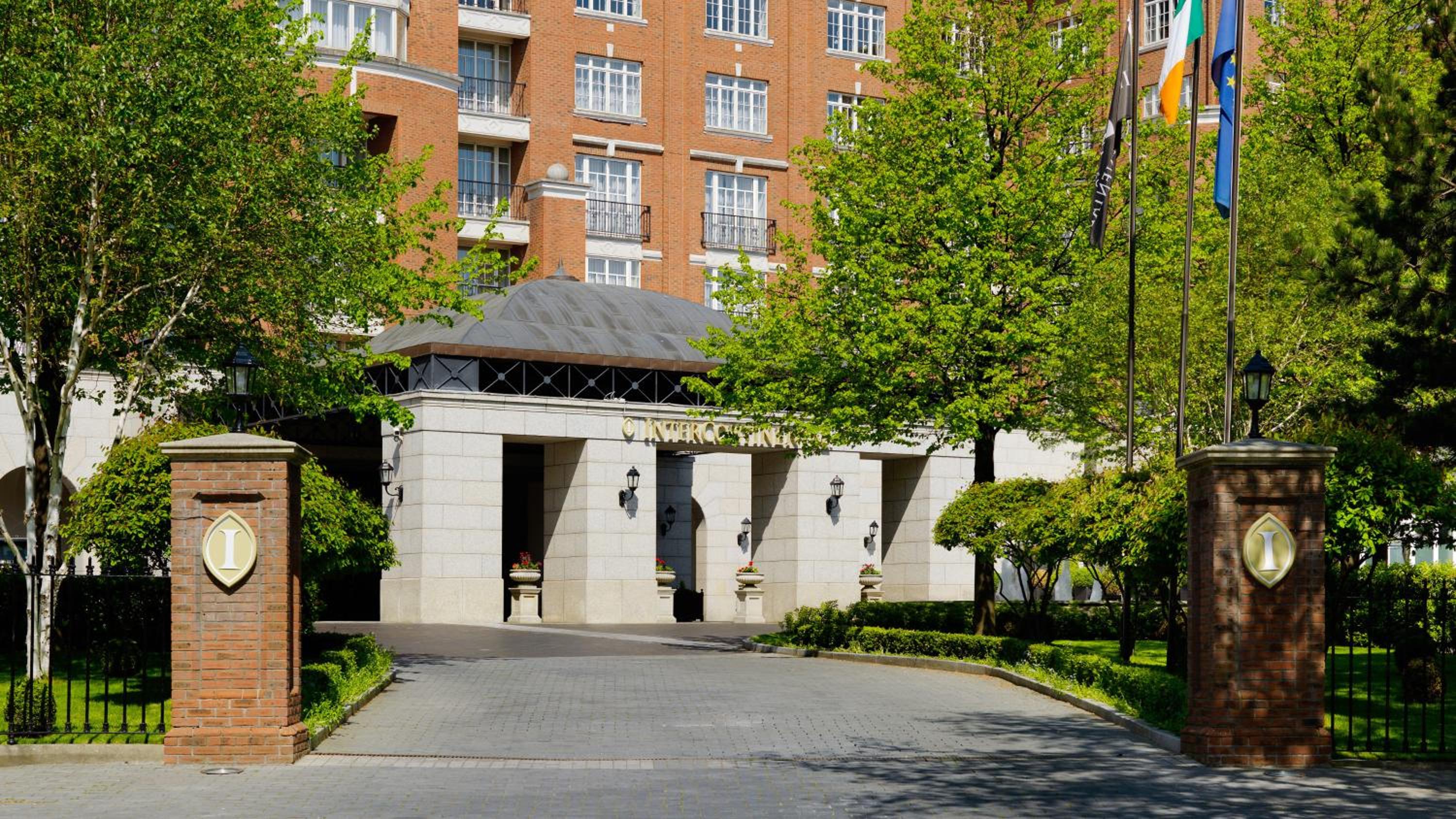
3. InterContinental Dublin — Ballsbridge · 5★ · 1,581 reviews · from ~£756/night. Sits in Dublin's Ballsbridge diplomatic quarter alongside the embassies and the RDS showgrounds — the grandest suites and events spaces on this list, and the highest price point in the guide. A five-minute stroll from the Aviva Stadium for match days.
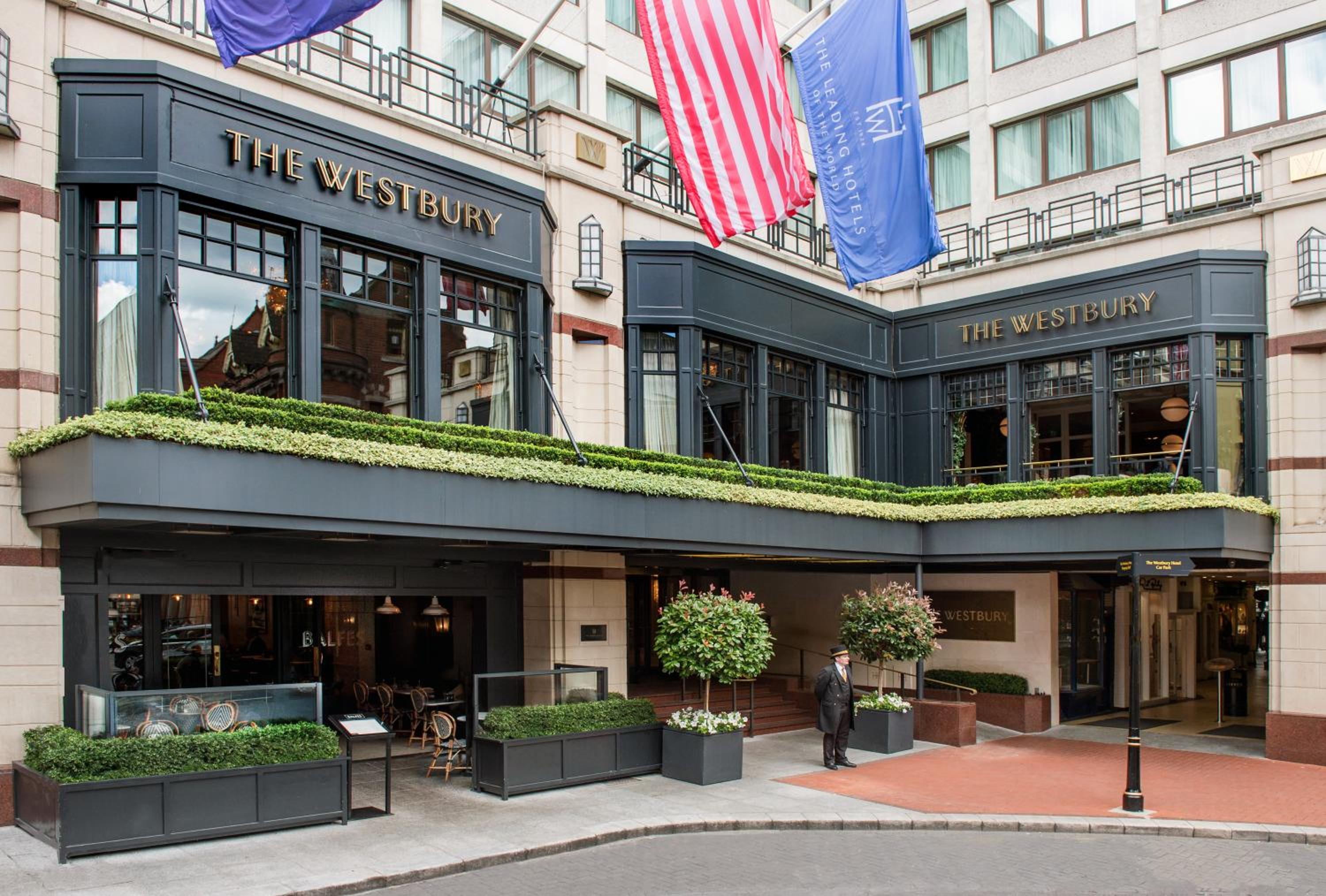
4. The Westbury Hotel — Grafton Street, off Balfe Street · 5★ · 1,227 reviews · from ~£512/night. The most central luxury address in the city — Grafton Street's pedestrianised shopping, Trinity College and St Stephen's Green are all within two minutes' walk. Its afternoon tea gallery is one of the most photographed rooms in Dublin hospitality.
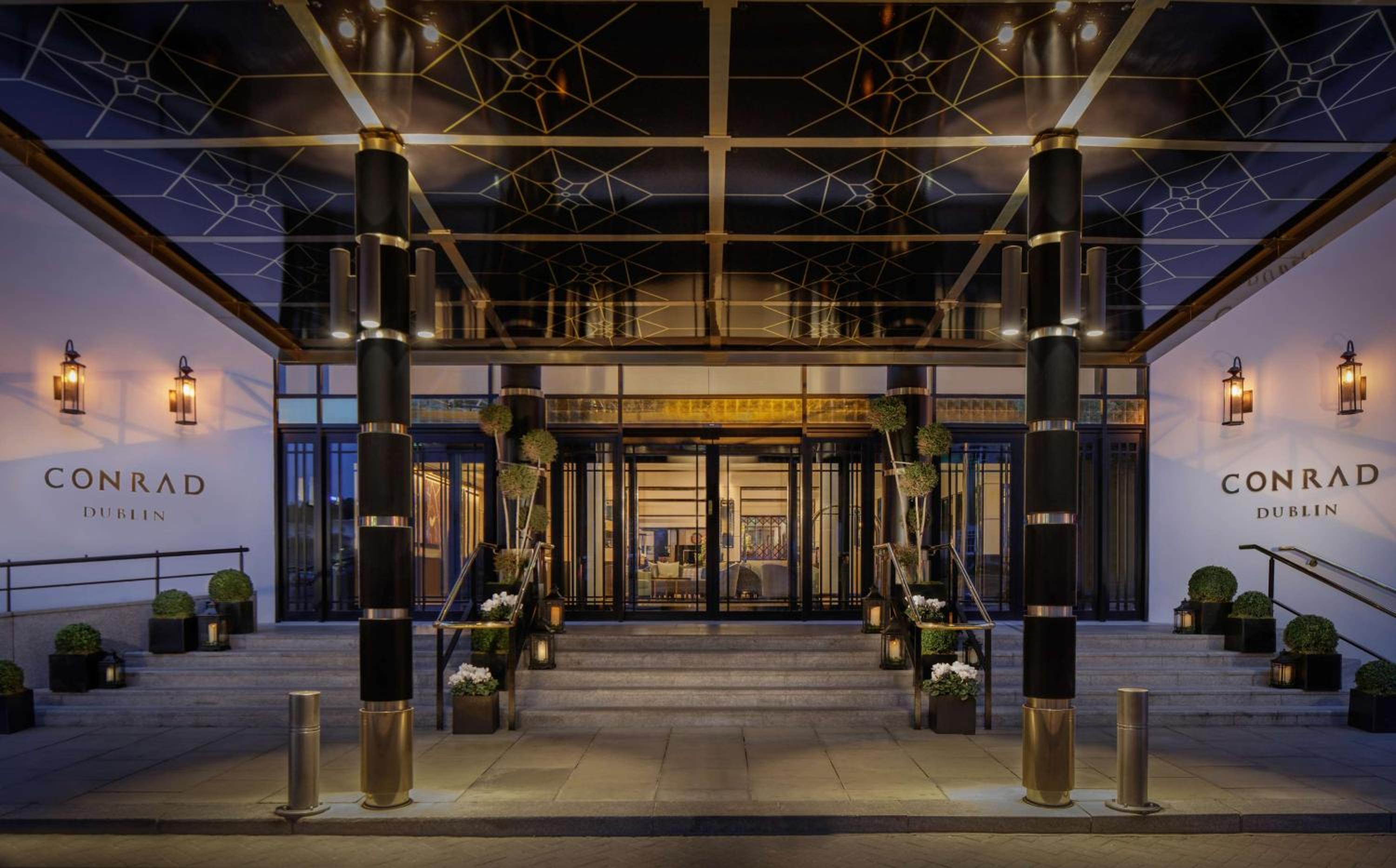
5. Conrad Dublin — St Stephen's Green · 5★ · 766 reviews · from ~£456/night. A purpose-built 5-star beside the National Concert Hall, popular with business travellers and event guests who want St Stephen's Green proximity without a period-townhouse layout. Hilton loyalty perks apply throughout.
6. The Leinster — Ballsbridge · 5★ · 1,164 reviews · from ~£277/night. A quieter, residential-feeling luxury address near the RDS showgrounds and Aviva Stadium — the value entry point into Dublin's true 5-star tier, and a strong choice for couples who want polish without the St Stephen's Green crowds.
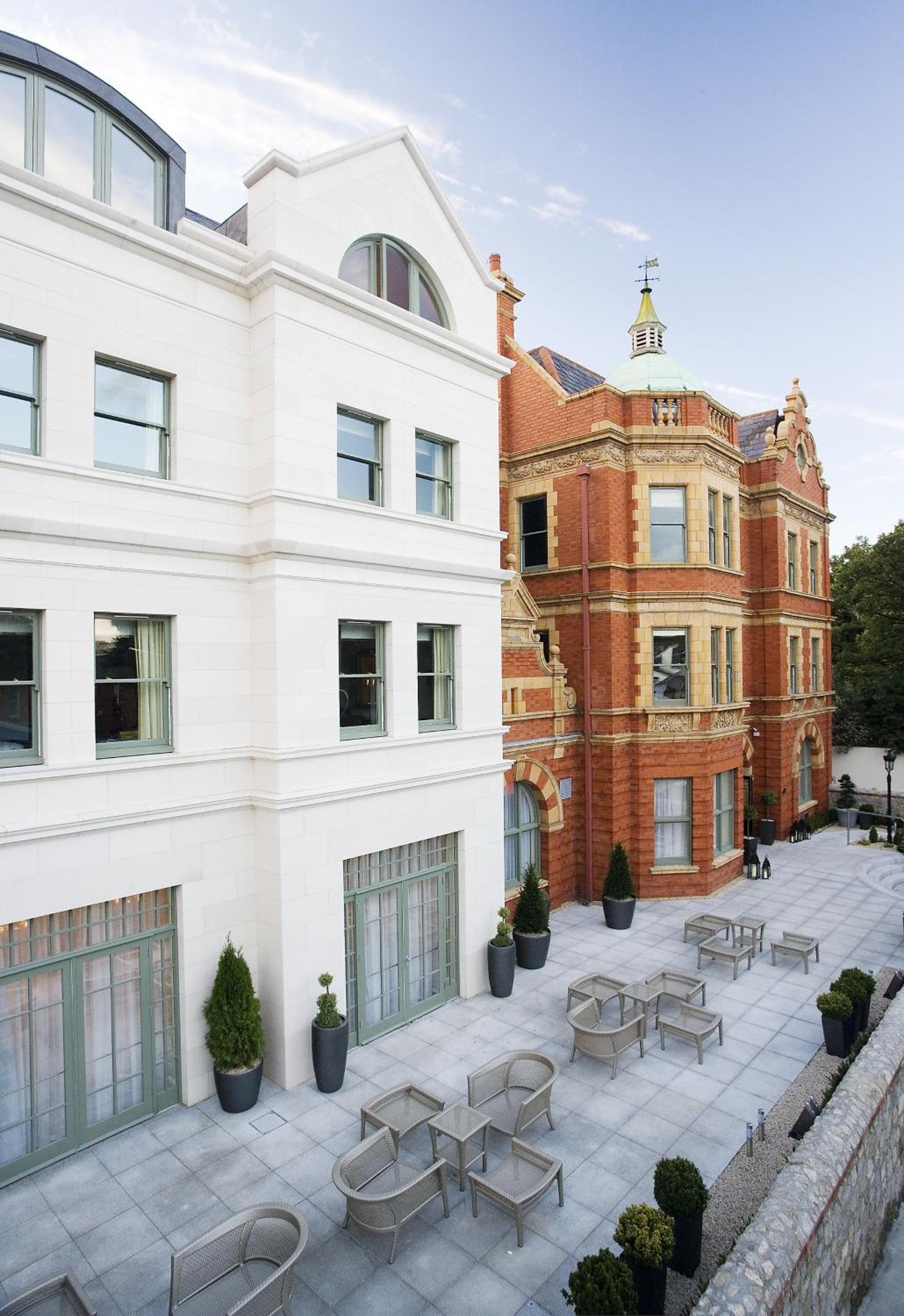
7. Dylan — Ballsbridge · 5★ · 525 reviews · from ~£303/night. A boutique luxury hotel in a restored Edwardian former nurses' home, with an eclectic, design-forward interior that stands apart from Dublin's Georgian-townhouse formula. Quiet Ballsbridge streets, a five-minute walk to the Grand Canal.
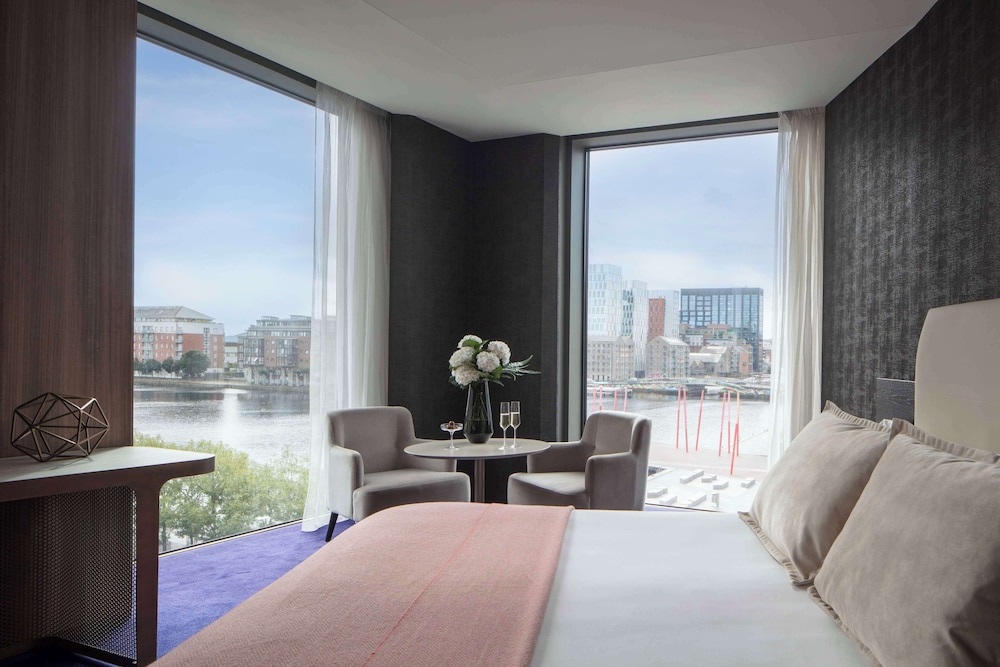
8. Anantara The Marker Dublin — Docklands, Grand Canal Square · 5★ · 149 reviews · from ~£382/night. A Leading Hotels of the World member in the Daniel Libeskind-designed Grand Canal Theatre district — the sharpest, most contemporary architecture on this list, with a rooftop bar overlooking the Docklands tech quarter and Dublin Mountains beyond.
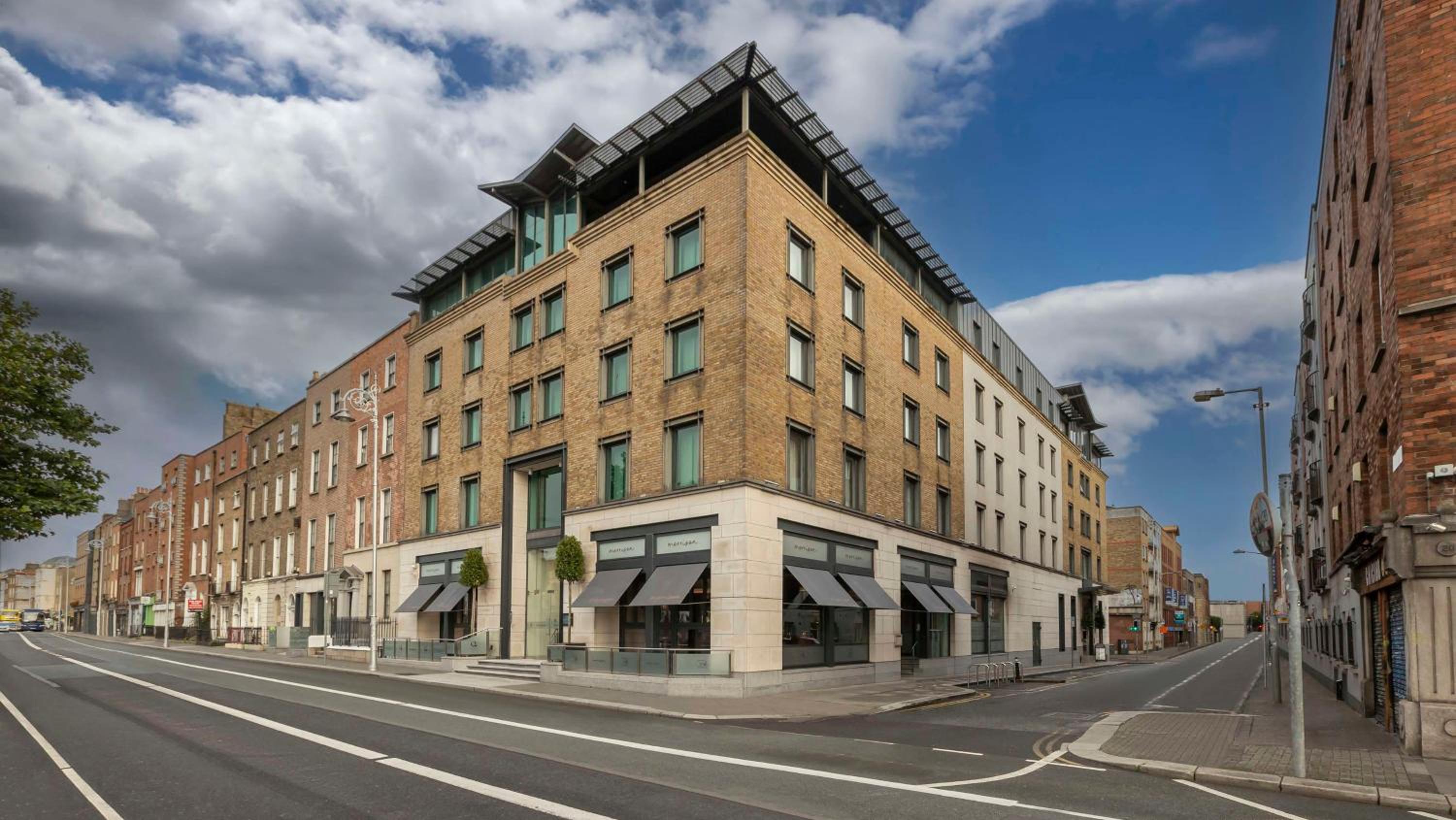
9. The Morrison Dublin, Curio Collection by Hilton — North Quays, Lower Ormond Quay · 5★ · 2,270 reviews · from ~£285/night. The most design-forward riverside hotel in the centre, directly across the Liffey from Temple Bar — a five-minute walk over the Ha'penny Bridge into the pubs, with a far quieter night's sleep on the north bank.
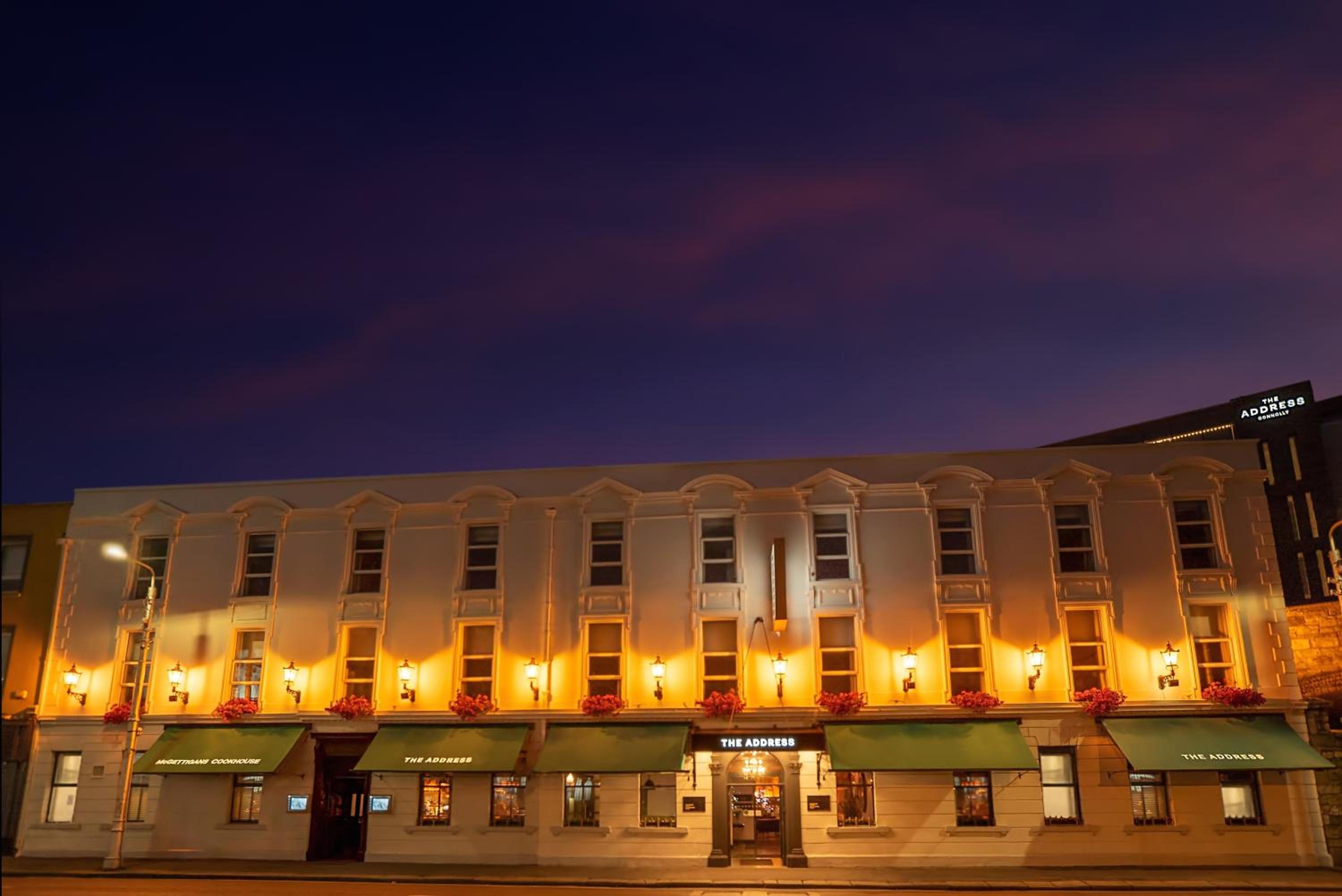
10. The Address Connolly — Connolly / City Centre · 4★ · 7,881 reviews · from ~£233/night. The value door into this luxury tier — a modern hotel by Connolly Station with the highest review count of any property on this list, walkable to the Docklands, O'Connell Street and the Luas tram network alike.
Mid-range Dublin hotels — 4-star city stays £180–£240
The middle of the market is where Ireland's reliable 4-star chains do the heavy lifting — Maldron and Clayton, both Irish-owned mid-market groups, feature heavily here alongside a handful of independents. Live midweek July rates pulled while writing — tap any hotel for your dates.
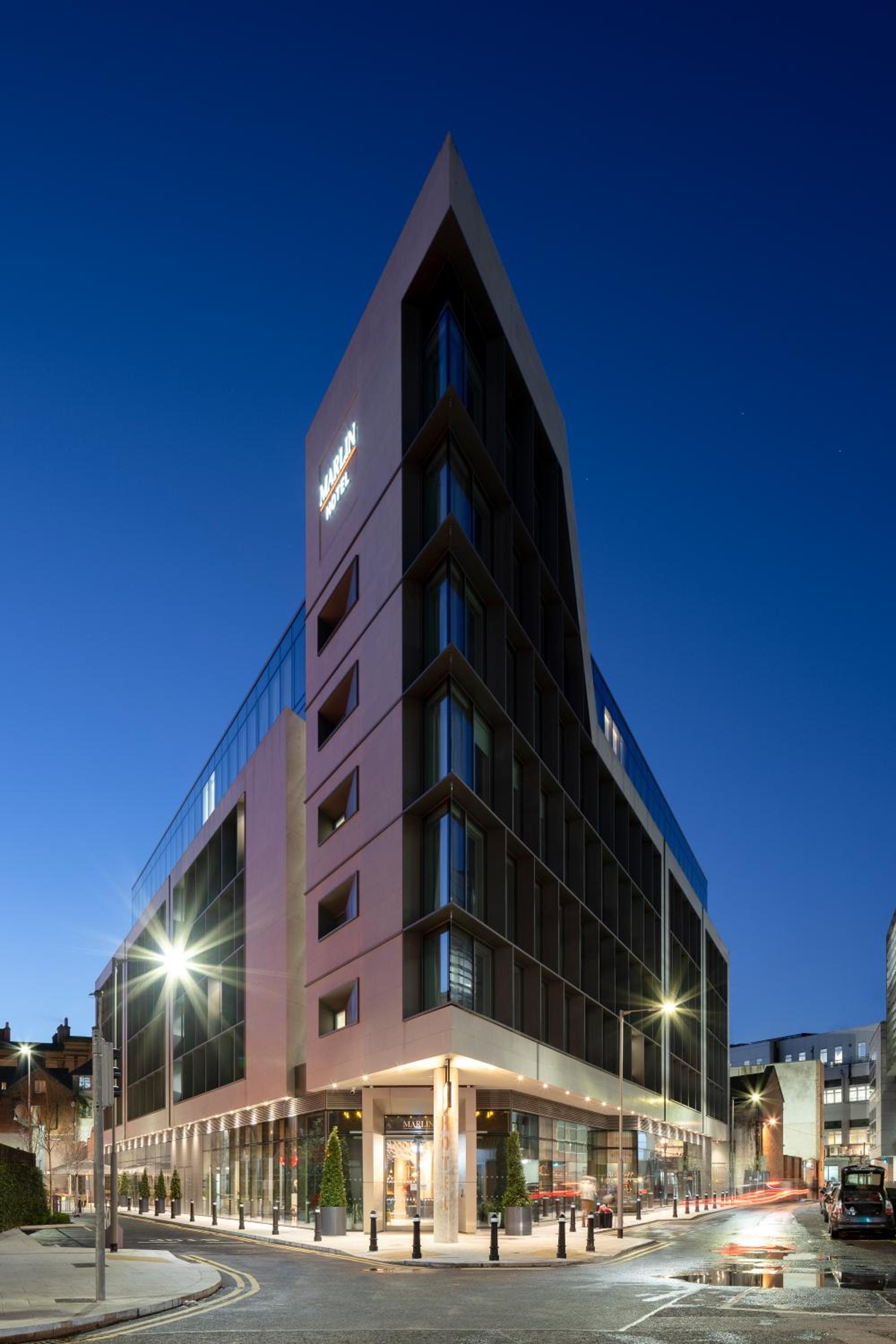
11. Marlin Hotel Stephens Green — St Stephen's Green · 4★ · 16,374 reviews · from ~£198/night. The most-reviewed hotel in this entire guide, sitting a few minutes' walk from St Stephen's Green and Grafton Street — modern rooms at a fraction of the neighbourhood's luxury-tier prices.
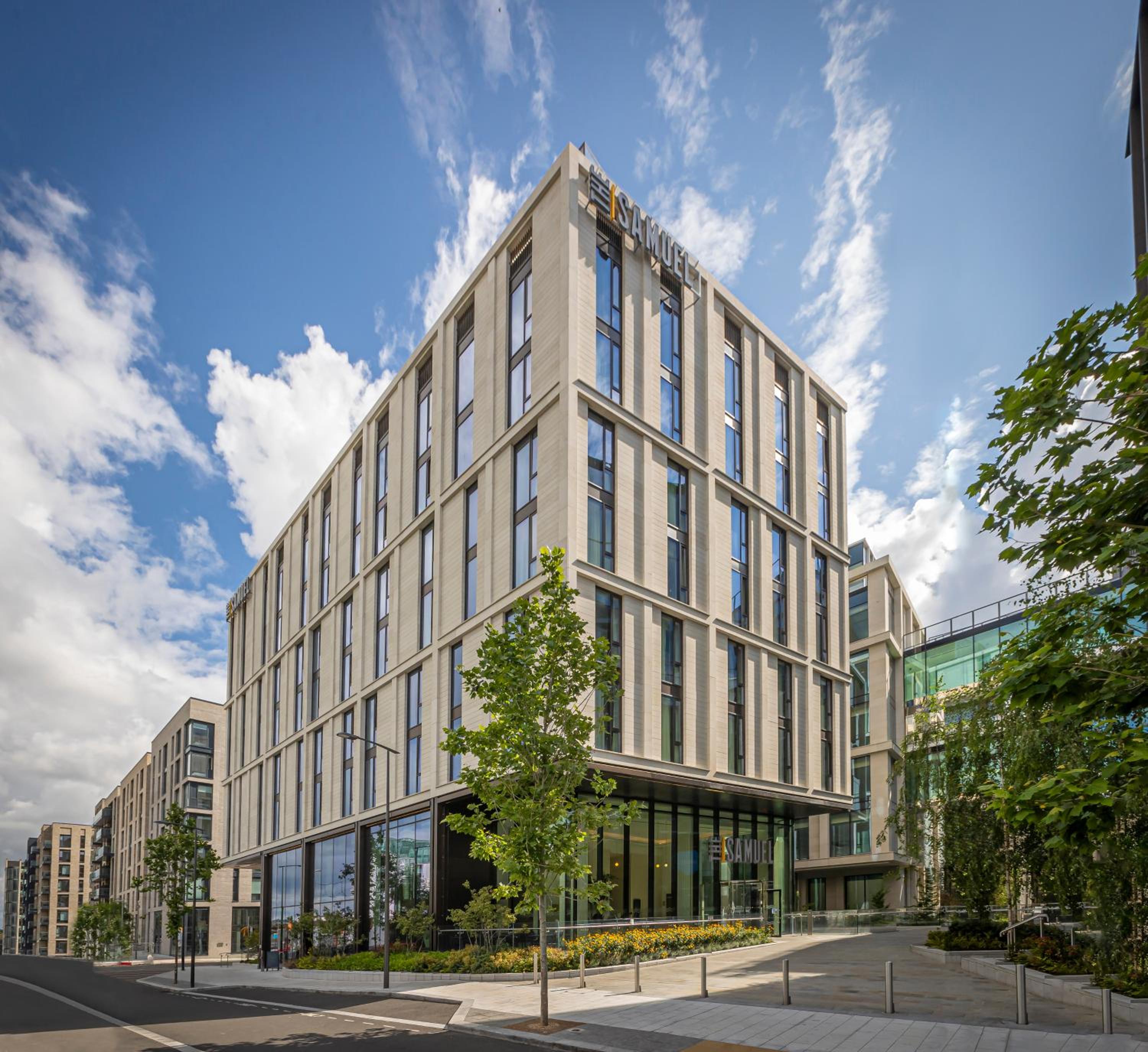
12. The Samuel Hotel, Dublin City Centre — City Centre · 4★ · 14,007 reviews · from ~£218/night. A newer riverside-adjacent 4-star with a huge review base and consistently modern rooms — a dependable central choice for travellers who want a hotel, not a heritage experience.
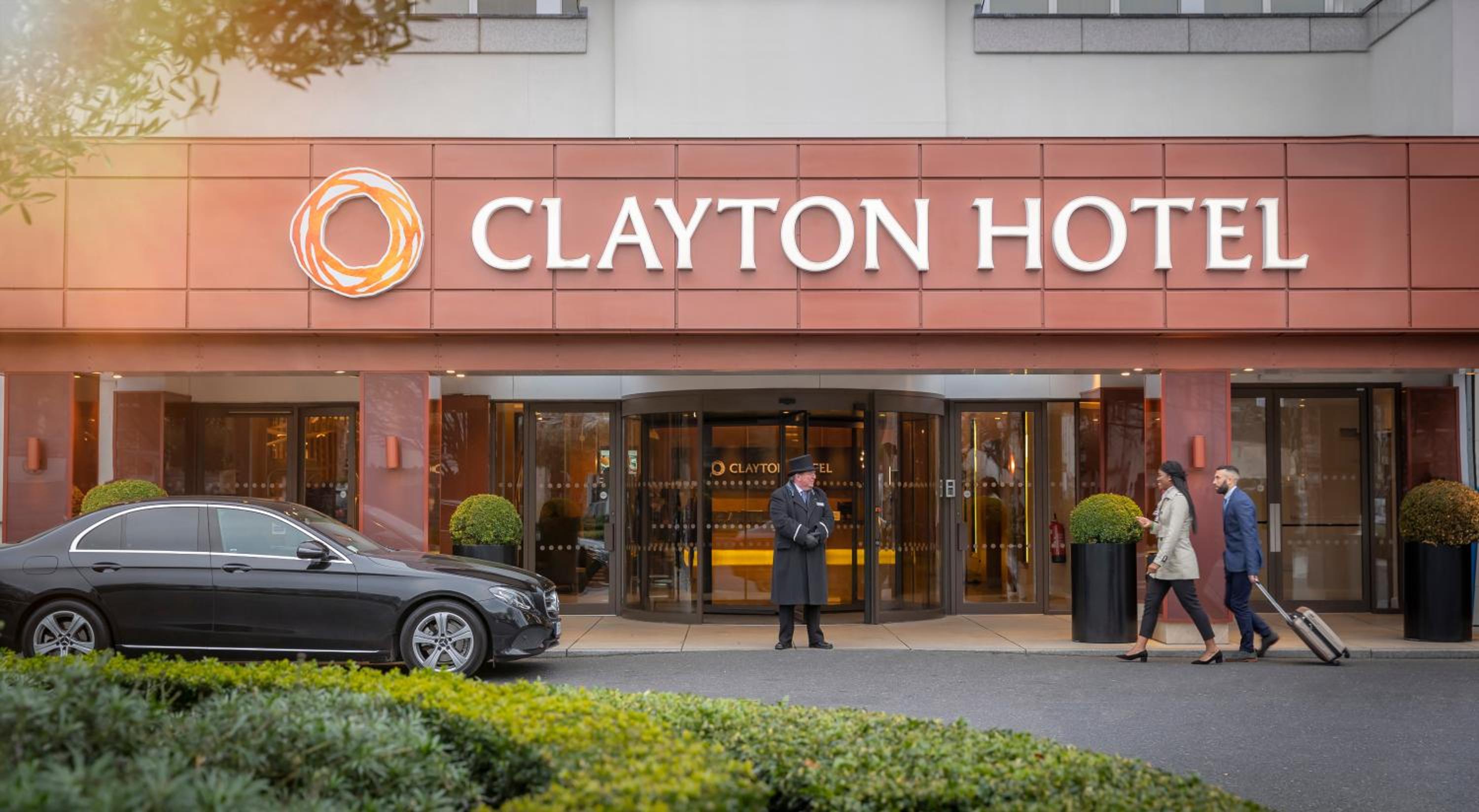
13. Clayton Hotel Burlington Road — Burlington Road / Ballsbridge fringe · 4★ · 13,210 reviews · from ~£200/night. One of Dublin's largest conference-and-leisure hotels, run by the reliable Irish Clayton chain — a straightforward, well-reviewed base a short walk from St Stephen's Green and the Grand Canal.
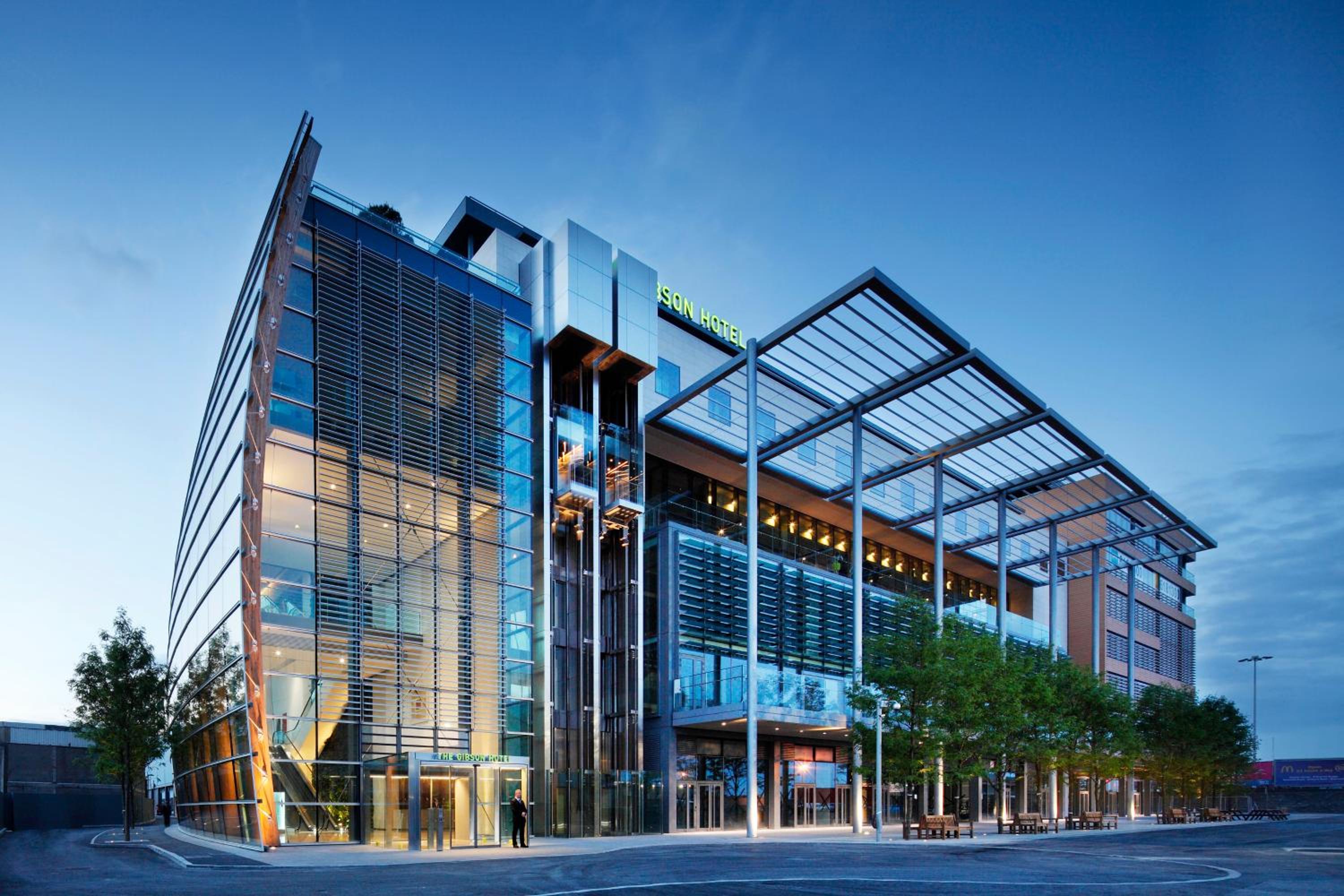
14. The Gibson Hotel Dublin City — Point Village, Docklands · 4★ · 8,687 reviews · from ~£198/night. Adjacent to the 3Arena, Dublin's largest concert venue, and facing the Liffey — the default mid-range pick for concert-goers and Docklands business trips alike.
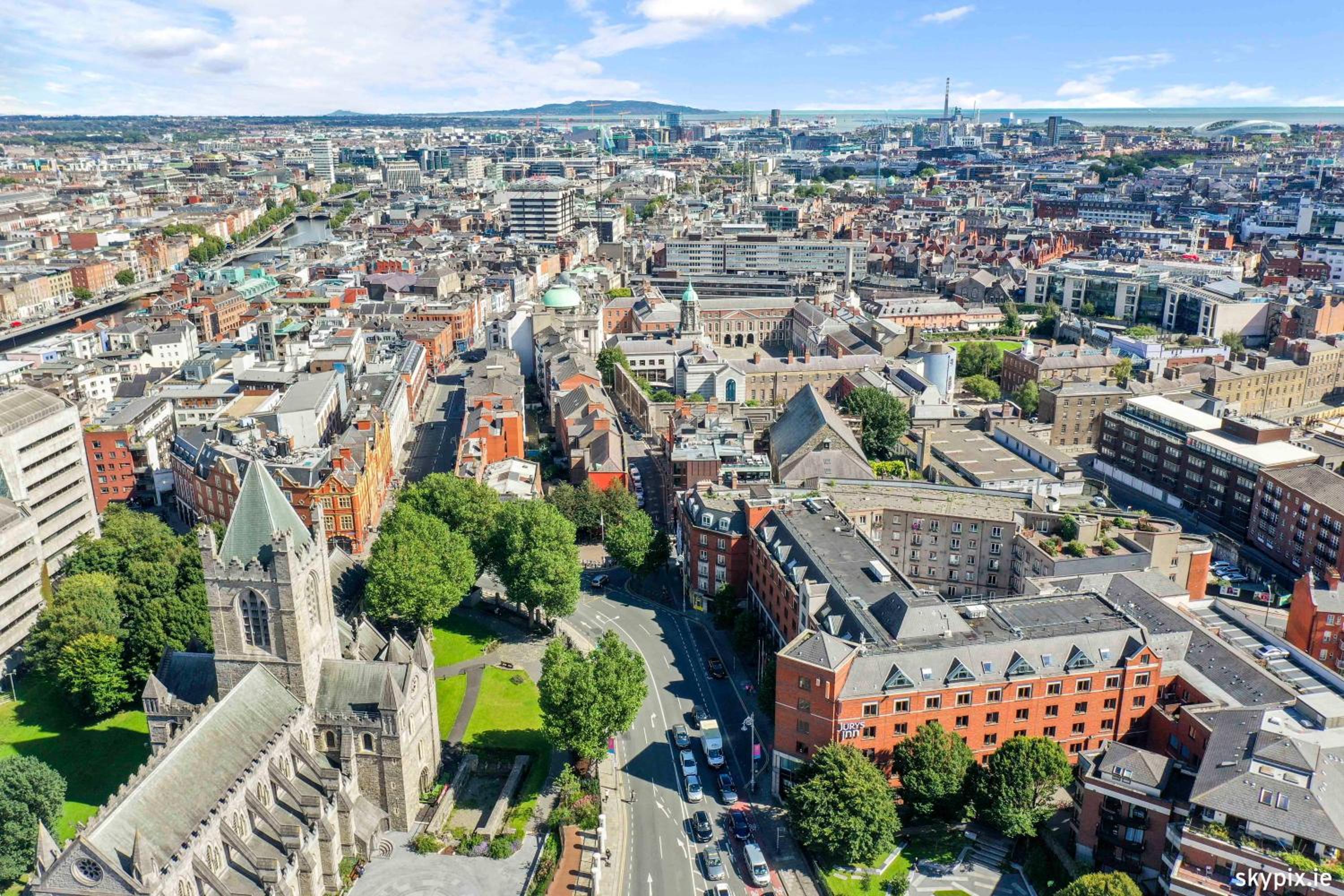
15. Leonardo Hotel Dublin Christchurch — Christ Church / The Liberties fringe · 4★ · 8,413 reviews · from ~£237/night. Steps from Christ Church Cathedral and Dublin Castle, with the Guinness Storehouse a 10-minute walk — the mid-tier's strongest sightseeing base.
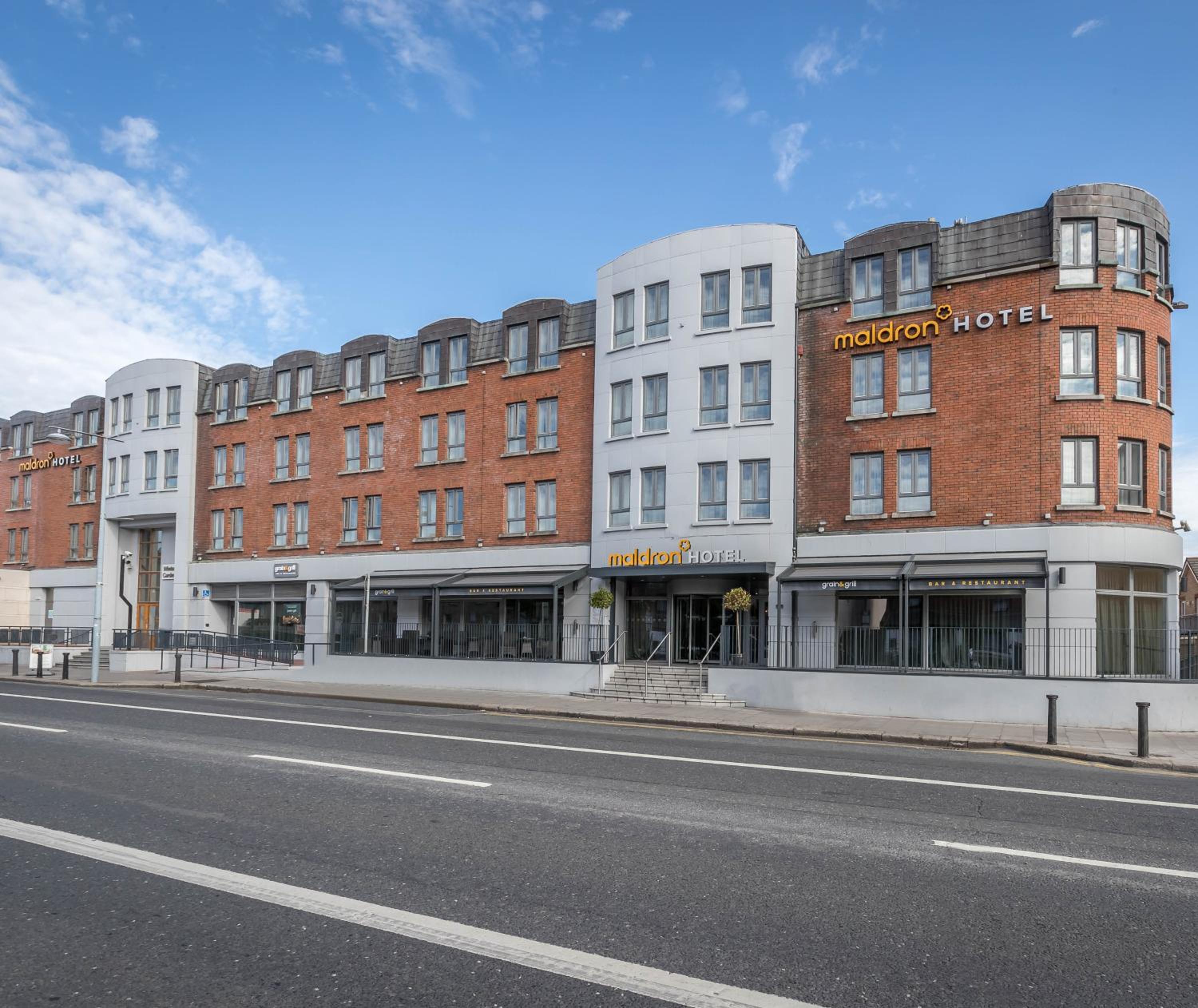
16. Maldron Hotel Pearse Street Dublin City — Pearse Street / Trinity fringe · 4★ · 7,078 reviews · from ~£197/night. One of several reliable Irish 4-star mid-market Maldron properties in this guide — a five-minute walk from Trinity College and the Docklands both, with dependable rooms and breakfast.
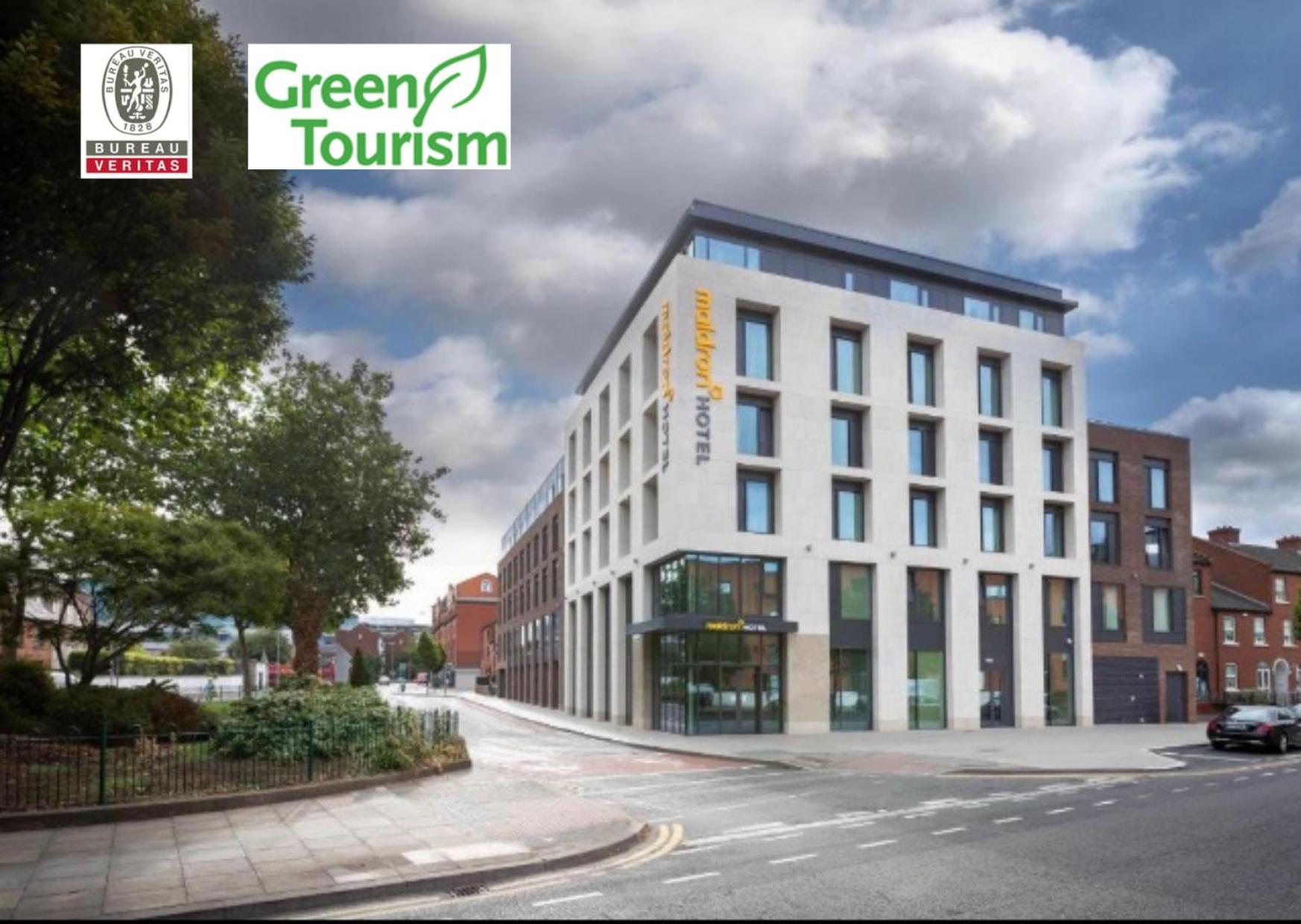
17. Maldron Hotel Kevin Street, Dublin City — Kevin Street / The Liberties · 4★ · 7,064 reviews · from ~£220/night. Another dependable Maldron address, this one on the Liberties edge near the Guinness Storehouse and St Patrick's Cathedral — a solid choice for distillery-and-cathedral sightseeing.
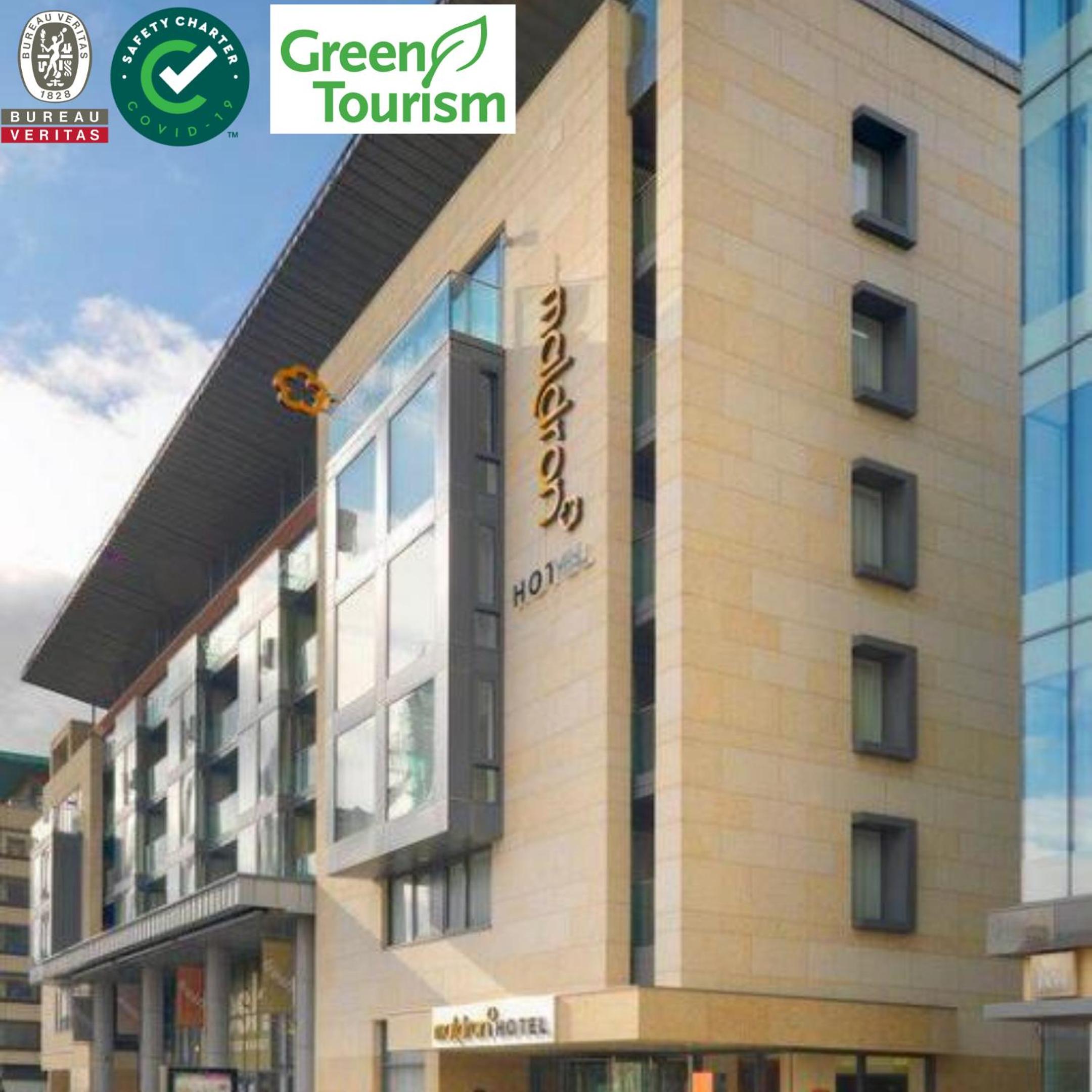
18. Maldron Hotel Smithfield Dublin City — Smithfield · 4★ · 6,998 reviews · from ~£213/night. The Maldron chain's Smithfield outpost, in the cobbled market square turned café district on the north side — a five-minute walk to the Guinness Storehouse and the Luas tram line.
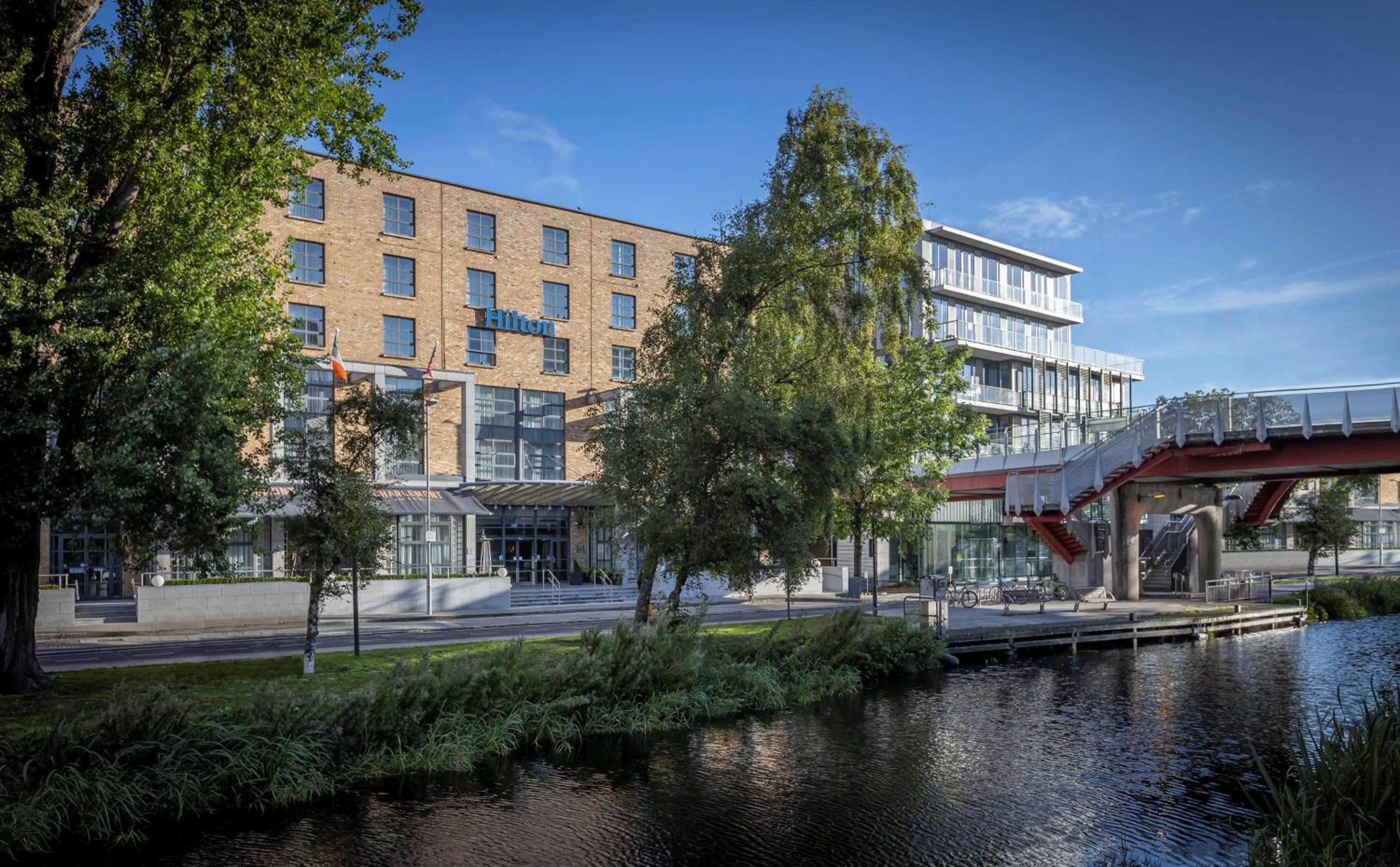
19. Hilton Dublin — City Centre · 4★ · 2,397 reviews · from ~£182/night. The cheapest entry point into this mid-range tier and the only international-chain 4-star on this list at this price — dependable Hilton standards in a central city-centre location.
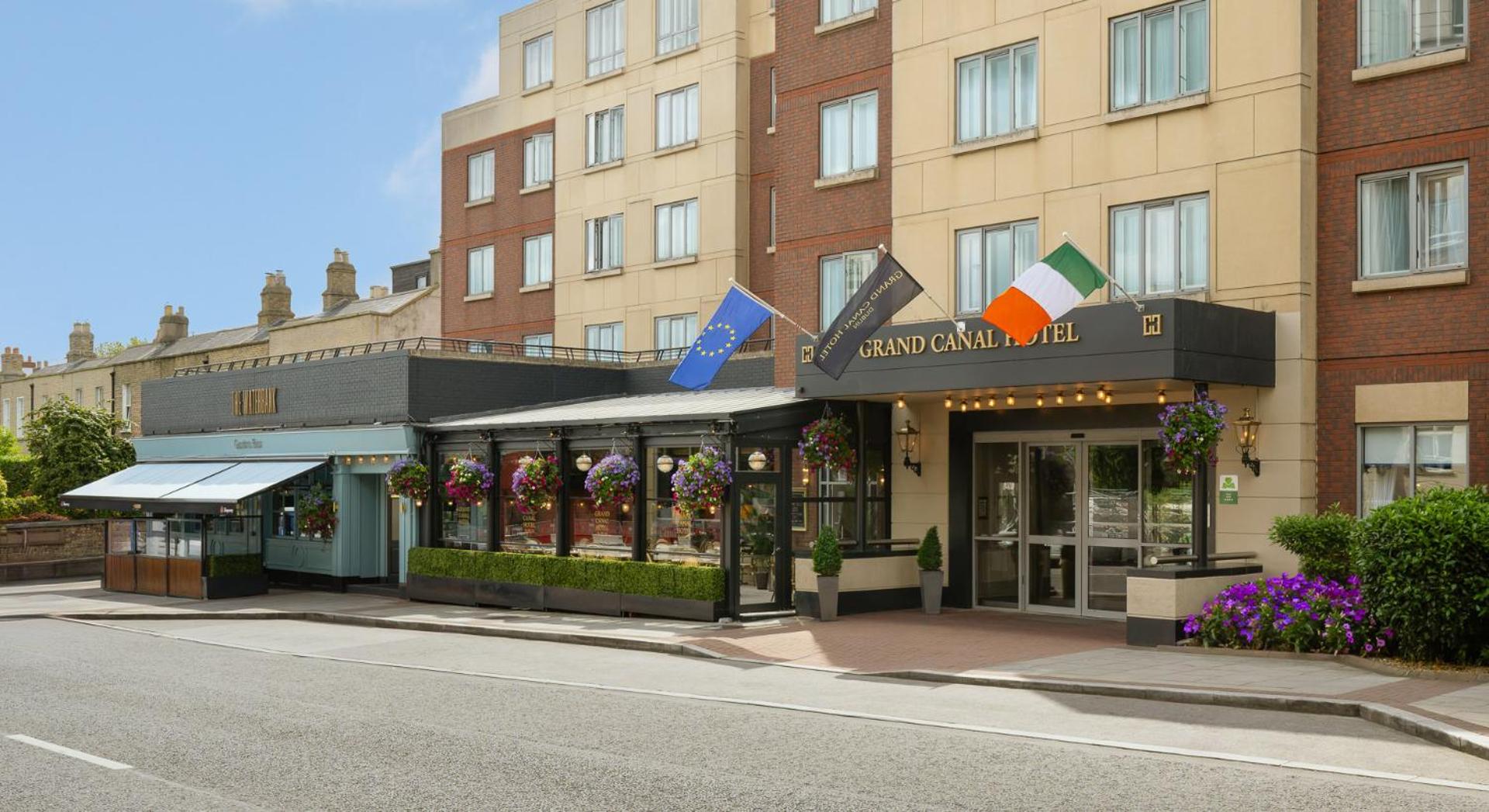
20. Grand Canal Hotel — Grand Canal / Docklands fringe · 4★ · 6,400 reviews · from ~£184/night. A canal-side 4-star between the city centre and the Docklands tech quarter — a quieter mid-range base with easy walking access to both Ballsbridge and the Grand Canal Square restaurants.
Cheap Dublin hotels under £190 — 29 real options
This is the tier we rebuilt this guide for. Every property below is a real, currently operating hotel we verified as distinct, with live wholesale rates on its JetMeAway page. Midweek from-prices were pulled on live July searches while writing; weekends and St Patrick's week run higher. Be honest with yourself about Dublin's floor: £103 here is not London-cheap or Prague-cheap — it's simply the lowest currently-bookable, quality-verified rate in one of Europe's tightest hotel markets.
South City student-aparthotels & guesthouses (from £103)
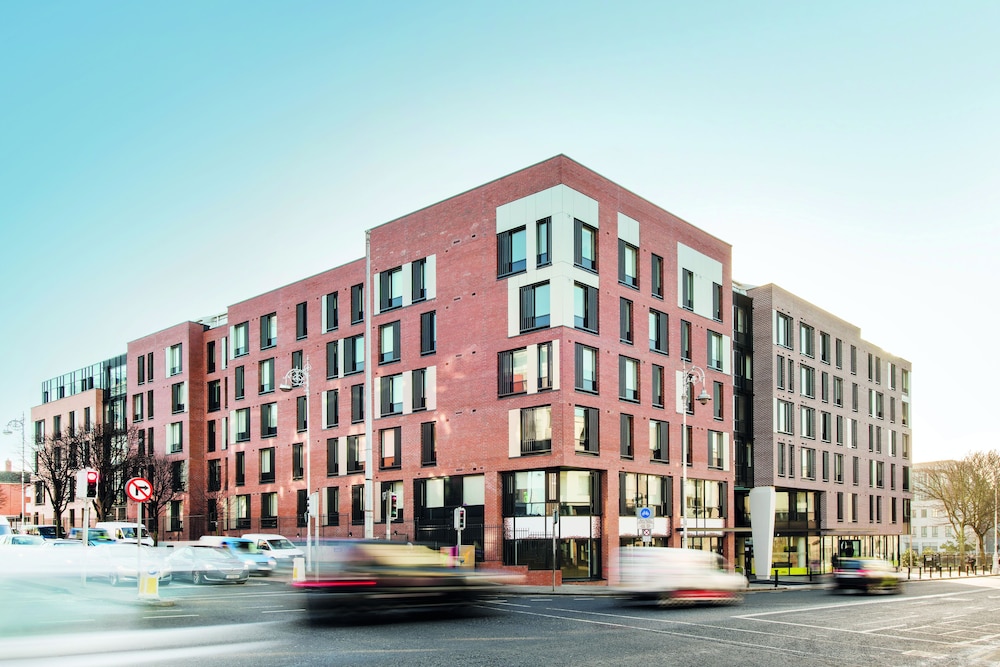
21. Yugo Kavanagh Court — Portobello, South City · 3★ · 190 reviews · from ~£103/night. The cheapest verified bed in this entire guide — a student-style aparthotel near the Grand Canal in Portobello, a 20-minute walk or short bus ride from St Stephen's Green. Compact, functional rooms; the trade-off for the lowest price in the city.
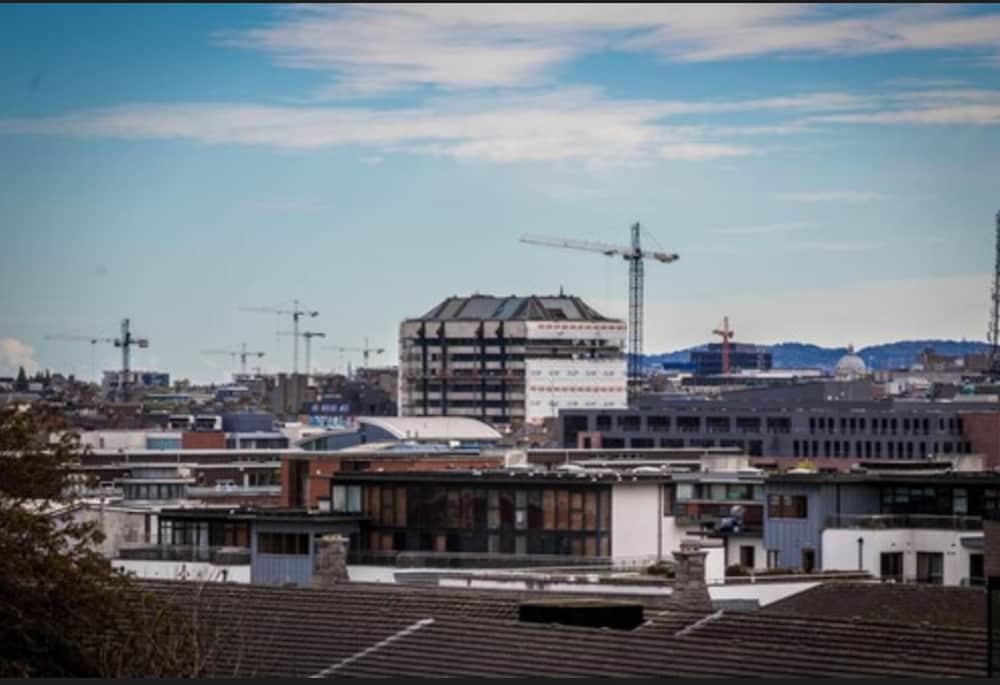
22. Swuite Dublin (Student Accommodation – ApartHotel) — South City · 3★ · 101 reviews · from ~£122/night. Apartment-style student accommodation let out as hotel rooms — kitchenette included, useful for longer stays or travellers who want to self-cater breakfast and cut daily costs.
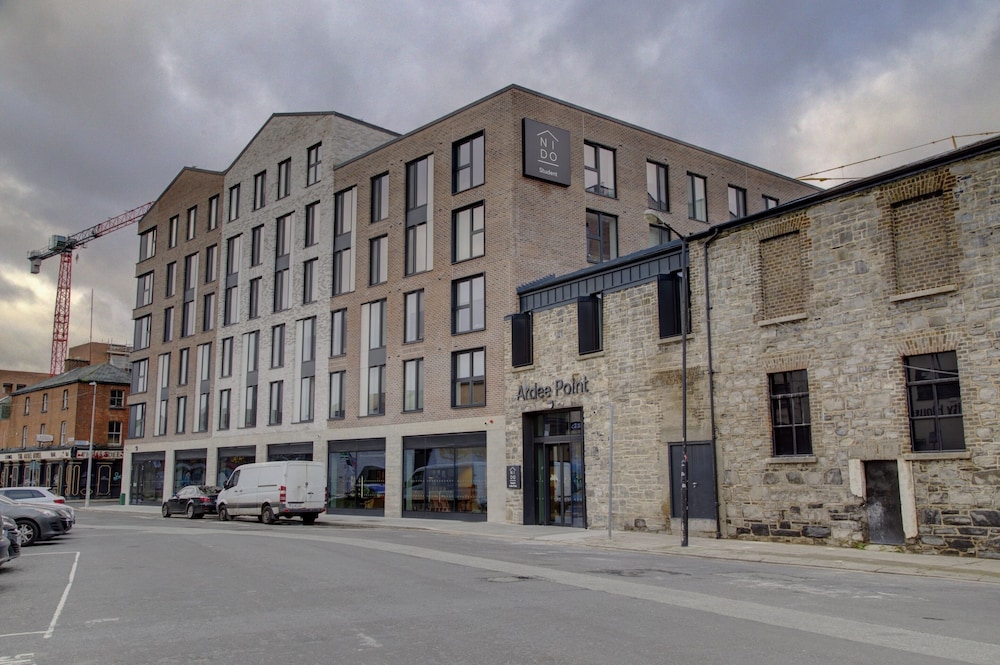
23. Destiny Student – Ardee Point — South City · 3★ · 83 reviews · from ~£142/night. Another student-accommodation-turned-aparthotel, similar in style to Swuite and Yugo — a reliable budget format in this city where purpose-built hotel supply is genuinely constrained.
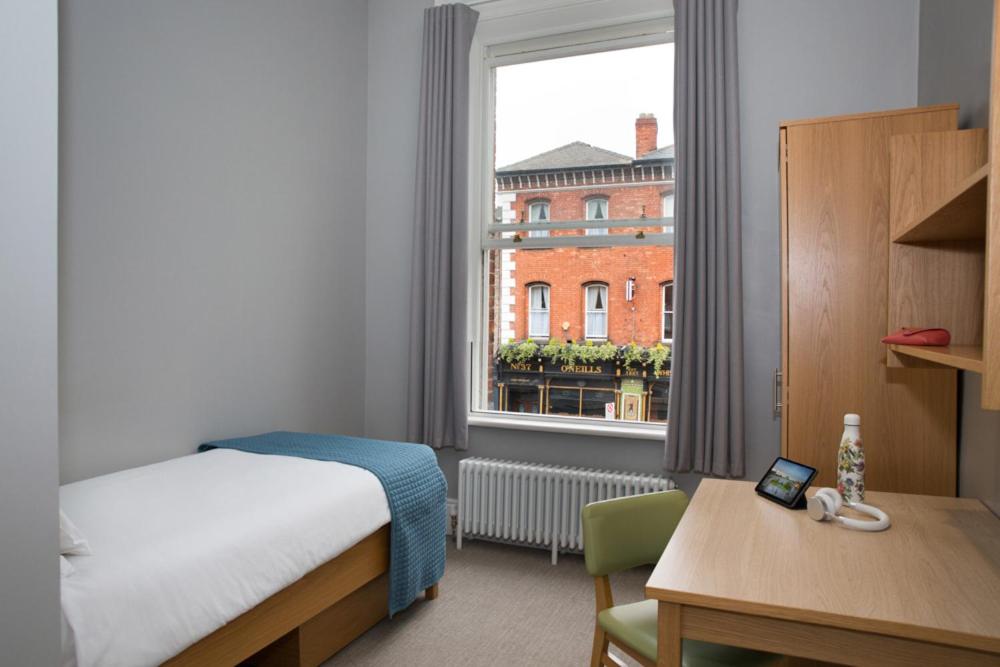
24. Trinity College – Campus Accommodation — Trinity College grounds, City Centre · 3★ · 2,091 reviews · from ~£178/night. Sleep inside Trinity College's own grounds, footsteps from the Book of Kells and the Long Room — a genuinely unique location that only opens up outside term time, at a mid-budget price for the address.
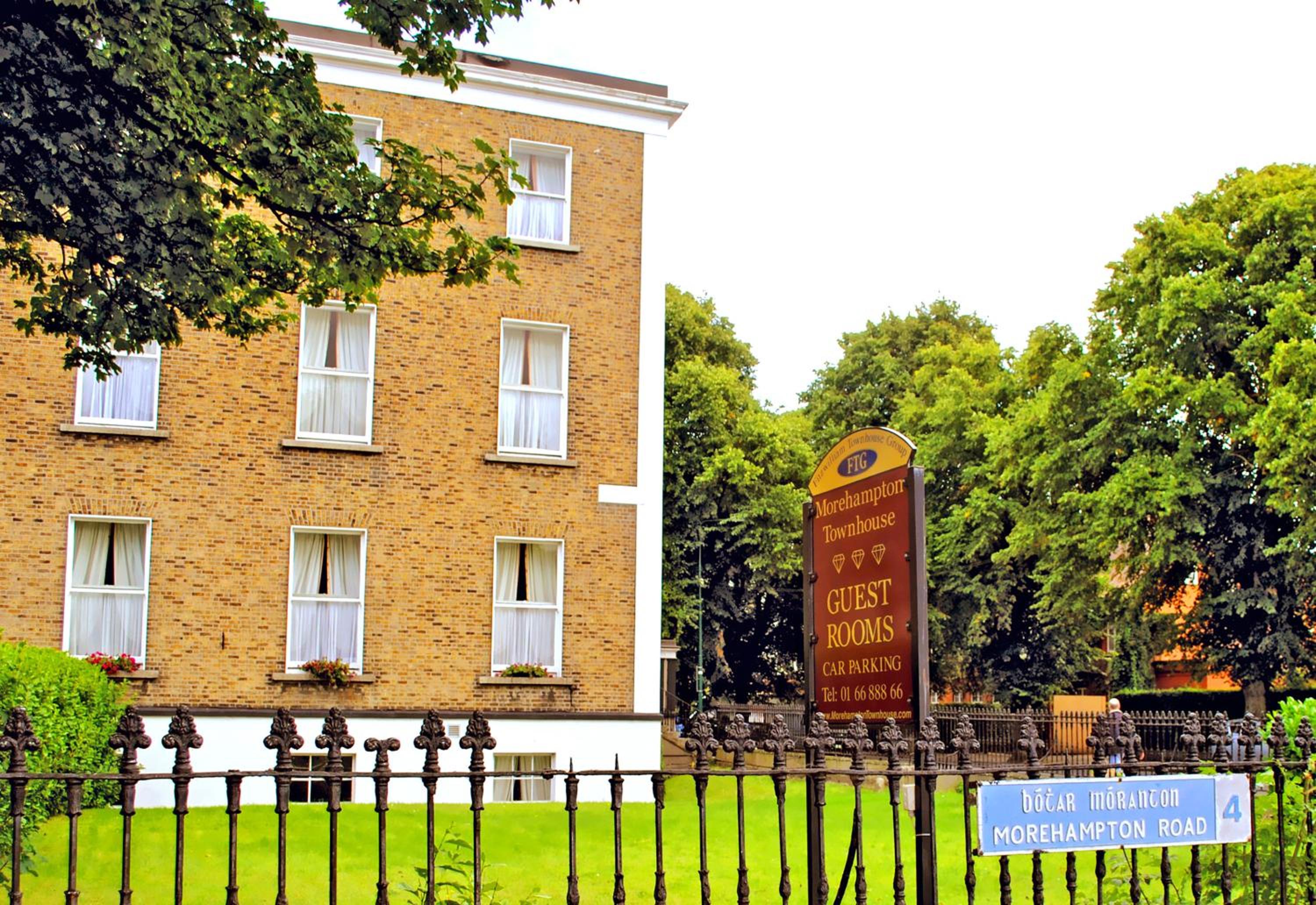
25. Morehampton Townhouse — Donnybrook, South City · 3★ · 3,793 reviews · from ~£176/night. A well-reviewed Georgian guesthouse in the quiet, leafy Donnybrook residential district — a short bus ride from St Stephen's Green, and a calmer alternative to the city-centre budget hotels.
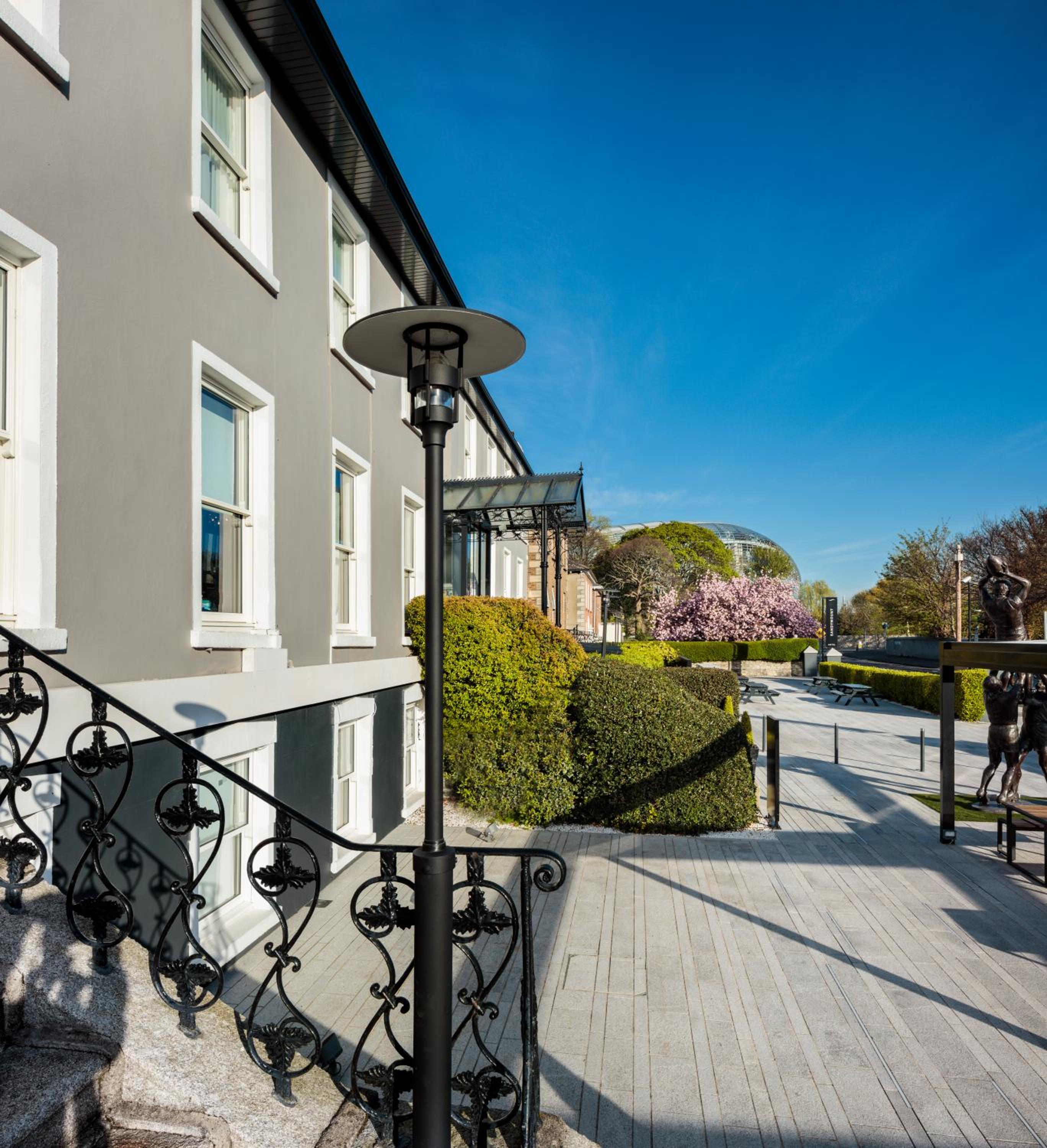
26. The Sandymount Hotel — Sandymount, South City · 4★ · 4,048 reviews · from ~£188/night. A proper 4-star in a residential seaside suburb with its own DART rail stop into the centre — the strongest family fit in the budget tier, with more space and quiet streets than anything at a similar price in the centre.
City Centre budget (from £145)
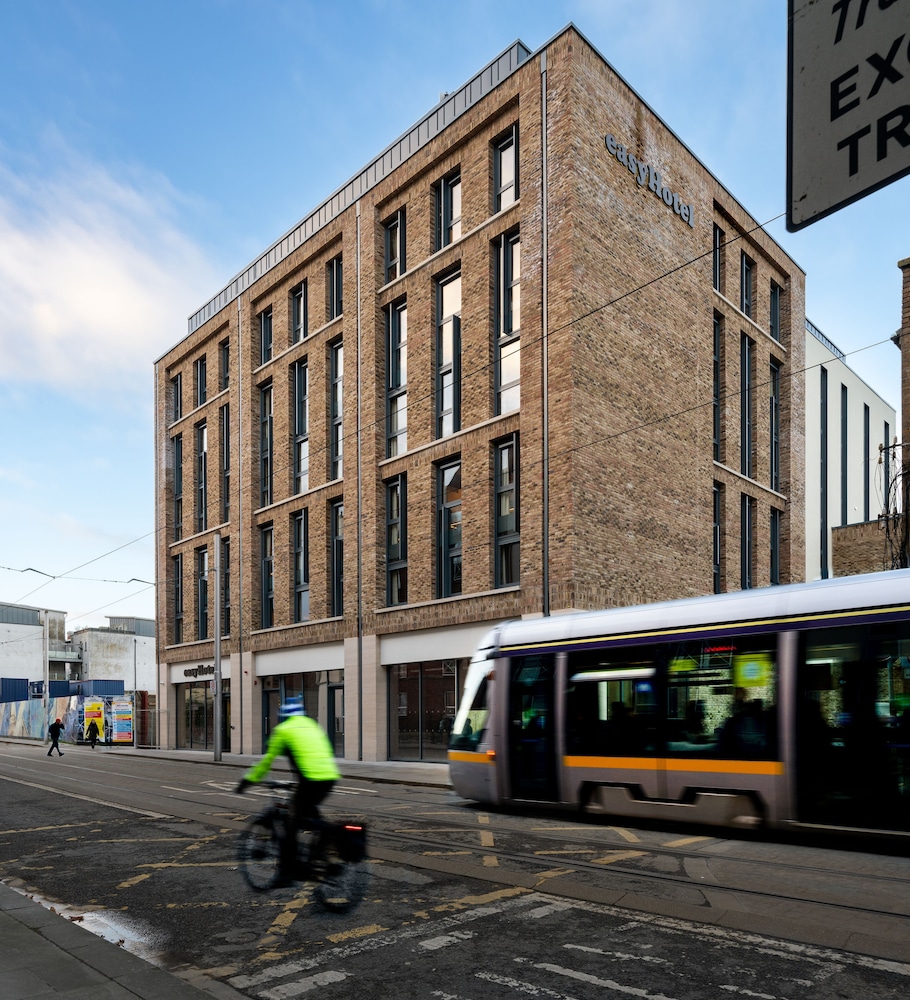
27. easyHotel Dublin City Centre — City Centre · 3★ · 287 reviews · from ~£145/night. Compact, no-frills rooms five minutes' walk from Temple Bar — the cheapest proper hotel-brand stay within genuine walking distance of the pubs and Trinity's front gate.
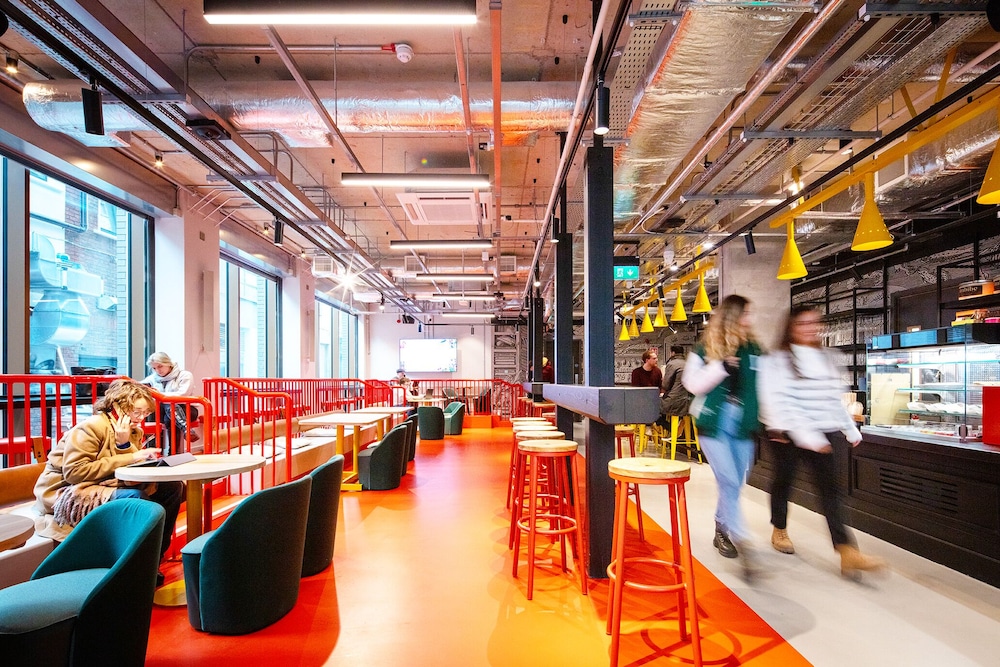
28. Clink i Lár — City Centre · 2★ · 223 reviews · from ~£140/night. A hostel-hotel hybrid in a converted building near Connolly Station — private-room rates that undercut most nearby branded hotels, aimed at travellers who want privacy without hostel-dorm pricing pressure.
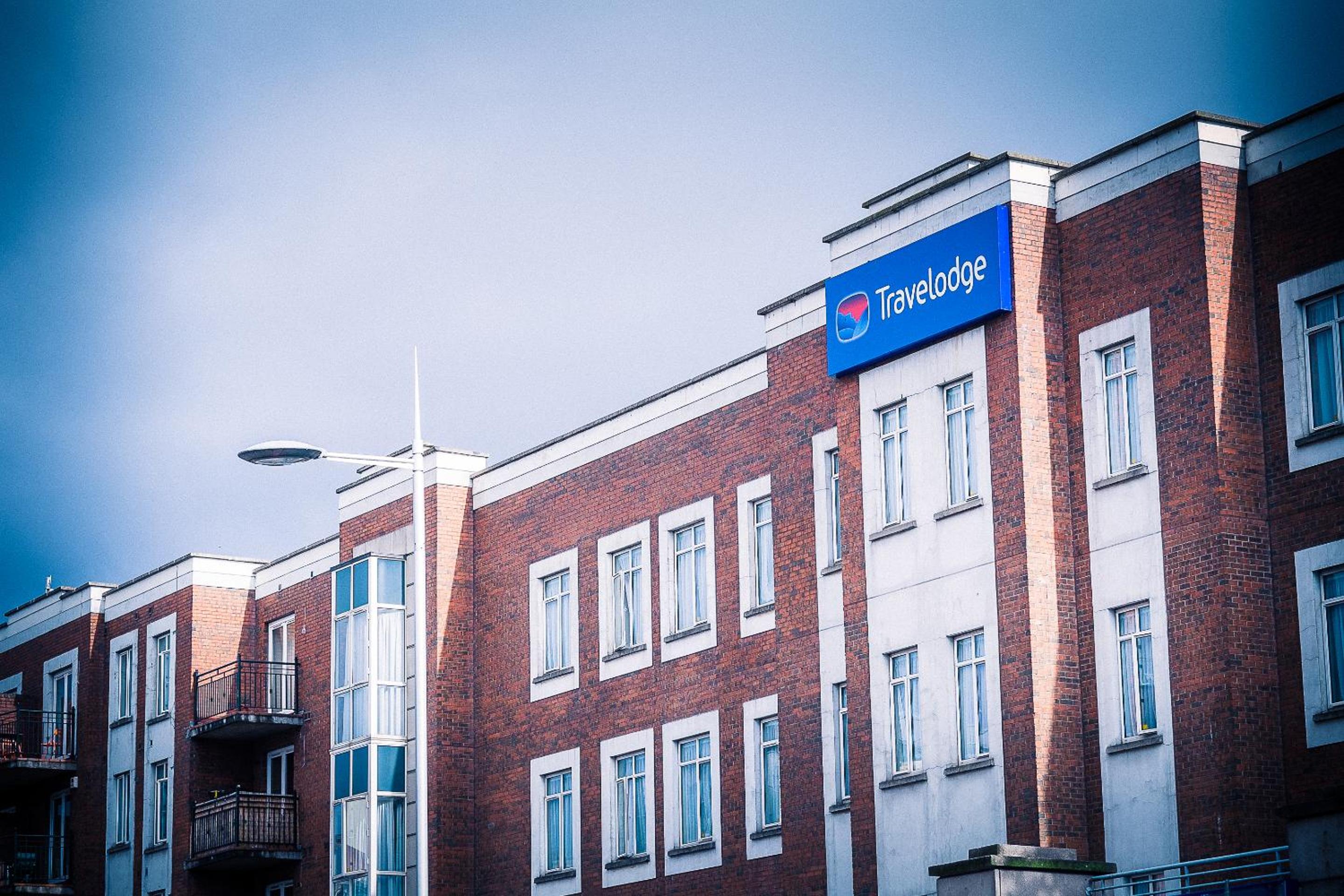
29. Travelodge Dublin City Rathmines — Rathmines, South City · budget chain · 3,115 reviews · from ~£161/night. The familiar UK Travelodge format transplanted to Dublin's Rathmines district — a straightforward, honestly priced budget chain option a bus ride from the centre.
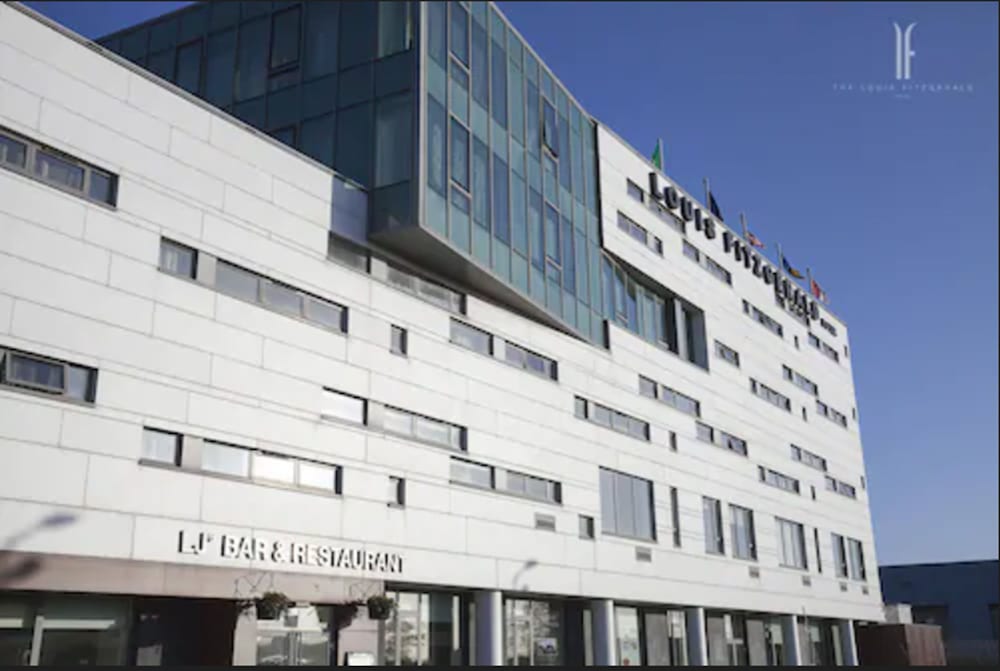
30. The Louis Fitzgerald Hotel — City Centre fringe · 4★ · 188 reviews · from ~£162/night. A locally-run 4-star with a well-known pub attached — a solid, unpretentious base with more character than the branded budget chains nearby.
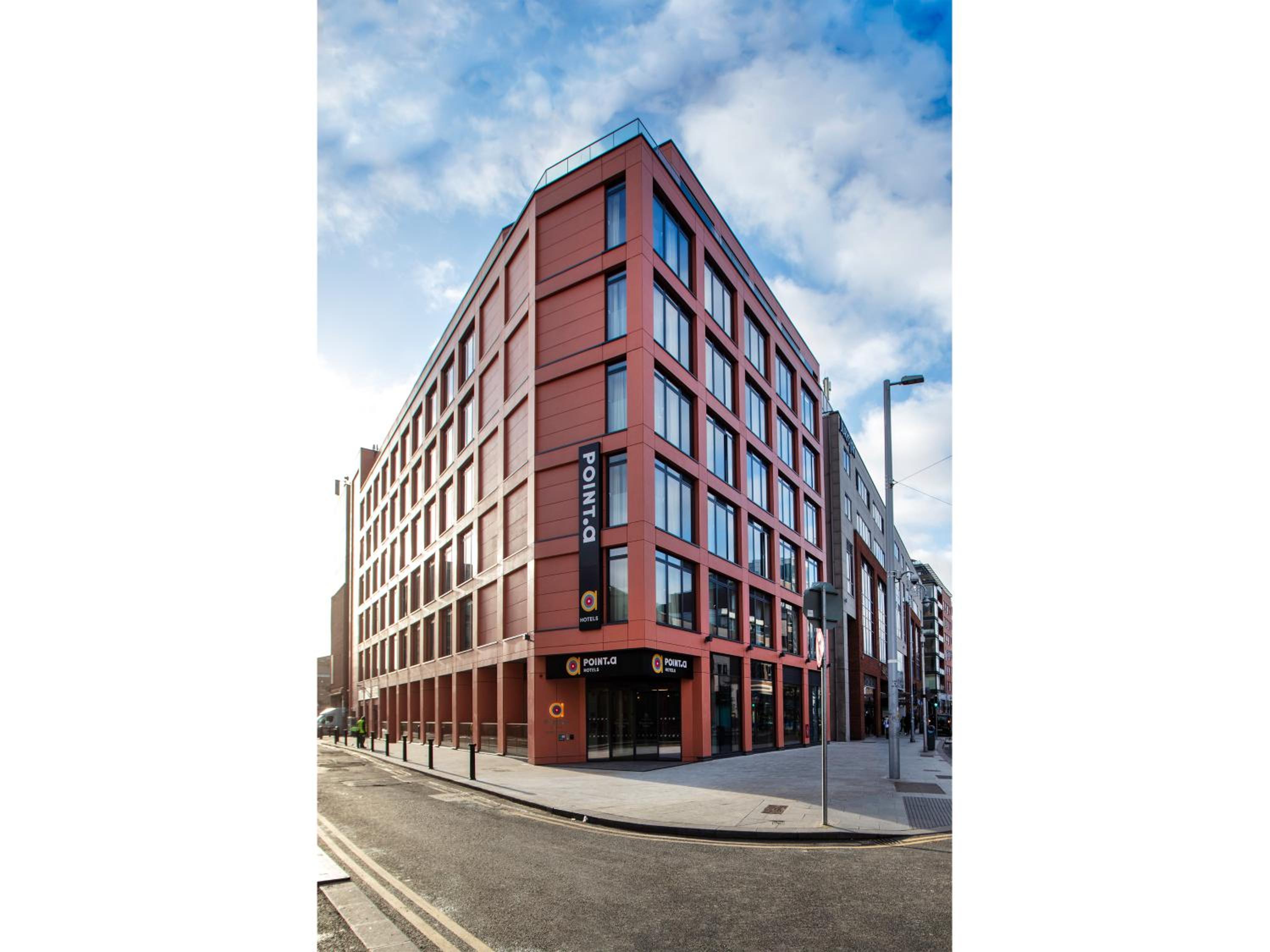
31. Point A Hotel Dublin Parnell Street — Parnell Street, North Side · 3★ · 8,458 reviews · from ~£164/night. A modern budget-boutique on the north side near O'Connell Street — sharp, compact rooms and one of the highest review counts in the budget tier, a short walk from Croke Park.
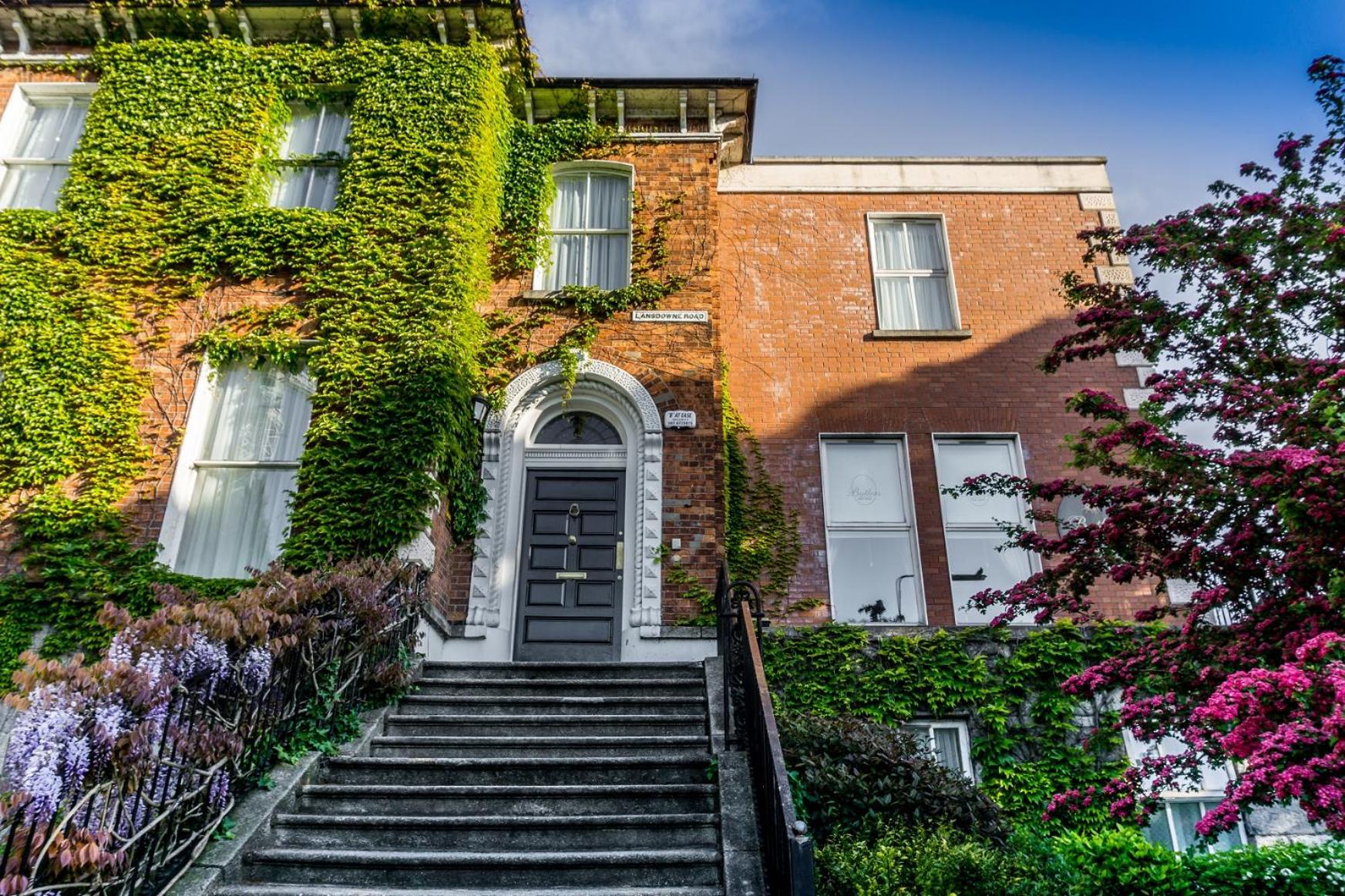
32. Butlers Townhouse — Canal-side, South City · 4★ · 486 reviews · from ~£171/night. A small Georgian guesthouse near the Grand Canal — the budget tier's couples' pick, quieter and more personal than the big chain hotels at a similar price point.
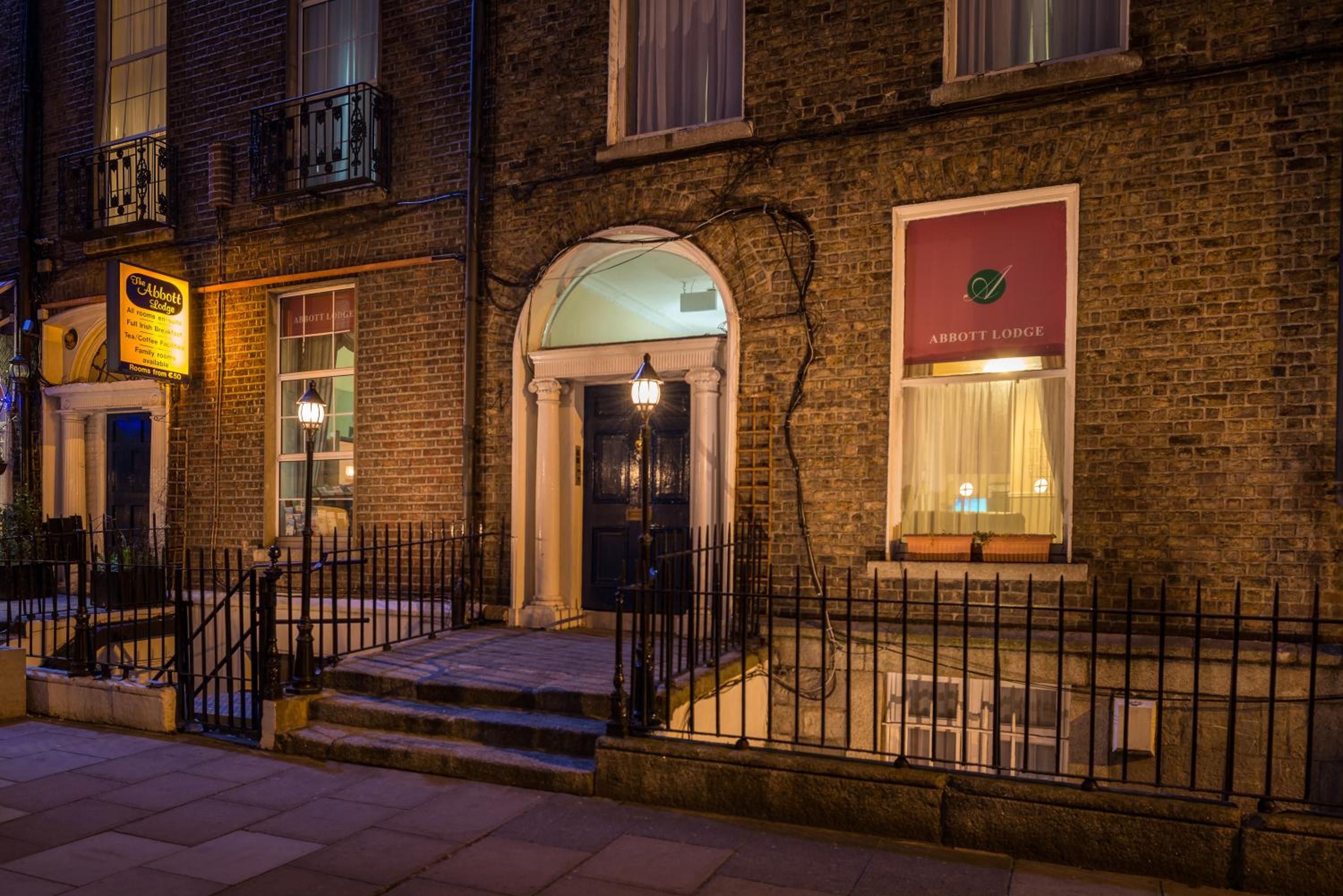
33. Iveagh Lodge — South City · 2★ · 696 reviews · from ~£173/night. A simple, independently run lodge close to the Iveagh Gardens — a quiet green-space base a short walk from St Stephen's Green.
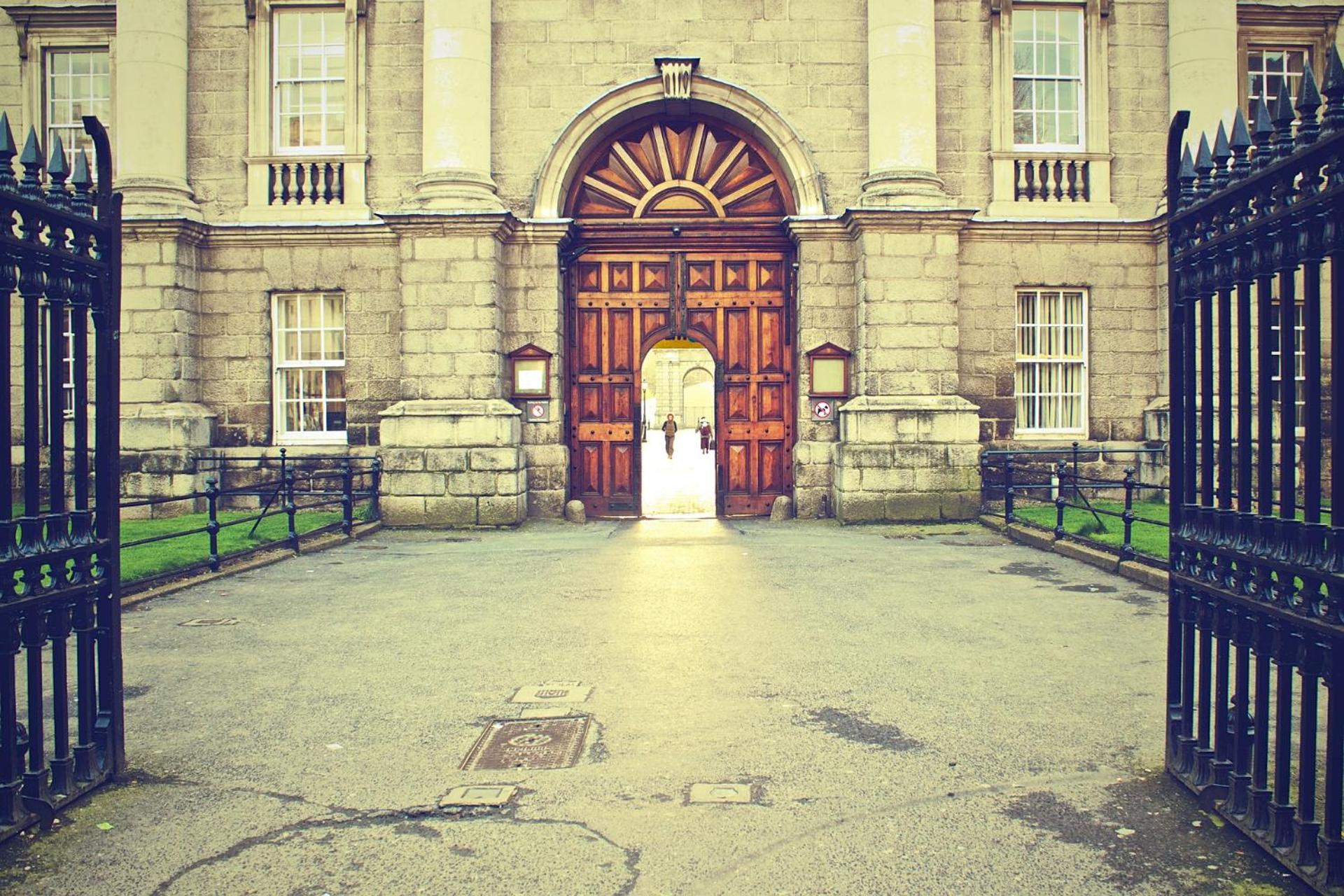
34. The Gate Hotel — Off O'Connell Street, North Side · 1★ · 3,847 reviews · from ~£175/night. A no-frills city-centre base a 10-minute walk to Temple Bar over the Ha'penny Bridge, and a similar distance to Croke Park in the other direction.
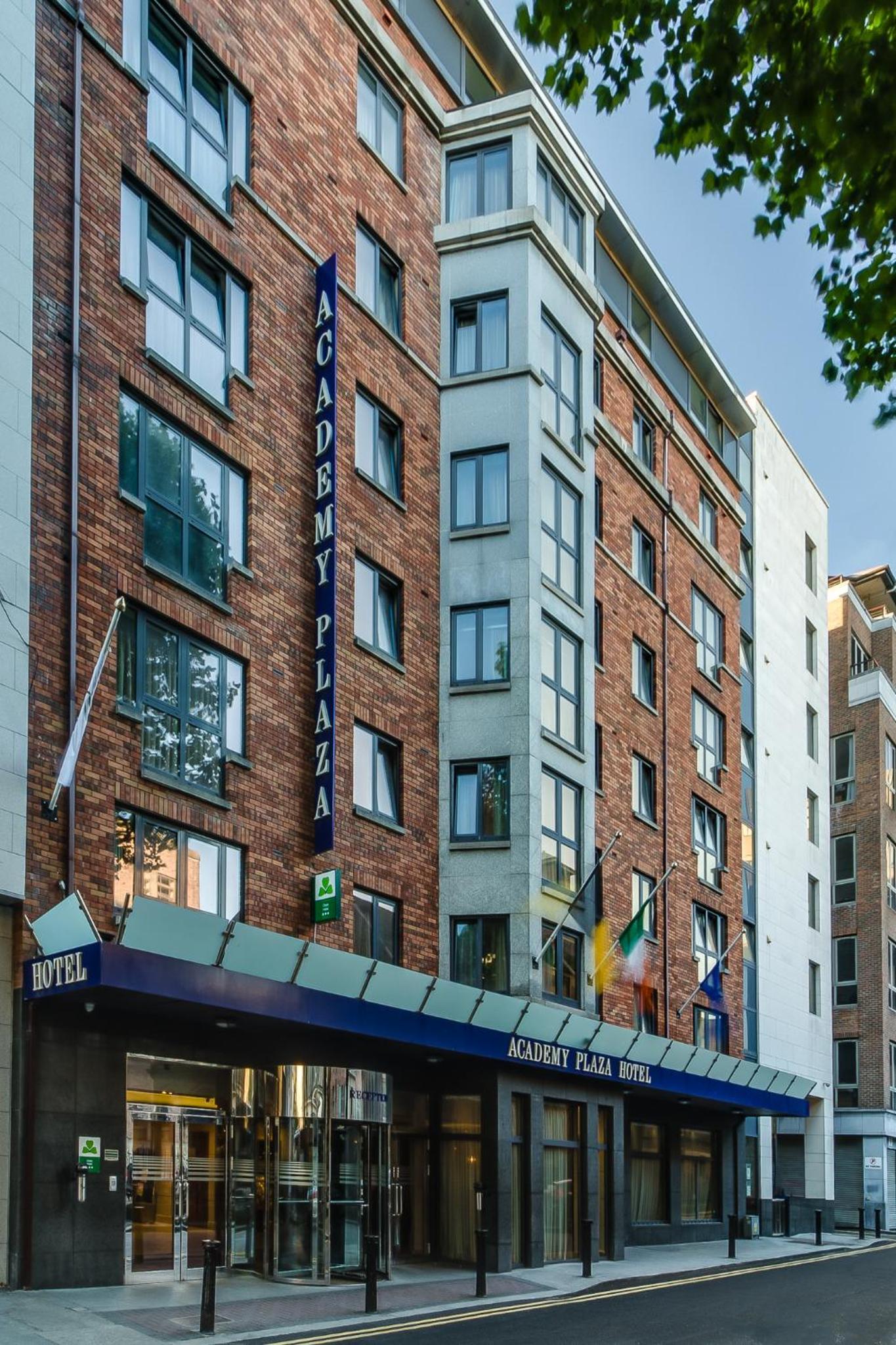
35. Academy Plaza Hotel — Off O'Connell Street, North Side · 3★ · 10,833 reviews · from ~£178/night. A well-reviewed budget-mid hotel a few minutes from O'Connell Street, with easy access to both Temple Bar and Croke Park on foot.
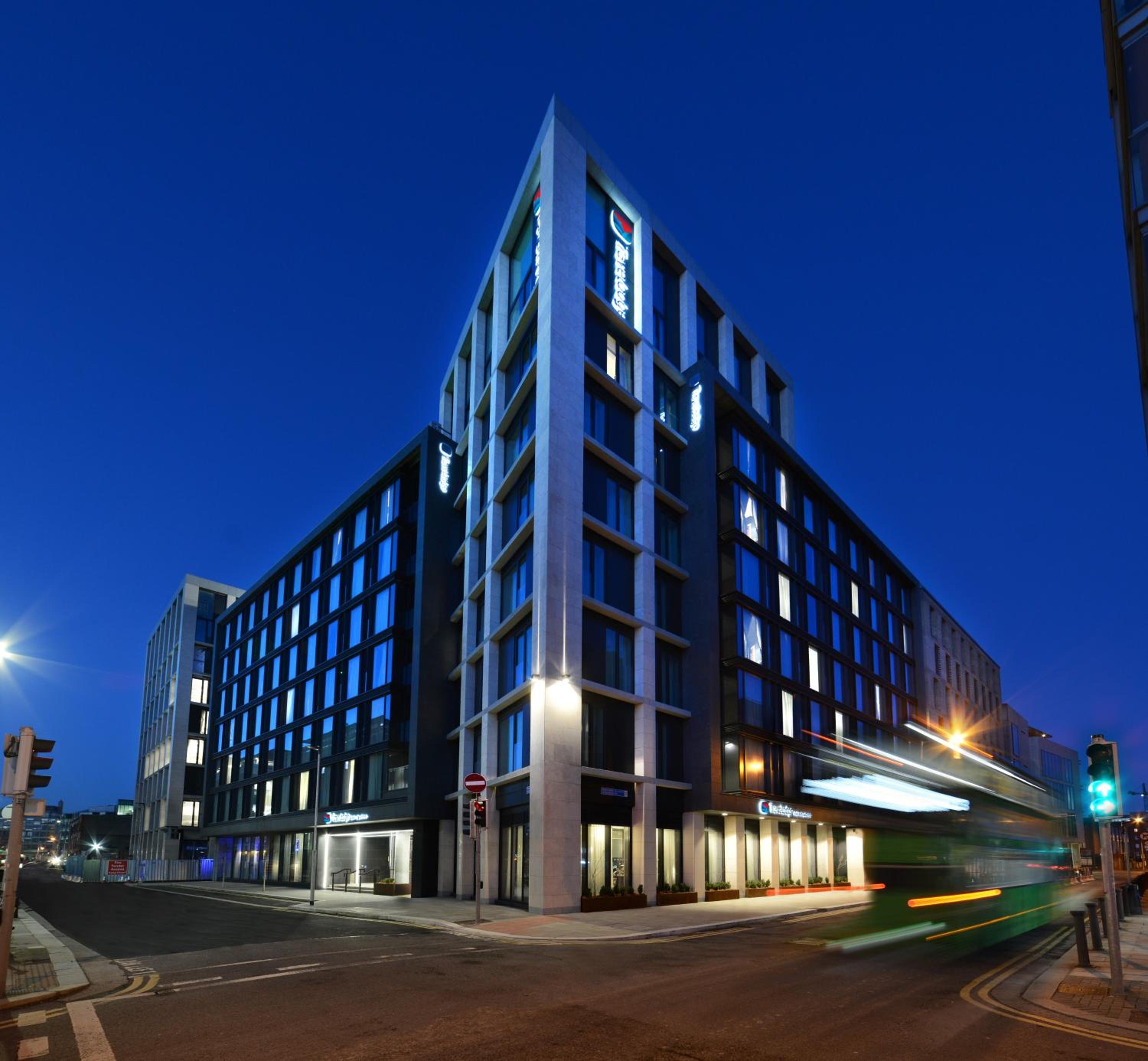
36. Travelodge PLUS Dublin City Centre — City Centre · 3★ · 12,884 reviews · from ~£180/night. The upgraded Travelodge PLUS format, right in the city centre — one of the most-reviewed budget properties in the guide, priced at the top of the budget band for its central position.
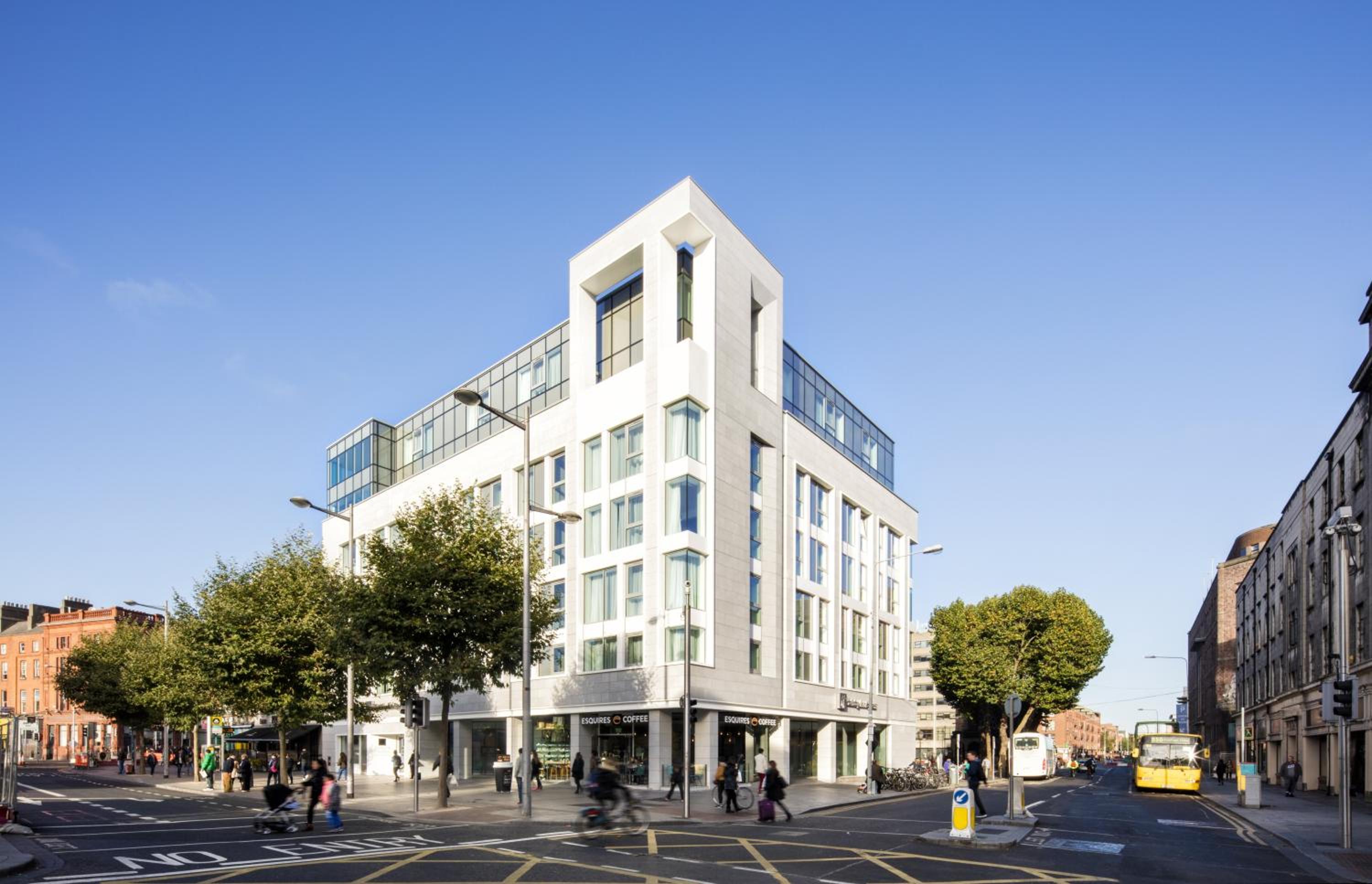
37. Holiday Inn Express Dublin City Centre — City Centre · 3★ · 7,529 reviews · from ~£181/night. The reliable IHG budget-business format, centrally located — a dependable choice for travellers who prioritise a known chain over character.
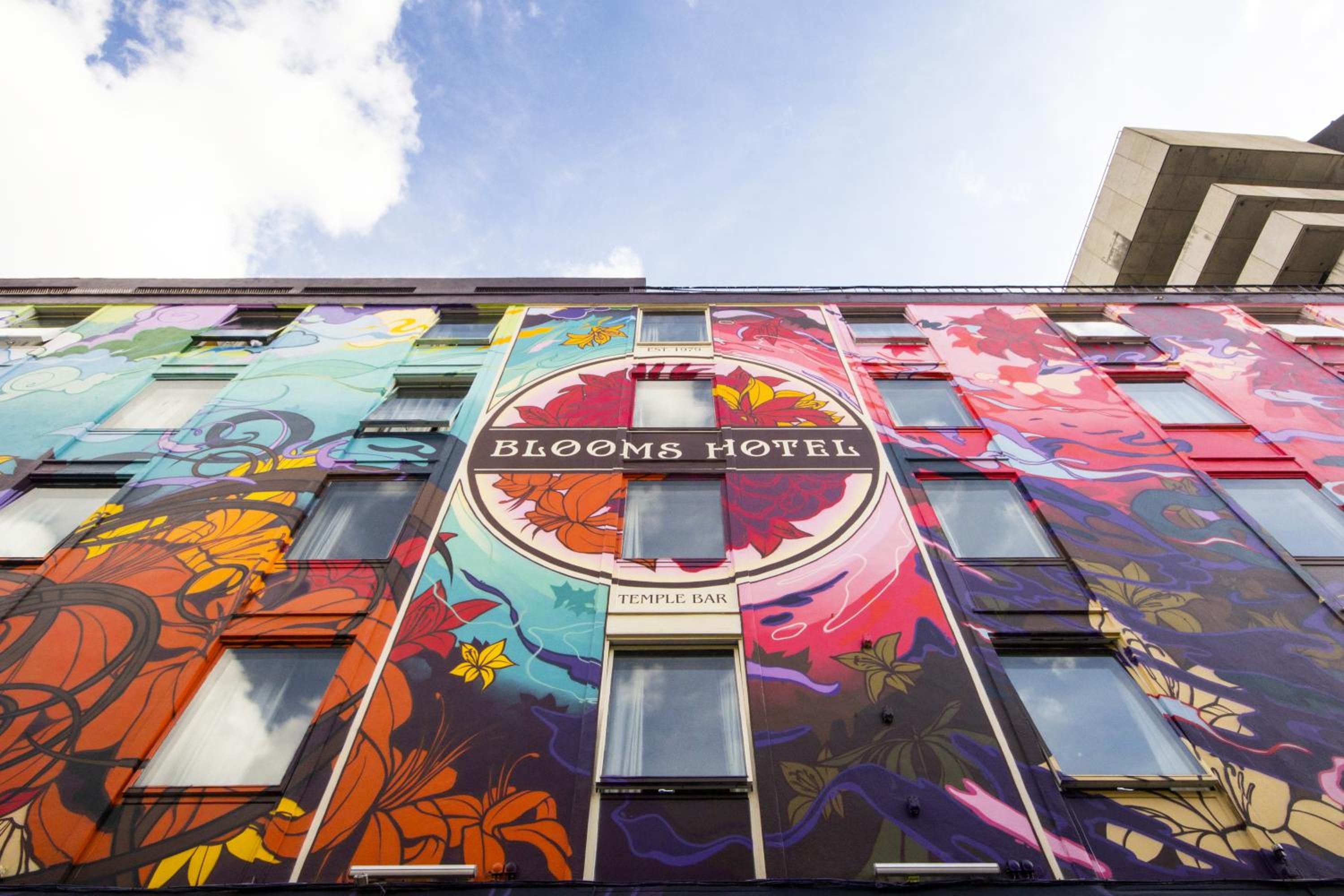
38. Blooms Hotel — Temple Bar edge, City Centre · 3★ · 10,169 reviews · from ~£185/night. Right on the edge of Temple Bar itself — the closest budget-tier hotel to the pubs and cobbled lanes, for travellers who want to walk out the door straight into the nightlife.
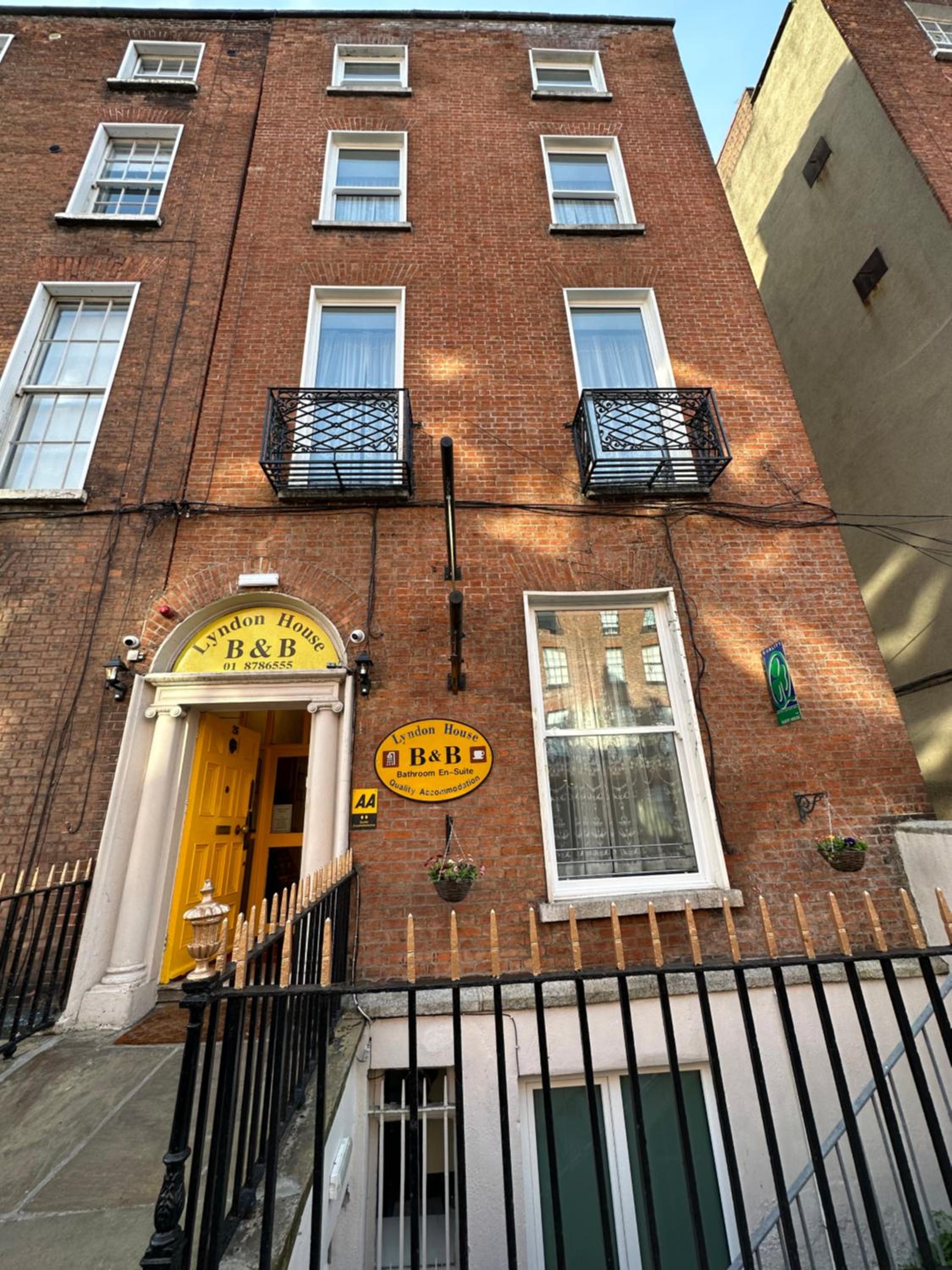
39. Lyndon Guesthouse — City Centre · 1,468 reviews · from ~£169/night. A well-reviewed independent guesthouse in the city centre — a straightforward, personally-run alternative to the branded budget chains at a similar price point.
Docklands & Smithfield budget (from £147)
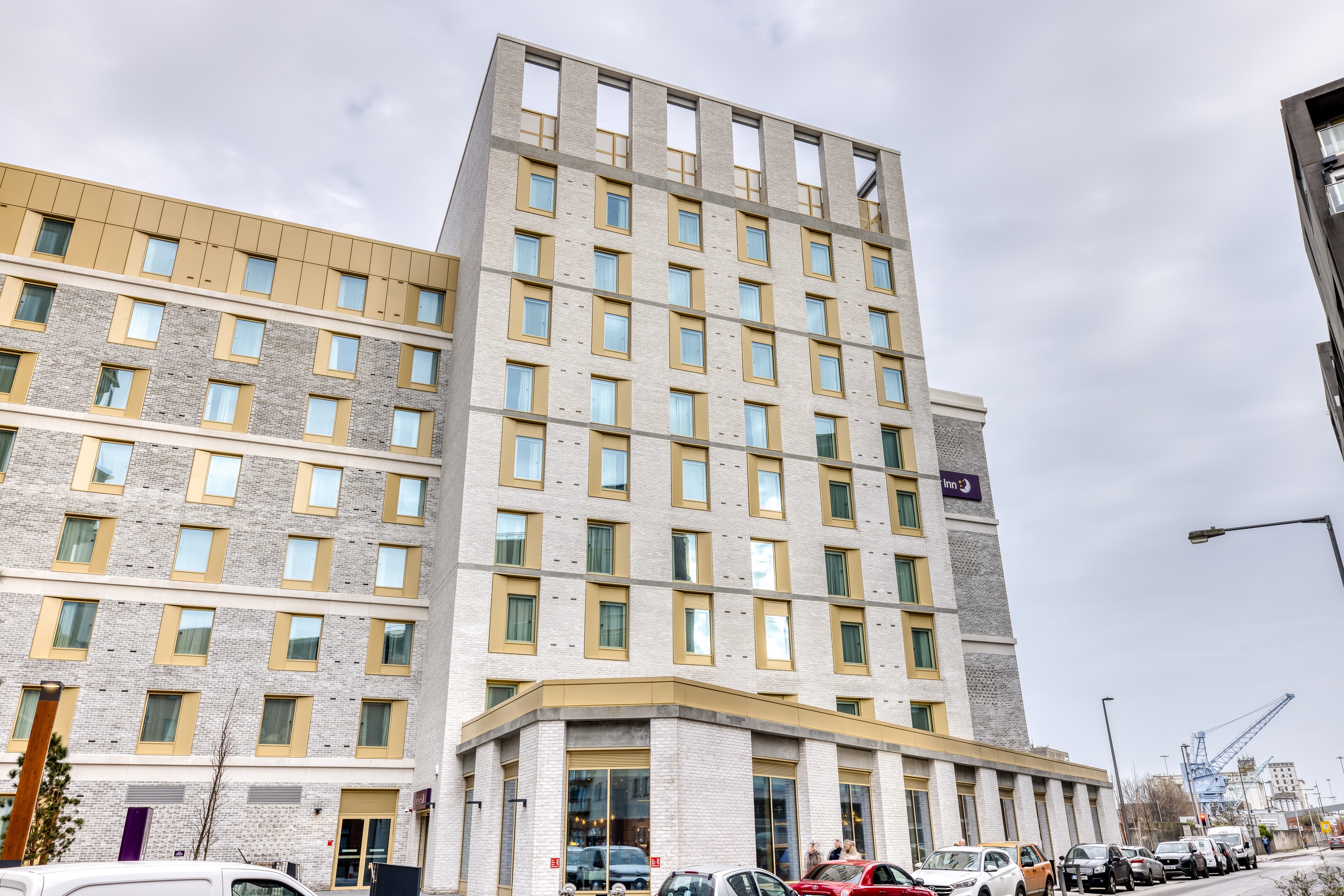
40. Premier Inn Dublin CC North Docklands — Docklands · budget chain · 129 reviews · from ~£164/night. The familiar UK Premier Inn format in Dublin's Docklands — full-size branded rooms near the Grand Canal tech quarter, a strong pick for travellers who know exactly what they're getting.
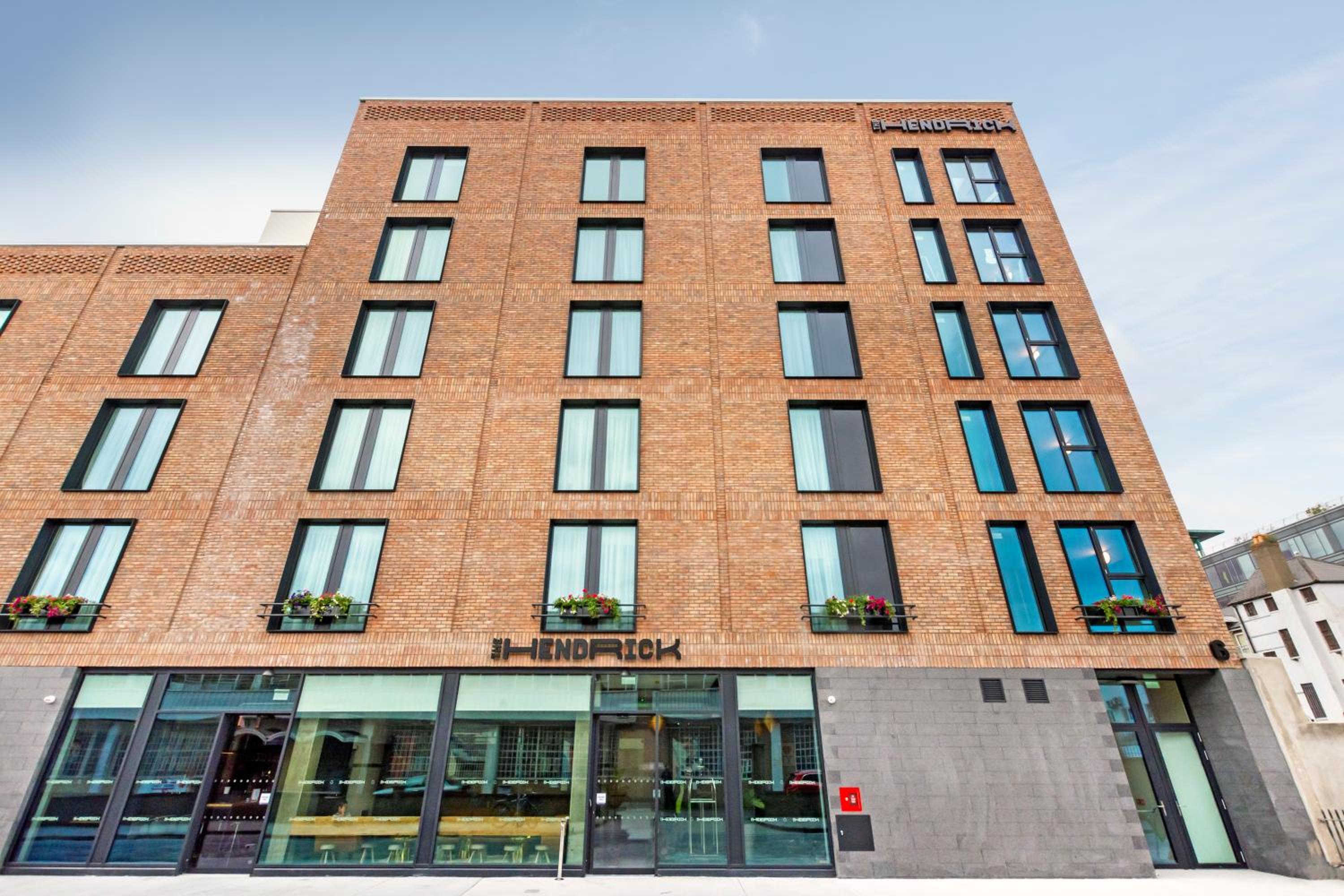
41. The Hendrick Smithfield — Smithfield · 7,713 reviews · from ~£172/night. A large, heavily-reviewed hotel in the Smithfield market square district — five minutes from the Guinness Storehouse and directly on the Luas tram line into the centre.
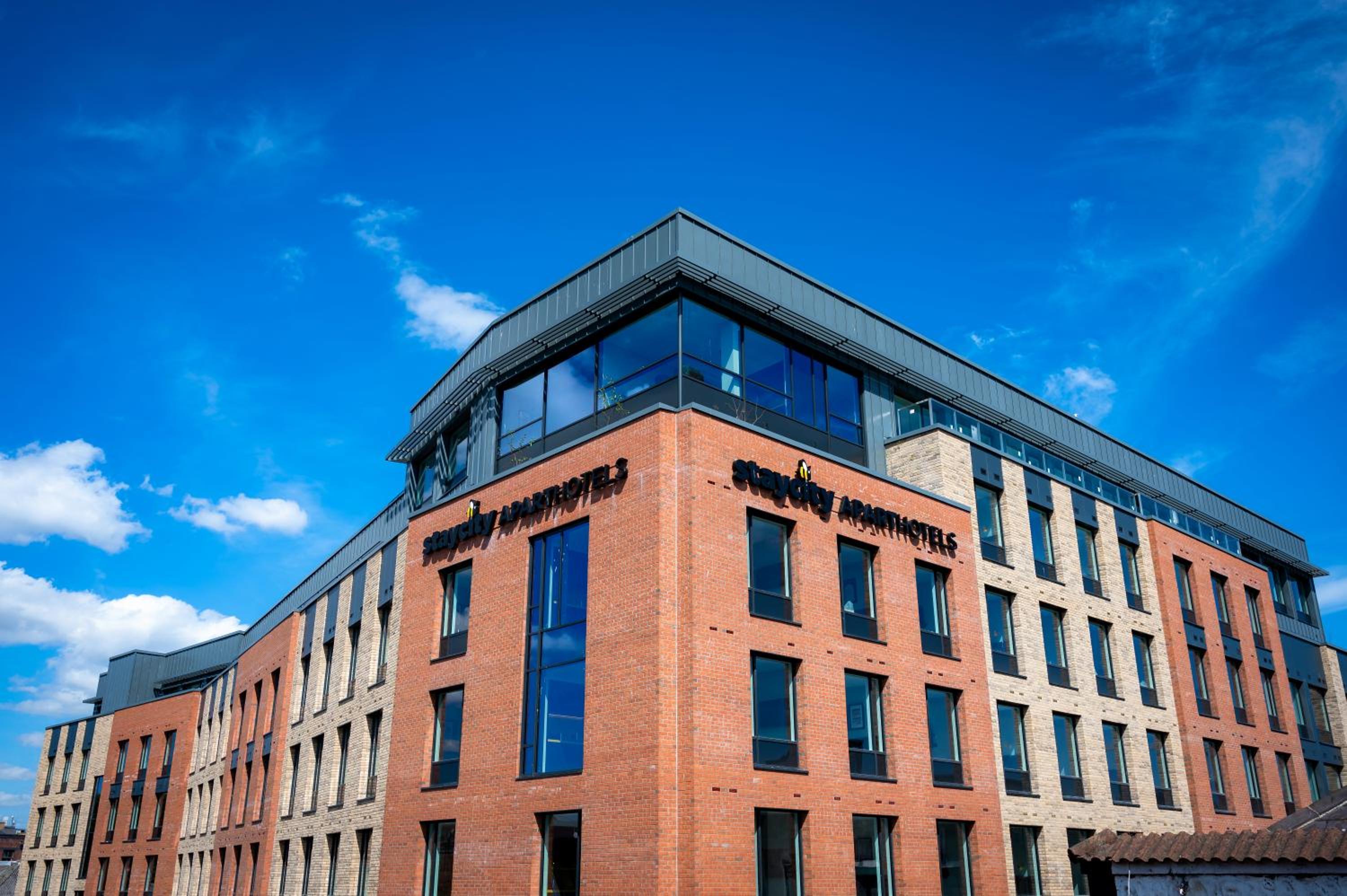
42. Staycity Aparthotels Dublin City Centre — City Centre · 4★ · 13,312 reviews · from ~£174/night. Apartment-style rooms with kitchenettes and one of the highest review counts in the whole budget tier — the strongest self-catering option for families or longer stays.
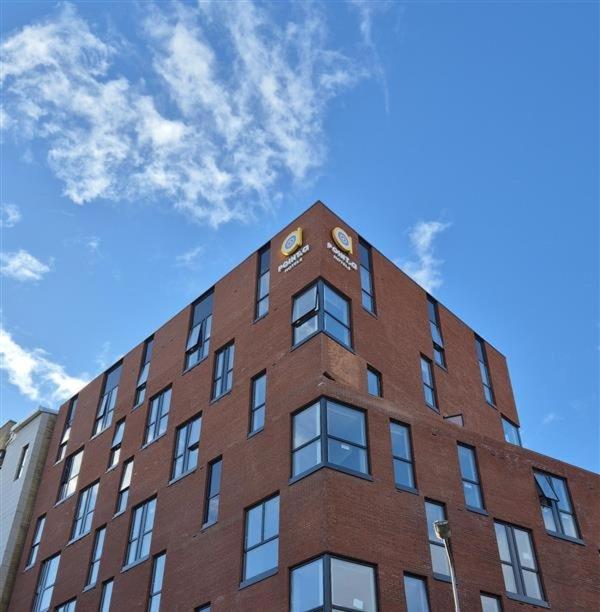
43. Point A Hotel Dublin Liberties — The Liberties · 1,450 reviews · from ~£186/night. The Liberties outpost of the modern Point A budget-boutique format — a short walk from the Guinness Storehouse and the distillery quarter's craft-brewery energy.
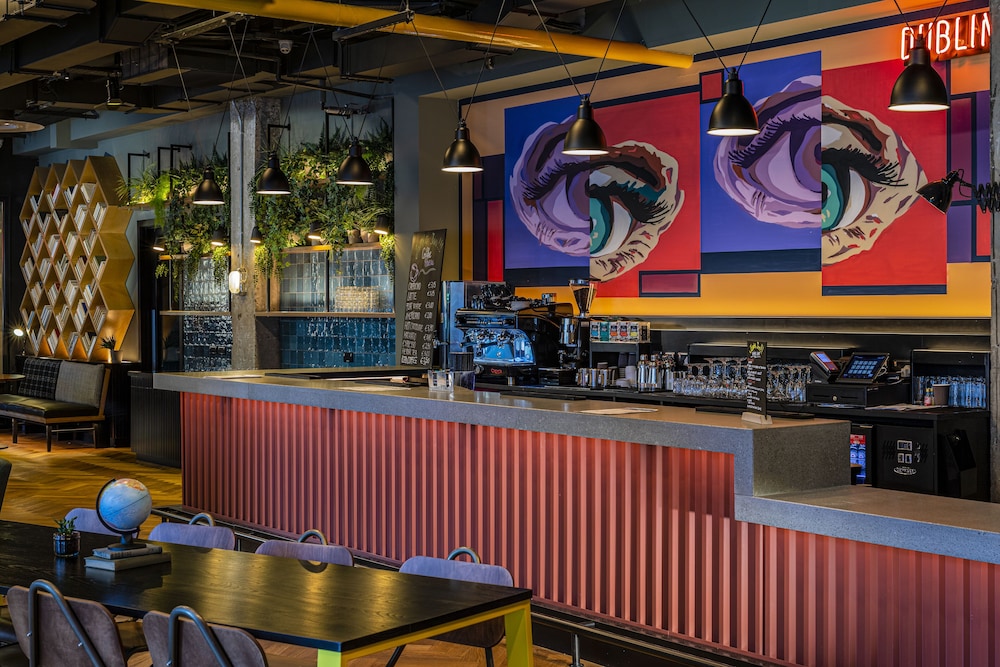
44. Latroupe Jacobs Inn — North Docklands fringe · 2★ · 140 reviews · from ~£186/night. A simple, budget-priced inn near the Docklands — one of the more basic options in this tier, for travellers prioritising price over polish.
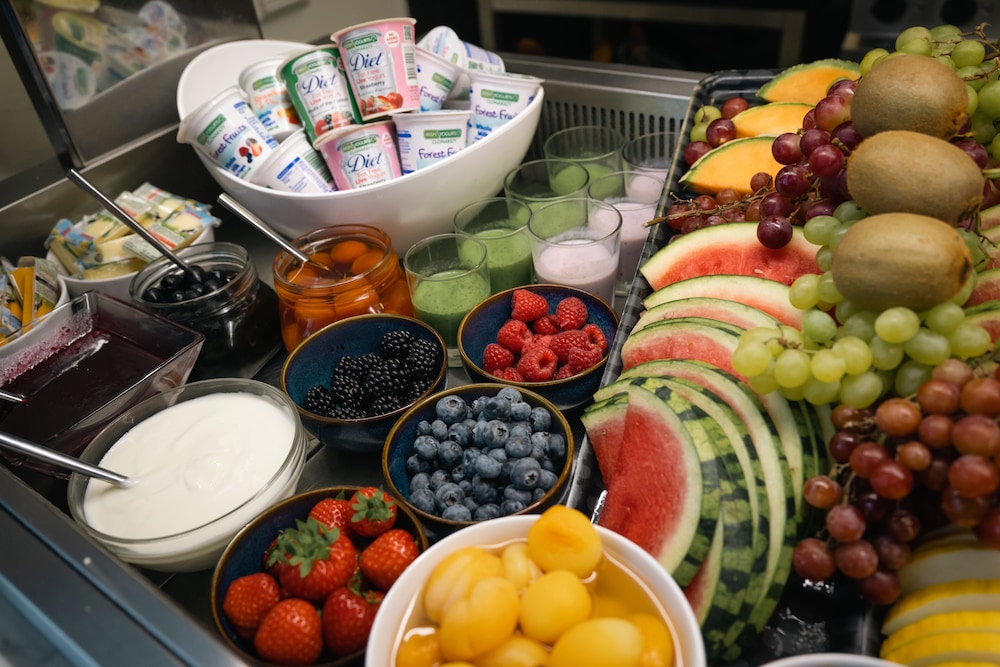
45. Aspect Hotel Dublin Park West — Park West, city fringe · 4★ · 142 reviews · from ~£147/night. A modern 4-star on the city's western edge with on-site parking — genuinely rare in this guide — making it a strong pick for travellers arriving with a hire car.
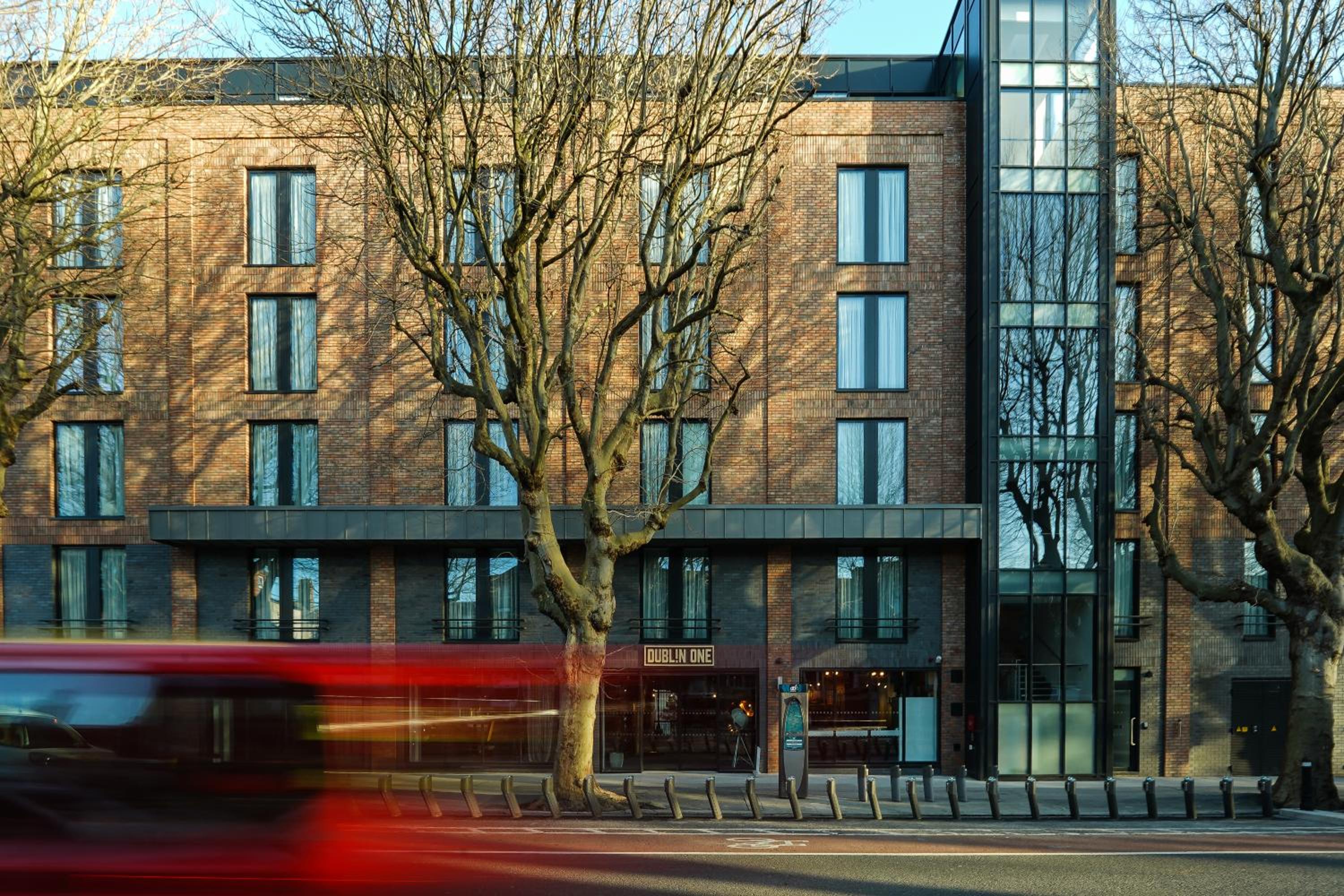
46. Dublin One — City Centre · 4★ · 8,676 reviews · from ~£156/night. A well-reviewed 4-star right in the city-centre grid, a strong middle-of-the-budget-tier option with easy walking access to both the north and south sides.
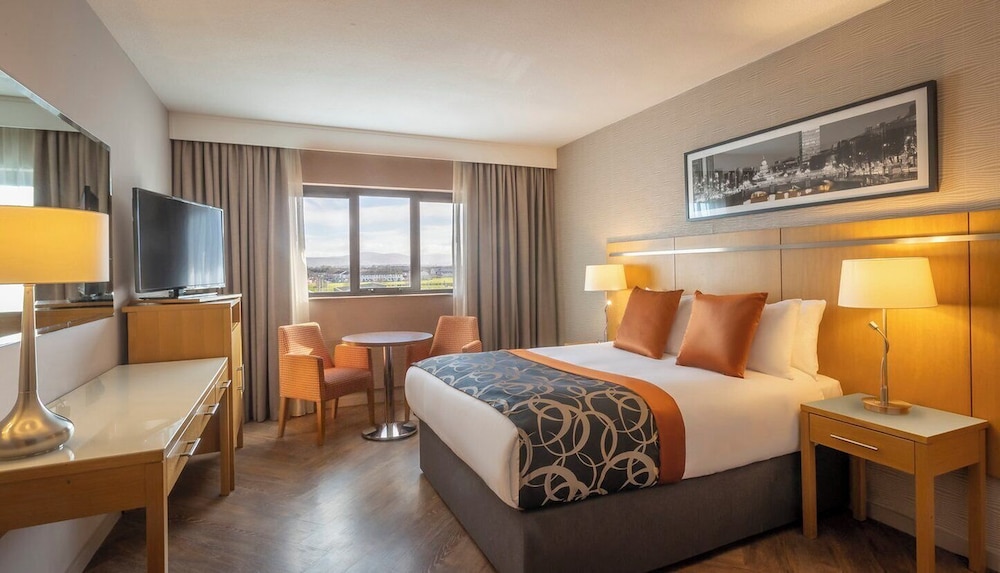
47. Clayton Hotel Liffey Valley — Liffey Valley, west Dublin · 4★ · 258 reviews · from ~£168/night. The Clayton chain's western outpost near the Liffey Valley shopping centre — on-site parking and motorway access make this the practical choice for a car-based trip or an early flight out.
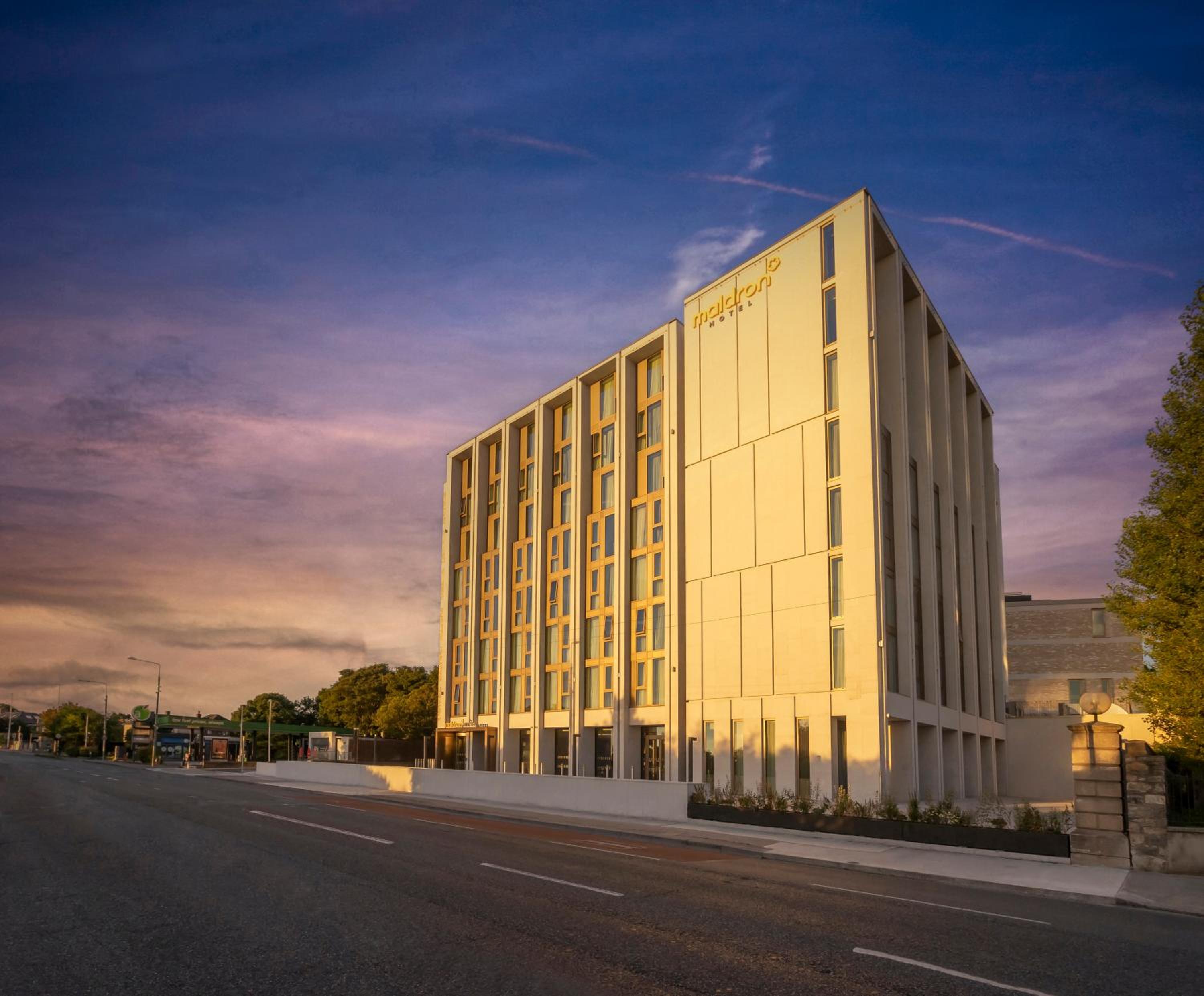
48. Maldron Hotel Merrion Road — Merrion Road, Ballsbridge fringe · 4★ · 6,599 reviews · from ~£135/night. One of the cheapest Maldron properties in the guide, near Ballsbridge and the Aviva Stadium — a strong pick for match-day travellers on a budget.
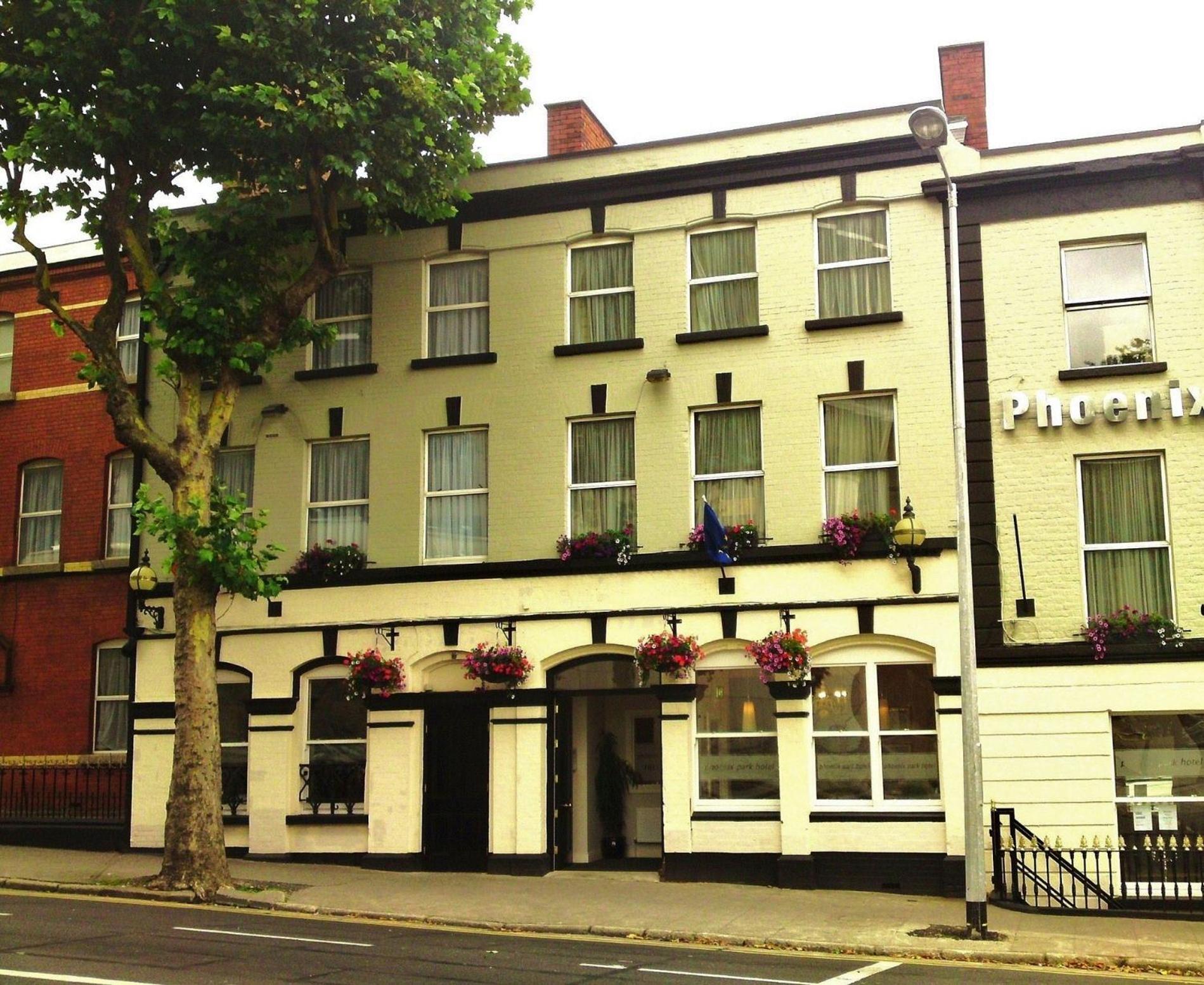
49. Phoenix Park Hotel — near Phoenix Park, North Side · 3★ · 4,052 reviews · from ~£188/night. Close to Phoenix Park, one of Europe's largest enclosed city parks, and a short walk from Smithfield — a green-space base for travellers who want a break from the city grid.
Budget tier summary: cheapest overall — Yugo Kavanagh Court £103; best walk-to-Temple-Bar value — easyHotel Dublin City Centre £145; best family fit — The Sandymount Hotel £188; best-reviewed budget stay — Staycity Aparthotels Dublin City Centre, 13,300+ reviews, £174. Compare all Dublin hotels with live prices →
Best Dublin Hotels for Specific Trips
Dublin's tight hotel market rewards knowing exactly what you need before you search. Here's how the 49 hotels above sort by traveller type.
Best Dublin Hotels for Business Travel
The Docklands is Dublin's business base — Anantara The Marker Dublin at the luxury end, Premier Inn Dublin CC North Docklands for budget-conscious trips. Conrad Dublin, beside the National Concert Hall, suits event and conference travel from the St Stephen's Green side.
Best Dublin Hotels for Trad Music & Temple Bar First-Timers
The Morrison Dublin and The Samuel Hotel sit just across the river with a five-minute walk into the pubs. On a budget, easyHotel Dublin City Centre and Blooms Hotel put you directly on Temple Bar's edge for the cheapest walk-in access in the guide.
Best Dublin Hotels for Georgian Sightseeing
Base yourself near The Shelbourne and St Stephen's Green — The Fitzwilliam Hotel and Conrad Dublin put you inside the Georgian core itself, walkable to Merrion Square, Trinity College and the National Gallery.
Best Dublin Hotels for Sports Fans (Aviva & Croke Park)
For Aviva Stadium: The Leinster and InterContinental Dublin at the top end, The Sandymount Hotel and Maldron Hotel Merrion Road on a budget. For Croke Park: Point A Hotel Dublin Parnell Street and The Gate Hotel are both a 15-20 minute walk.
Best Dublin Hotels for an Early Flight Out
Clayton Hotel Liffey Valley and Aspect Hotel Dublin Park West both sit on the city's western edge with motorway access and on-site parking — the two most practical bases in this guide for a car journey to Dublin Airport that doesn't route through the city centre.
Best Dublin Hotels for Value (and the Price Reality)
Dublin doesn't hide a hidden fee the way Las Vegas or Prague do — no resort fee, no tourism tax — so the headline price on every hotel page here is genuinely the all-in number. The real value play is accepting that Dublin's honest floor is £103, not £50, and choosing your tier accordingly: Yugo Kavanagh Court for the absolute cheapest verified bed, The Address Connolly for a 4-star-luxury feel at the bottom of the luxury tier, or Hilton Dublin for the cheapest true international-chain 4-star. Judge Dublin against its European peers, not against Prague or Lisbon, and the pricing makes more sense.
Best Dublin Hotels for Families With Kids
On a budget: The Sandymount Hotel (residential seaside suburb, own DART stop, ~£188), Staycity Aparthotels Dublin City Centre (kitchenette rooms for self-catering, ~£174) and Premier Inn Dublin CC North Docklands (familiar branded rooms, ~£164). With more to spend: The Gibson Hotel puts families beside the 3Arena and the Luas tram, and Clayton Hotel Burlington Road offers scale and reliability near St Stephen's Green.
Best Dublin Hotels for Couples and Honeymoons
The Fitzwilliam Hotel and The Leinster lead the romantic end of the luxury tier — Georgian-square polish and quiet Ballsbridge streets respectively. Dylan, in a restored Edwardian nurses' home, is the design-led boutique alternative. On a budget, Butlers Townhouse near the Grand Canal is the small, personal guesthouse pick that beats a chain hotel on atmosphere at a similar price.
Guinness, Trinity and Temple Bar — Dublin's Essentials
A few non-negotiables for any Dublin trip, and where this guide's hotels put you relative to each:
- Guinness Storehouse — the Liberties' seven-storey shrine to the black stuff, topped by the 360° Gravity Bar view. Book timed entry online; walk-up queues in summer run 45-60 minutes. Leonardo Hotel Dublin Christchurch and Maldron Hotel Kevin Street are both a 10-minute walk.
- Trinity College and the Book of Kells — the 800 AD illuminated manuscript in the Long Room (65 metres of dark oak shelving). Book at tcd.ie/Library; same-day entry is rare in summer. Trinity College Campus Accommodation puts you inside the grounds when term allows it.
- Kilmainham Gaol — the prison where the 1916 Rising leaders were executed, and the most significant historical site in Ireland. Sells out weeks ahead year-round — book at kilmainhamgaol.ie as soon as your dates are set.
- Temple Bar's cobbled lanes — best enjoyed as an evening out rather than a base, given the footfall and the pricing it commands. Blooms Hotel and The Morrison give you the closest access without paying full Temple Bar rates.
- Christ Church Cathedral and St Patrick's Cathedral — Dublin's twin medieval cathedrals, both under 10 minutes' walk of the Liberties hotels above.
- Croke Park — GAA headquarters and the fourth-largest stadium in Europe, a short walk from the north-side budget cluster around Parnell Street.
JetMeAway's Scout feature surfaces this kind of neighbourhood intelligence automatically once you book.
UK Practicalities
- Direct UK flights: Ryanair, Aer Lingus and easyJet fly from London Luton, Stansted and Gatwick, Manchester, Birmingham and Edinburgh, among others — flight times of roughly 1-1.5 hours. Search UK flights to Dublin (DUB).
- Airport transfer: Aircoach to O'Connell Street, about 40 minutes, around €12. Taxi €25-35, 20-30 minutes. No rail link from the airport.
- Passport / ID: The UK and Ireland share the Common Travel Area, so a passport isn't strictly required by law, but every airline demands photo ID and most insist on a passport at check-in regardless.
- Currency: Euro (EUR) — different from Northern Ireland's pound sterling, despite sharing the island.
- Tourism tax: None. Ireland doesn't levy a hotel city tax, unlike Prague, Barcelona or Berlin.
- Tipping: Optional but common — 10-15% in restaurants for good service, rounding up is fine in pubs.
- Best months: May-September, with June-July the sweet spot (18-22°C, long evenings). St Patrick's Festival (17 March) books out the whole city six months ahead.
- Budget: Luxury trip — £250-500+/night all-in. Budget-tier trip — £103-190/night all-in, roughly €40-50 (£34-43) a day for food, a pub pint and one paid attraction on top.
Booking Dublin Hotels in 2026: Rates and the Dates to Avoid
Dublin room rates swing hard by date, sometimes more than by hotel — the same budget room can move £40-60 between a quiet Tuesday in February and a Saturday in July. The cheapest stretch of the year runs November through March, excluding the Christmas/New Year fortnight, when even the Georgian luxury hotels drop well below their summer rates. Two recurring dates spike the whole city and are worth planning around rather than into:
- St Patrick's Festival, around 17 March — the single biggest date on the Irish calendar. The entire city books out months ahead and prices climb hardest of the year, even at the budget end.
- Major Aviva Stadium and Croke Park fixtures — international rugby weekends, GAA finals and large concerts can sell out the Ballsbridge and Docklands hotel clusters specifically, even when the rest of the city has rooms.
Unlike Las Vegas's resort fee or Prague's per-night city tax, Dublin's headline price is genuinely the number you pay — there's no hidden line item to budget around. The variable that matters here is simply the calendar: book midweek and outside St Patrick's week, and this guide's £103-£190 budget tier holds. Compare live 2026 Dublin prices to see today's number on your dates.
How Dublin Compares to Prague, Vienna and Edinburgh
Dublin is the most expensive of this guide's European city cluster at the budget end — where Prague's cheapest verified stays and Vienna's budget tier can dip well under £100, Dublin's floor sits at £103 and its budget ceiling reaches nearly £190. Edinburgh is the closer comparison — another compact, historic capital where a tech and tourism boom has pushed hotel rates up faster than supply can follow. At the luxury end, The Shelbourne and The Fitzwilliam are priced like a mid-range Balmoral or Witchery in Edinburgh, or a solid 5-star in Vienna's Innere Stadt — Dublin doesn't out-price its Western European peers at the top, only at the bottom.
Privacy Shield: Why Book Dublin Through JetMeAway
Irish hotel groups share booking data across their UK and European portfolios, and the big chains (Maldron, Clayton, Hilton, IHG) run active loyalty-marketing programmes. When you book Dublin through JetMeAway, your data reaches the hotel only at check-in — not the chain's marketing database.
Ready to Book?
Every hotel above links to its own live-price page — real wholesale rates, taxes and fees included, book in under 90 seconds. No spam, no upsells, no phone calls.
Frequently asked questions
What's the cheapest decent hotel in Dublin?
How much does a budget Dublin hotel cost per night?
Why is Dublin so expensive vs other European capitals?
Which Dublin areas are cheapest?
Is Temple Bar worth staying in?
Where should families stay in Dublin on a budget?
Do hotels in Dublin charge city tourism tax?
Which cheap Dublin hotels are walking distance to Temple Bar / Trinity College?
Are Dublin easyHotel / Travelodge rooms actually decent?
Can you do Dublin on £60/day after the hotel?
When are the cheapest months for Dublin hotels?
Do UK travellers need a passport for Dublin?
What's the currency in Dublin?
How do I get from Dublin Airport to city centre?
Are there hostels in Dublin?
Which hotels in Dublin are pet-friendly?
Which hotels are near Croke Park / Aviva Stadium for matches?
Are direct UK flights to Dublin cheap?
Which hotels in Dublin have parking?
Is Dublin walkable?
Are Georgian hotels historic?
Best months to visit Dublin?
Which hotels in Dublin are best for couples?
What's included in 'Traditional Irish breakfast' and which hotels do it?
Guinness Storehouse queue advice?
Do hotels in Dublin ban stag/hen groups?
Ryanair vs Aer Lingus for UK visitors?
Read next
Plan Your 2026 Trip Now
Use the JetMeAway Scout to compare live prices across 15+ trusted providers. Zero booking fees.
Start Searching